

German growth buoyed by domestic demand, spending on refugees
 Add BT as a preferred source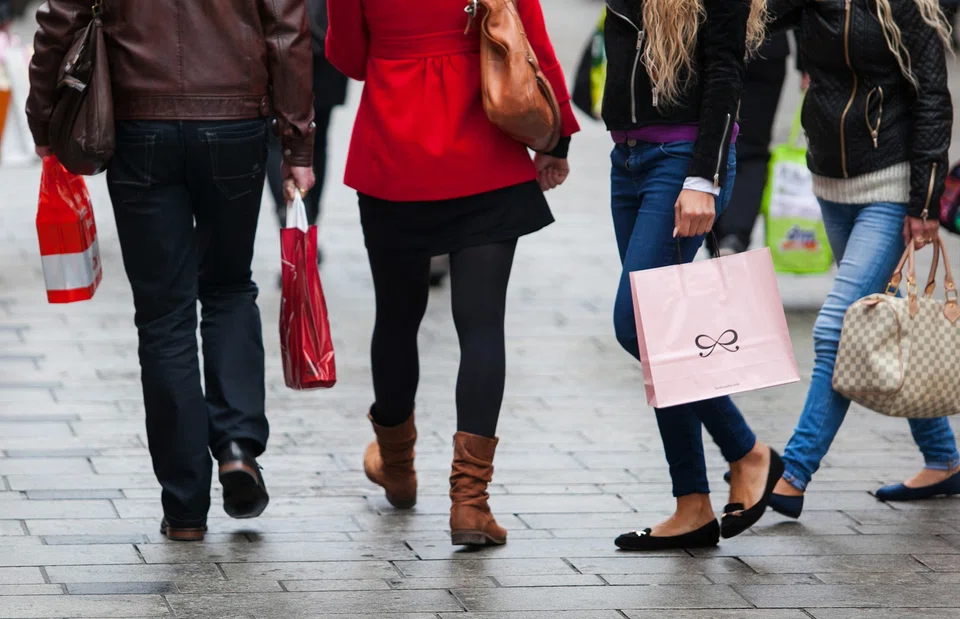
[BERLIN] A rise in German private consumption and higher state spending on refugees more than compensated for weakness in foreign trade, helping Europe's biggest economy to grow at a modest, albeit slower pace in the third quarter, data showed on Tuesday.
Record-high employment, rising wages and nearly stable prices are boosting household spending in Germany while cheaper gasoline is freeing up some cash for other purchases.
At the same time, record numbers of people, fleeing war in the Middle East, are arriving in Germany. The federal government and states are spending billions of euros (dollars) on housing the new arrivals, integrating them and finding them jobs.
The Federal Statistics Office confirmed a flash estimate showing seasonally adjusted gross domestic product (GDP) grew by 0.3 per cent on the quarter between July and September, after expanding 0.4 per cent between April and June.
Private consumption rose 0.6 per cent in the third quarter, while state spending jumped 1.3 per cent - the biggest rise since early 2009. Overall, domestic demand added 0.7 percentage points to GDP. "Of course, the refugee costs are playing a role here. These are the first effects on state spending," an official at the Statistics Office said.
Higher state spending on refugees will help boost growth in the coming quarters also, DekaBank economist Andreas Scheuerle said, noting that weak investment by German companies remained a problem for the economy.
Exports climbed at a slower pace than imports in the third quarter as demand from China and emerging markets weakened. Net foreign trade subtracted 0.4 percentage points from GDP - the weakest contribution for two years. "Exports are particularly weak," Scheuerle said. "Without help from the weaker euro and growth in industrialised countries, they would have been worse." The German economy has recently been sending out mixed signals. While exports and imports bounced back in September, industrial output posted its steepest drop in more than a year that month, according to data released this month.
In addition, factory orders fell for three consecutive months between July and September, reinforcing concerns that a slowdown in emerging markets will leave its mark.
The closely watched ZEW survey showed last week, however, that morale among German analysts and investors improved more than expected in November despite the attacks in Paris.
In addition, a survey among purchasing managers pointed to accelerating growth in the private sector in November.
REUTERS
Share with us your feedback on BT's products and services
TRENDING NOW
Eligible Singaporeans to receive up to S$850 in GSTV cash, up to S$450 in MediSave top-ups in August
The quest for global capital: Vietnam eyes MSCI upgrade as Indonesia fights downgrade risk

Targeted credit relief: Vietnam steers funding to Vingroup, Sun Group, Masterise megaprojects

E-commerce job cuts signal S-E Asia’s shift from scaling to deeper user engagement

