

German industrial workers get 8.5 per cent pay rise due to labour deal
 Add BT as a preferred source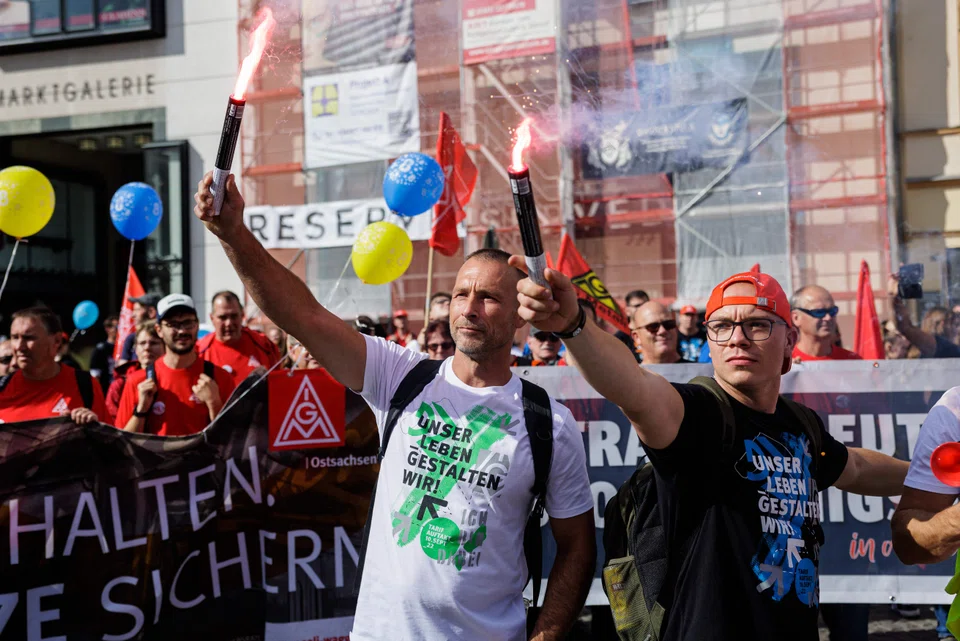
GERMANY’S largest labour union and employers have agreed on two rounds of wage increases for industrial workers, averting the threat of strike action in Europe’s biggest economy.
The IG Metall union said on Friday (Nov 18) that the deal in the state of Baden-Wuerttemberg will raise pay by 5.2 per cent next year and 3.3 per cent in 2024. This is on top of 3,000 euros (S$4,270) in tax-free bonus payments to counter inflationary pressures.
The union has recommended the agreement to eventually cover some 3.9 million workers in Germany’s industrial sector to help compensate for soaring living costs.
“Employees will soon have significantly more money in their pockets permanently,” Joerg Hofmann, head of IG Metall, said. The union said the deal represented an 8.5 per cent wage increase, without clarifying how it calculated the hike.
The talks between IG Metall and the Gesamtmetall employers’ association have been one the most significant domestic showdowns of Europe’s energy crisis so far. Companies had been reluctant to increase wages due to rising costs for raw materials, natural gas and electricity.
At the same time, there has been concern that significantly higher pay might risk entrenching already-high inflation. German consumer price growth unexpectedly accelerated in October, following a trend already seen in France and Italy.


Some 900,000 workers had participated in strikes prior to the agreement, affecting companies including auto-parts maker Robert Bosch. Industrial workers typically need to drive to out-of-town production sites, meaning they are more exposed to the increased cost of fuel.
While the pay hike is burdening companies’ competitiveness, further strikes would have done even more damage, the Gesamtmetall employers’ group said on Friday.
“The agreement is an advance on the growth that we hope to see again from 2024,” Gesamtmetall president Stefan Wolf said. BLOOMBERG
Decoding Asia newsletter: your guide to navigating Asia in a new global order. Sign up here to get Decoding Asia newsletter. Delivered to your inbox. Free.
Share with us your feedback on BT's products and services
TRENDING NOW

Nearly half of Apac’s wealthy expect market crash or correction, plan to rotate to cash: study

Yeo’s, Tiger Beer and now Gardenia – flight of food manufacturing from Singapore might be just as planned

AGT raises Nam Cheong stake; Silchester increases holdings of ComfortDelGro

Johor property old hand KSL readies family handover amid market boom

