German parties keep far right from power despite state win
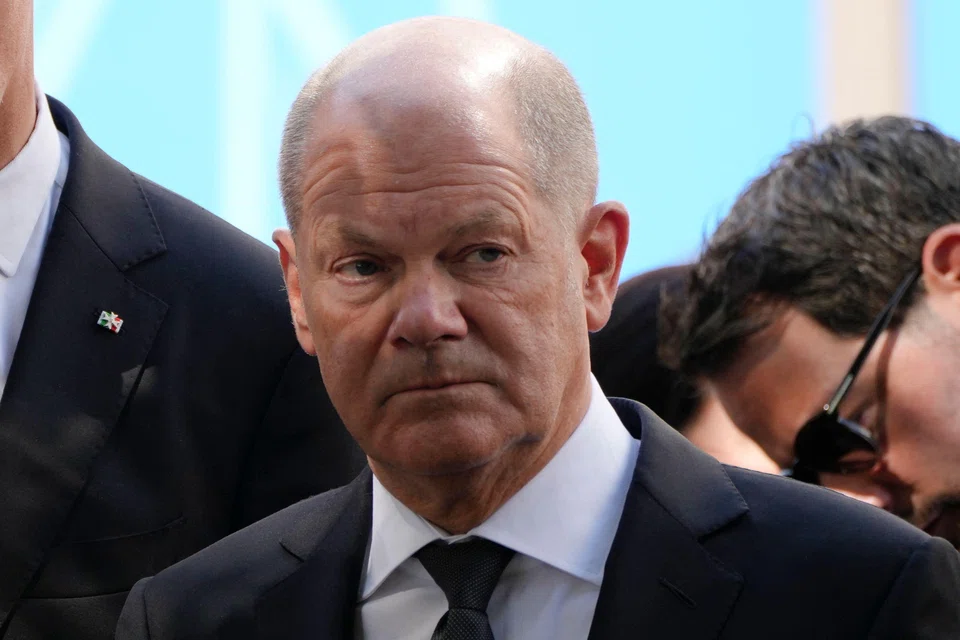
POLITICAL parties in two eastern regions moved to block the Alternative for Germany from power after the far-right party won Sunday’s (Sep 1) election in Thuringia and came a close second in neighbouring Saxony.
The AfD, classified by security services as right-wing extremist in both states, took 32.8 per cent of the vote in Thuringia, according to preliminary results, the first triumph for a far-right party in a German state ballot since World War II.
The other parties in the regional parliament have said they will not join a coalition with the AfD, meaning the second-placed Christian Democrats – who won in Saxony – are most likely to lead the next administration in the state capital Erfurt.
The outcome of the elections in the two eastern German states represented another humbling for Chancellor Olaf Scholz’s Social Democrats and his two partners in the deeply unpopular ruling coalition in Berlin – the Greens and the Free Democrats.
With just over a year until the next scheduled national election, they got less than 15 per cent between them in each of the two states. The FDP was nowhere near the 5 per cent threshold for getting into either regional parliament and the Greens fell short in Thuringia.
The coalition has failed to “generate trust among people and, above all, confidence that we can implement what we promise,” Saskia Esken, a co-leader of Scholz’s SPD, said in an interview with public broadcaster Phoenix. “That’s why we have to campaign even more, explain things, and get out there.”
With Germany’s economy stagnating and migration a key concern among voters, nationwide support for the three ruling parties has slumped to record lows.
Populist forces of the extreme right and left took more than 60 per cent of the vote in Thuringia and almost half in Saxony, highlighting the crumbling of Germany’s political centre in some parts of the country.
National backing for the conservative CDU/CSU alliance is around 32 per cent – roughly the same as the SPD, Greens and FDP combined – and the AfD is in second place on about 18 per cent.

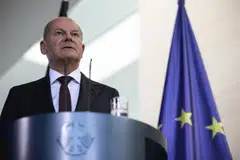
The battering for Scholz’s alliance prompted fresh claims from opposition lawmakers that the government is a spent force, as well as renewed calls for the next election to be brought forward. It may also fuel debate about whether Scholz should be the Social Democrat chancellor candidate if the coalition survives until next September.
As an alternative, the party could consider the defence minister, Boris Pistorius, who is the country’s most popular politician, according to opinion polls.
With the government in dire straits, optimism that Germany would rebound in 2024 from two years of almost zero growth has faded. An anticipated jump in consumer spending failed to materialise and the country’s industrial sector continues to struggle.
Bickering over how to tackle the challenges facing the world’s third-largest economy, apparently without being able to offer effective solutions, has fuelled frustration with the three ruling parties.
They’re likely to suffer another drubbing in a state ballot in three weeks in Brandenburg – the region that surrounds the capital Berlin and is home to Scholz’s Potsdam constituency.
The CDU’s solid performance on Sunday could feed into their decision on a conservative chancellor candidate. The party leader, Friedrich Merz, seems likely to secure the nomination and received backing from the CDU premier of Hesse, Boris Rhein.
“The CDU is very strong in Saxony and constructive politics is also not possible in Thuringia without us,” Rhein was quoted as saying Monday by the Funke media group. “This is clearly also a success for our federal chairman Friedrich Merz.”
A number of other hopefuls cannot yet be ruled out, including North Rhine-Westphalia Premier Hendrik Wuest and Bavaria Premier Markus Soeder, who leads the Christian Social Union, the CDU’s sister party in the southern region.
Merz has said the CDU and CSU will decide on their joint candidate after the Brandenburg vote. The final state election before the next national ballot is at the beginning of March in Hamburg, the port city where Scholz used to be mayor and his SPD rules in coalition with the Greens.
In Sunday’s elections, a new far-left party, the Buendnis Sahra Wagenknecht, won 15.8 per cent in Thuringia and 11.8 per cent in Saxony, according to preliminary results.
Founded only in January after Wagenknecht split from the Left party, it is likely to play a key role in keeping the AfD out of power in Thuringia. Like the far-right party, the BSW wants to curb immigration and stop aid to Ukraine.
With little prospect of the AfD winning power at the national level anytime soon, impact should be limited from the state votes on financial markets, which were unsettled by the recent rise in popularity of French fringe parties. Germany’s DAX index hit a record high last week, topping its previous peak of May 15.
Decoding Asia newsletter: your guide to navigating Asia in a new global order. Sign up here to get Decoding Asia newsletter. Delivered to your inbox. Free.
Share with us your feedback on BT's products and services