

Germany to have 5 billion euros extra budget leeway in 2024
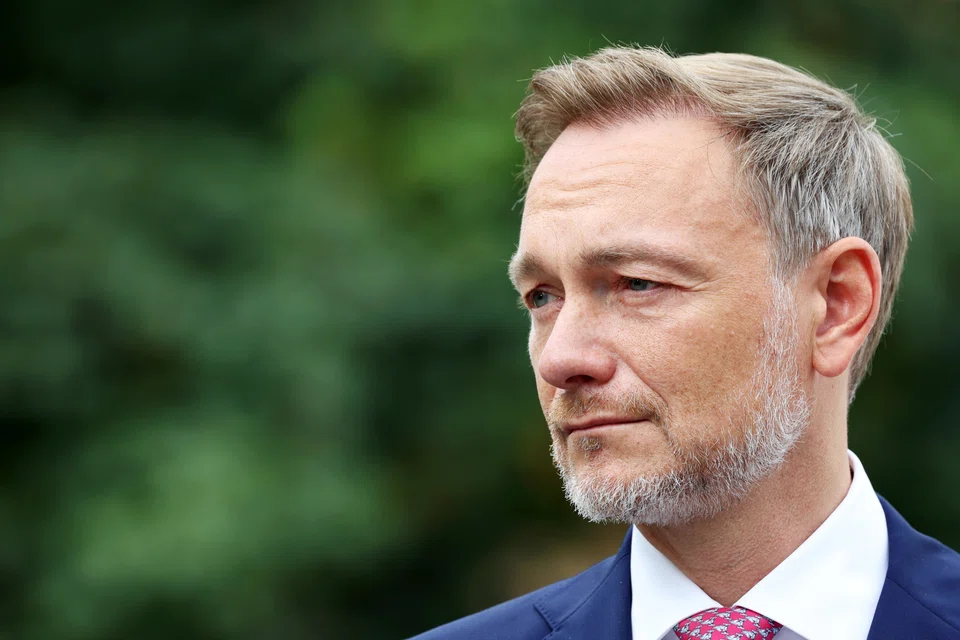
GERMANY’S federal government will have room to increase net borrowing by around 5 billion euros (S$7.2 billion) next year due to a mechanism that permits additional new debt during an economic downturn.
Finance Minister Christian Lindner had pencilled in net borrowing of 16.6 billion euros for 2024, bringing the federal government’s finances back in line with a constitutional limit known as the “debt brake” after it was suspended during the pandemic and the energy crisis.
The Economy Ministry will publish a revision to its forecast for 2023 gross domestic product on Wednesday to a contraction of 0.4 per cent, from a previous prediction of 0.4 per cent expansion, providing leeway under the budget rules to expand new borrowing to about 22 billion euros, according to people familiar with the planning, who asked not to be identified.
A spokeswoman for the economy ministry declined to comment. A finance ministry spokeswoman said that an adjustment of the government’s economic forecasts would typically lead to a change in the amount of permitted new debt. However, this would not necessarily create room for additional spending, she added.
Lindner, who chairs the fiscally hawkish FDP party, insisted on restoring the debt brake after the government ramped up borrowing and spent hundreds of billions of euros to cushion the impact of the pandemic and rising energy costs on households and companies.
His budget for next year squeezes spending across all government departments except for defence and cuts net new debt from around 45 billion euros this year.




Although new borrowing peaked at more than 200 billion euros in 2021 before falling to about 115 billion euros in 2022, Germany still has one of the lowest debt to GDP ratios among rich nations at around 66 per cent. BLOOMBERG
Decoding Asia newsletter: your guide to navigating Asia in a new global order. Sign up here to get Decoding Asia newsletter. Delivered to your inbox. Free.
Share with us your feedback on BT's products and services
TRENDING NOW
One-third of Singapore-listed firms at risk in severe AI downturn: MAS

‘We don’t want to stay as we are’: CEO Patrick Ng builds a more resilient Huationg

He built the Vingroup empire. Now South-east Asia’s richest man is handing some key roles to his sons

Radiant World table shows six lenders with US$870 million exposure

