

Global bird flu outbreak leaves China facing baby chick shortage
 Add BT as a preferred source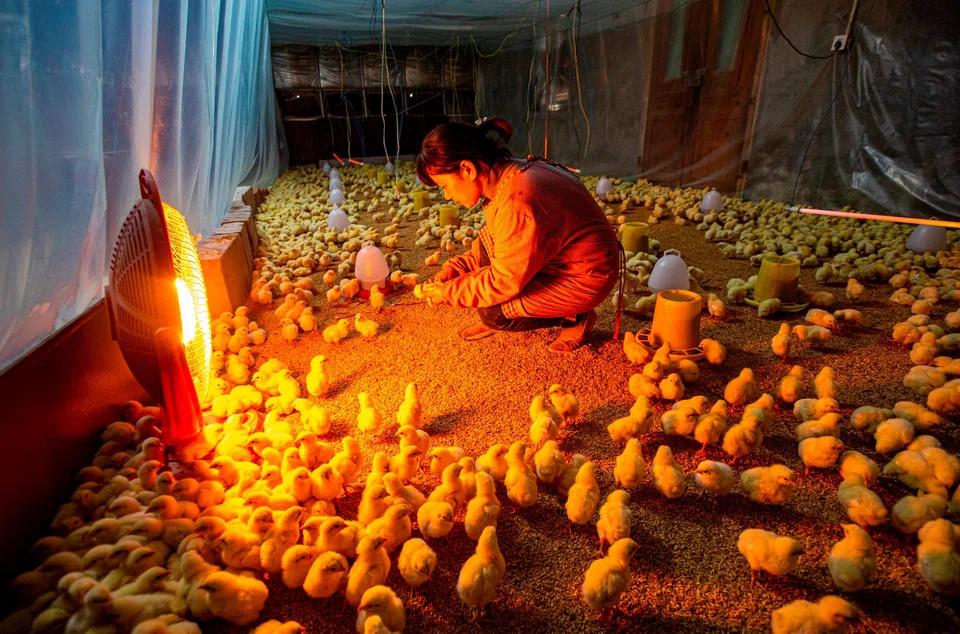
DeeperDive is a beta AI feature. Refer to full articles for the facts.
AN unprecedented global bird flu outbreak that has killed off 58 million birds in the US alone in a little over a year is causing pain in the world’s second-largest poultry producer: China is running short of baby chicks.
Since the start of the year, prices have soared in China, threatening to drive up food inflation but also exposing a weak link in Beijing’s efforts to shore up food security. The world’s largest market relies heavily on imported breeding stock for white-feathered broiler chickens, which account for more than half of the country’s chicken production.
Baby chicks from Shandong Yisheng Livestock and Poultry Breeding, the top chicken breeder in China, were quoted at around 6 yuan (S$1.17) per chick this week, three times the price at the start of the year.
“An underlying factor is inadequate imports of breeding stocks,” said Lin Guofa, head of research at consultancy Bric Agriculture Group. “Supplies are tight.”
China’s imports of so-called grandparent breeding chicken stocks in 2022 have more than halved, according to industry estimates based on customs data — far from what is usually needed to meet production demand.
On top of raging bird flu outbreaks, disruption to flights due to Covid curbs last year also restricted imports.
Navigate Asia in
a new global order
Get the insights delivered to your inbox.
The number of grandparent white broiler chicken renewed in 2022 fell by more than a fifth, according to official data. Industry sources say some breeders have been forced to resort to forced moulting — a practice that extends the productive life of breeding chicken flocks.
China developed its first independent white-feather broiler breeds in 2021, after sourcing from overseas entirely for almost two decades. But Beijing still relies on foreign imports as limited domestic breeds have yet to take significant market share.
There may now be an added incentive to accelerate those efforts, given the limitations imposed by bird flu sweeping the world, and leaving China’s options for breeder imports very restricted. Currently, according to a filing this month from breeder Yisheng, China can only import from one US state, Alabama, and New Zealand.
The shortage may have some way to run, too.
“Imports of grandparent breeding stocks have been low since May last year,” Shandong Minhe Animal Husbandry, another top breeder in China, said in a filing last week. “The shortage of commercial baby chicks is seen expanding gradually from the end of the second quarter or early third quarter. Prices will be strong.” BLOOMBERG
Decoding Asia newsletter: your guide to navigating Asia in a new global order. Sign up here to get Decoding Asia newsletter. Delivered to your inbox. Free.
Share with us your feedback on BT's products and services
TRENDING NOW

StarHub hands Ensign InfoSecurity control back to Temasek in S$115 million deal, books S$200 million gain

Singaporeans can now buy record amount of yen per Singdollar

Air India asks Tata, Singapore Airlines for funds after US$2.4 billion loss

Keppel DC Reit posts 13.2% higher Q1 DPU of S$0.02833 on strong portfolio performance

