


Global economy faces widening strains as Middle East war intensifies
For companies exposed to the region, the risks are shortages of crucial components, higher costs and thinner profit margins
 Add BT as a preferred source
[WASHINGTON, DC] The economic fallout from the war in the Middle East is spreading outside the region.
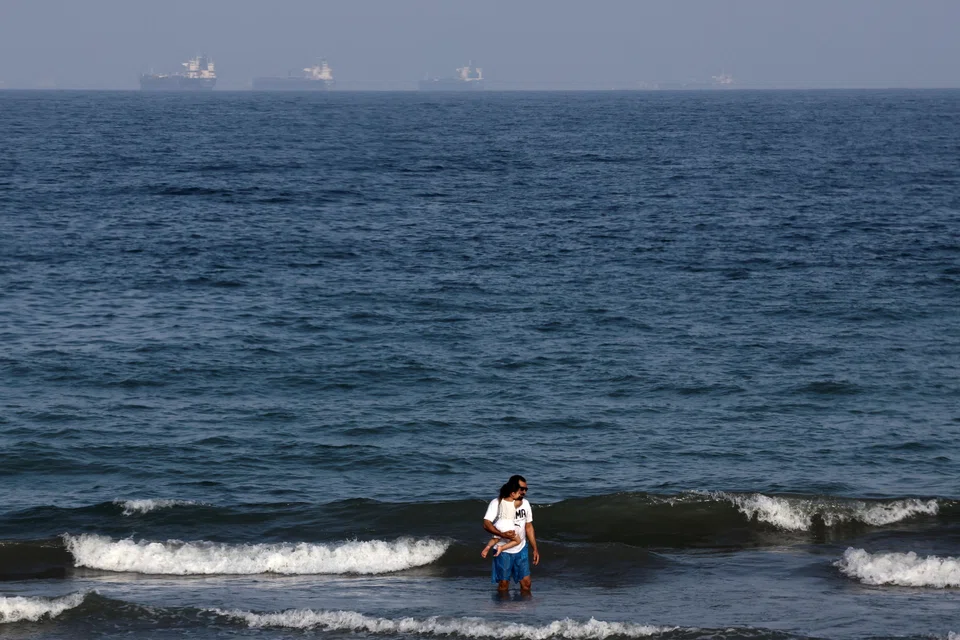
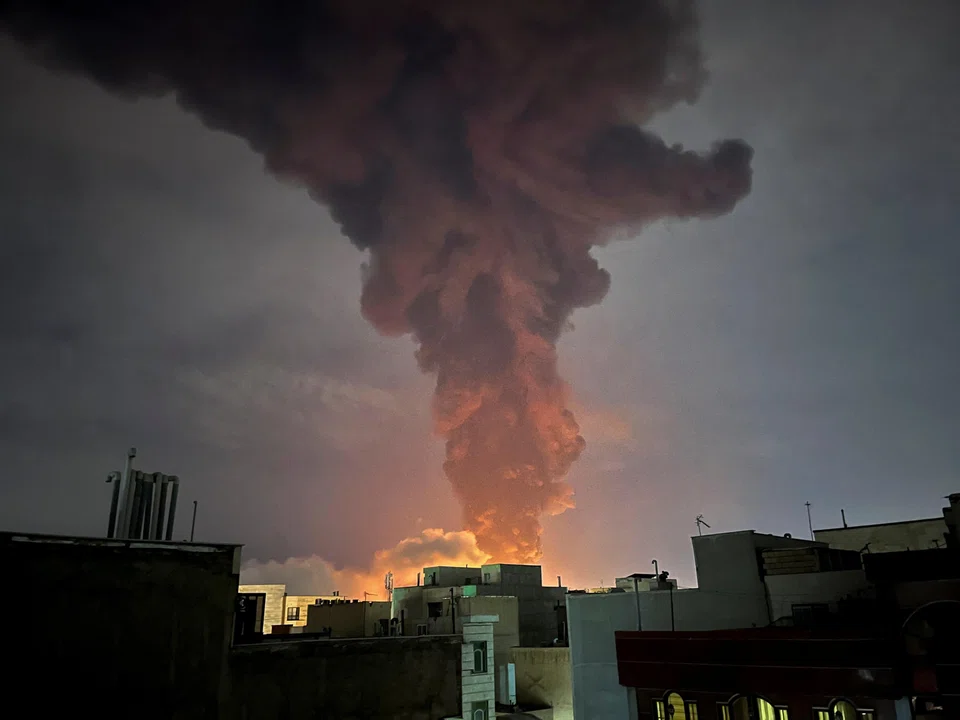
Persian Gulf ports have turned into military targets. The vital Strait of Hormuz is effectively closed, sending fuel costs and shipping rates soaring.
Vessels cannot reach a container hub that handles more volume than Rotterdam between four continents. Air cargo – halted for a week – will need time to work through backlogs, with carriers looking to resume flights soon.
The conflict between the US-Israel alliance and Iran is intensifying as it heads into a second week, straining global supply chains and raising questions about price spikes not seen since the pandemic.
For companies exposed to the region, the risks are shortages of crucial components, higher costs and thinner profit margins.
If that trickles down to stores, another potential squeeze will be felt by consumers at a time when many are already struggling with daily expenses.
Navigate Asia in
a new global order
Get the insights delivered to your inbox.
In financial markets, stocks, bonds and havens such as the US dollar are reflecting those inflation concerns as well as the threats to households and businesses.
Those are especially acute for countries still dealing with the legacy of Covid-19-era budget deficits, labour-market scars and sub-par growth.
Plenty of resilience
Kristalina Georgieva, the managing director of the International Monetary Fund (IMF), said on Friday (Mar 6) in Bangkok: “The world economy has been remarkably resilient (against) shock after shock. But this resilience is being tested yet again, and many countries step into more uncertainty with depleted buffers.”
SEE ALSO

She added that central bankers need to be more attentive and fiscal authorities must be “very careful” in deploying stimulus, given existing debt loads in many countries. “Every shock that comes on top of the previous one, the world faces it in a more difficult position,” she noted.
Beyond the old infrastructure of the trade of goods, bombs are dropping on the underpinnings of the digital economy: data centres. Drone strikes damaged three facilities operated by Amazon.com in the United Arab Emirates and Bahrain.
For now, many economists say that the overall impact on global gross domestic product is likely to be modest and uneven, but that calculation will shift the longer the conflict drags on.
Adding to the uncertainty in global trade is the lack of a clear road map for Washington’s tariff policy.
In the US, Federal Reserve governor Christopher Waller said that consumers are likely to experience sticker shock as gas prices rise. He spoke before a US Labor Department report on Friday showed employers unexpectedly cut jobs in February and the unemployment rate rose, indicating fragility in the job market.
A Bloomberg Economics analysis showed that the biggest global economic headwinds come from energy markets, with about a fifth of global oil and liquefied natural gas supplies passing through Hormuz.
Asian countries such as China, India, Korea and Japan are top buyers of Gulf oil.
By region, the fallout will be uneven.
At Capital Economics, chief economist Neil Shearing said that Asia, the euro area and the UK are more exposed than the US.
Oxford Economics on Friday trimmed its UK economic growth forecast for 2026, saying the Iran conflict will push up inflation and household energy bills.
Officials from the European Central Bank indicated they are staying vigilant in case of any inflationary flare-ups, and executives with operations in the region are not hitting the panic button yet.
Stefan Hartung, the CEO of Robert Bosch, the world’s biggest maker of car parts, said: “We see a world which is really under stress – that is clear.”
But the difficulties might be short-lived, and many companies have boosted resilience since the pandemic.
With companies facing less transport capacity, Hartung downplayed the possibility of widespread industry shortages. “You need to be more like in the Covid-19 times. I suspect that for the long term, we will see a stabilisation coming,” he added.
Policy reversal
US President Donald Trump’s administration is trying to relieve the energy-supply crunch that helped push US retail petrol prices to the highest level at any time under his terms as president.
On Thursday, it cleared the way for India to temporarily increase its purchases of Russian oil, a policy reversal that reflects the concern about the energy fallout.
But the global economy’s worries extend past oil, natural gas, jet fuel and petrol.
Bloomberg Economics estimates that almost 7 per cent of global fertiliser exports, close to 6 per cent of precious metals, 5.3 per cent of aluminium and aluminium products and 4.4 per cent of cement and other non-metallic minerals were shipped out of Persian Gulf ports “and are at risk of disruption”.
“This is a significant event – not just in the Middle East, but for supply chains and the world,” said Jan Rindbo, CEO of Danish shipping company Norden, one of the world’s largest transporters of raw materials.
A Norden-chartered vessel that just offloaded grain in Saudi Arabia was about to leave the Gulf on Mar 7 when an Iranian order was broadcast, calling for crews to turn around.
Rindbo added: “The longer this conflict continues, the greater the concern about what it means for the world. We are seeing people take a step back. It may be that they are not buying quite as many raw materials as they otherwise would, as they wait to see how the situation develops.”
Shipping through the region will soon come with a higher premium. German tyremaker Continental highlighted the risks on Wednesday, warning that the conflict may affect its sales and earnings by driving up and disrupting its costs and operations respectively.
Christian Kotz, the company’s CEO, said: “We are very early in this situation.”
But the war has already created “more uncertainty”, he added.
Niall van de Wouw, chief airfreight officer with Xeneta, an Oslo-based digital freight platform, said that in the short run, air-cargo rates could double or triple on flights transiting the Middle East hubs. With freighters parked, as much as 18 per cent of the world’s capacity disappeared this week.
Tourism and business travel has also suffered.
Thomas Woldbye, CEO of London’s Heathrow Airport, the busiest in Europe, said that 300 flights had been scrapped since the conflict broke out, with more disruptions expected. He declined to say how much the disruption was costing for each day.
“We are not talking a significant amount – not yet,” he added. “If it continues for a very long time, then we will have to look at that.”
Much will depend on the resumption of flights and the return of capacity.
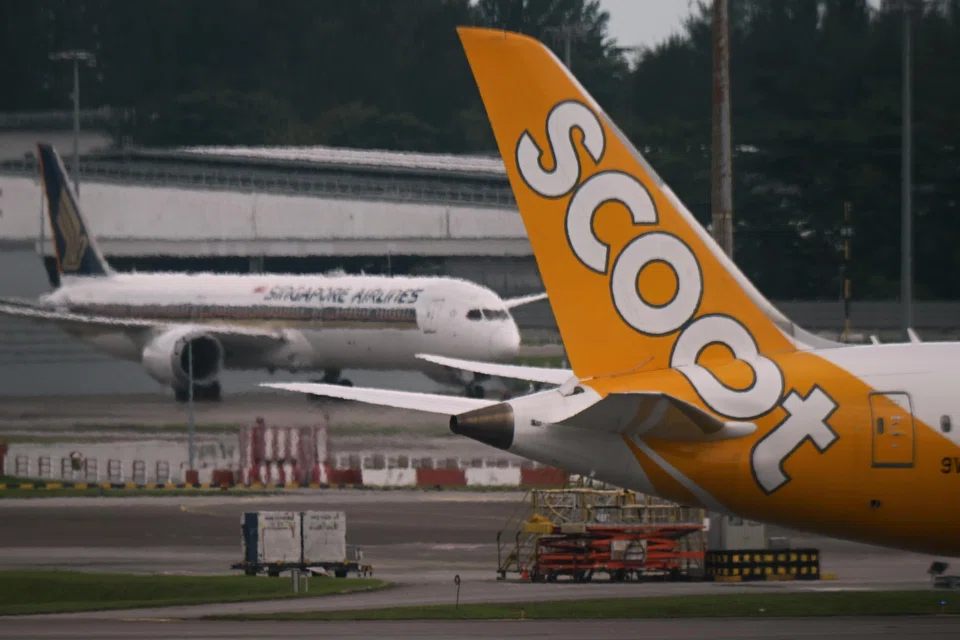
State-owned Etihad said on Friday that it will resume a limited commercial schedule between its hub in Abu Dhabi and a number of destinations in Europe, India, the US and the Middle East, including Riyadh.
Emirates plans to resume operations, after flights were temporarily suspended on Saturday. Qatar Airways said that it will operate limited flights to Doha on Sunday from London, Paris, Madrid, Rome, Frankfurt and Bangkok.
Container lines are adjusting, too, though they are less flexible to quick moves and more susceptible to attacks.
Daily bookings placed by cargo owners looking to import goods into the ports east of Hormuz plummeted by 81 per cent in just two days this week, said Vizion, which provides supply-chain visibility.
Roughly 100 container ships are inside the Gulf, unable to leave given the security risks – despite Trump’s pledge on Mar 3 to ensure safe passage using navy convoys.
Dozens more are waiting to enter it or have been rerouted to other gateways, stretching capacity and raising the risk of bottlenecks elsewhere.
Congestion spreading
Global shipping giants Mediterranean Shipping Company, AP Moller-Maersk and several others have suspended bookings for the routes linking Asia to the Middle East, and the services connecting that region with Europe.
That means congestion is spreading quickly in the region, but also in Asia, as ships offload cargo that had been bound for the Middle East at the nearest safe port.
Destine Ozuygur, a senior market analyst for Xeneta, said that Nhava Sheva, India’s busiest container port sitting east of Mumbai, was at 64 per cent congestion as at Friday, skyrocketing from 10 per cent since Mar 1.
On Friday in a post on social media, she added: “Some secondary ports that we expect to see used as relay hubs, such as Dar es Salaam, already have a baseline of 50 per cent congestion and are now seeing wait times surge to more than five days a vessel.”
Congestion at Singapore and Colombo is building as well, both are already above 40 per cent.
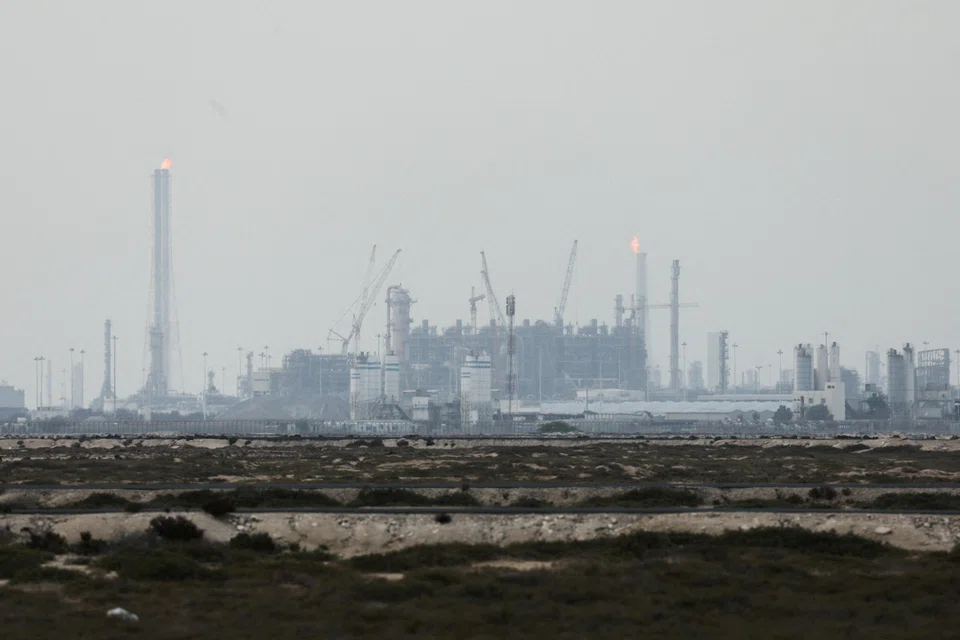
Van de Wouw said that shutdowns at major petrochemical and refining facilities in the Gulf region are reverberating far beyond fuel markets to pharmaceutical supply chains, medical packaging and other healthcare products.
DHL Group CEO Tobias Meyer said on Mar 6 while referring to the regional restrictions on air freight operations: “Certainly this is a challenging situation. That will create some bottlenecks in the days and weeks to come, and similarly on the ocean side – we will need to find new rotations for vessels.”
He pointed out that DHL is deploying its fleet of trucks “to move cargo to airports that are open”. BLOOMBERG
Decoding Asia newsletter: your guide to navigating Asia in a new global order. Sign up here to get Decoding Asia newsletter. Delivered to your inbox. Free.
Share with us your feedback on BT's products and services

