

Global economy set for continuing growth in 2017 and beyond
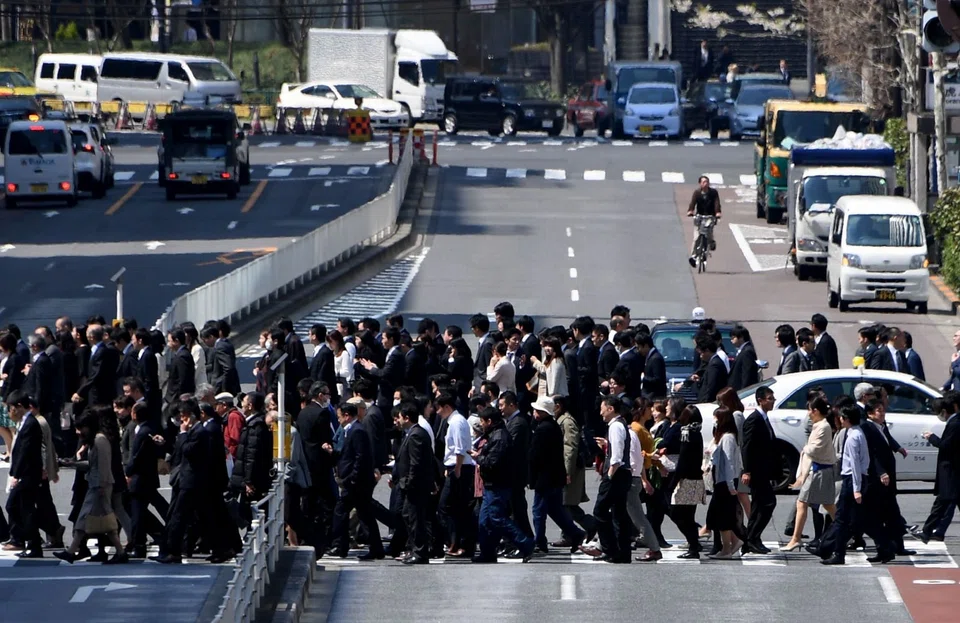
Tokyo
IN WHAT is now becoming a pattern among international financial institutions, the World Bank is issuing an upbeat forecast for global economic growth today, predicting a quite sharp upturn this year compared to 2016 and saying that improvement should carry over into next year and 2019.
"Global activity is firming broadly as expected, manufacturing and trade are picking up, confidence is improving, and international financing conditions remain benign," the World Bank said in its latest Global Economic Prospects report.
Despite what it called "substantial policy uncertainty", the report said that "global growth is projected to accelerate to 2.7 per cent in 2017, up from a post-crisis low of 2.4 per cent in 2016, before strengthening further to 2.9 per cent in 2018-2019".
Since late last year, reports from the World Bank, the International Monetary Fund and the OECD (Organisation for Economic Co-operation and Development) among others have pointed to a lasting upturn in the world economy, suggesting an improved backdrop for investment and consumption, with private economists being generally on board with this view.
"The reassuring news is that trade is recovering," said World Bank chief economist Paul Romer. A bright spot in the outlook is a recovery in trade growth to 4 per cent after a post-financial crisis low of 2.5 per cent last year.
But like other international bodies, the World Bank caveated its latest forecasts with warning of possible disruption to global trade, arising from the threat of possible protectionism in leading economies such as the US and the possibility of counter-responses elsewhere.
The report also suggested that the long absence of upward pressure on prices globally is likely to give way to rising inflation and a more generalised tightening of monetary policy, with possible adverse consequences for financial markets.
Activity in advanced economies is expected to gain momentum in 2017, said the World Bank, "supported by an upturn in the United States". "In the euro area and Japan, growth forecasts have been upgraded reflecting strengthening domestic demand and exports."
The US economy is forecast to grow 2.1 per cent this year after an anaemic expansion of just 1.6 per cent in 2016, and growth there is projected to accelerate to 2.2 per cent next year.
Advanced economy growth overall should be 1.9 per cent in 2017, moderating in 2018-19. Japan's growth should rise to 1.5 per cent in 2017 from one per cent in 2016 before slowing again next year, while euro area growth will be 1.7 per cent this year, slowing to 1.5 per cent in 2018.
Among the world's largest emerging economies, China is expected to see growth moderate gradually to 6.5 per cent this year from 6.7 per cent in 2016 and slipping futher to 6.3 per cent next year. India should grow 7.2 per cent this year from 6.8 per cent in 2016, and hit 7.5 per cent in 2018.
Indonesia's growth is expected to pick up to 5.2 per cent in 2017 and 5.3 per cent in 2018 as the effects of fiscal consolidation dissipate and private activity picks up. Growth in the Philippines is forecast to hold steady at 6.9 per cent this year and the next.
Meanwhile the global growth outlook "is predicated only on legislated fiscal and trade policies", said the report. It warned that "structural headwinds, including slower trade liberalisation as well as elevated policy uncertainty, continue to weigh on the outlook for trade".
Financial market volatility "has been low despite elevated policy uncertainty, reflecting investor risk appetite and, perhaps, some level of market complacency", said the World Bank. Renewed risk appetite has supported emerging market and developing economy financial markets as capital inflows to these markets remain robust.
"Over time, however, a gradual tightening of international financing conditions may weigh on capital flows to these economies."
The report also highlights concern about mounting debt and deficits among emerging market and developing economies, "raising the prospect that an abrupt rise in interest rates or tougher borrowing conditions might be damaging".'
TRENDING NOW

Nvidia reinstates Jensen Huang as CEO; Trump says move poses no national security risk

Beyond the greenback, Vietnam’s big borrowers turn to Asian-currency bonds

Indonesia’s coal tycoon Low Tuck Kwong replaced as Bayan Resources president-director

Six workers file employment claims against Crystal Jade Food Manufacturing

