

Global economy stuck in low growth trap, says OECD
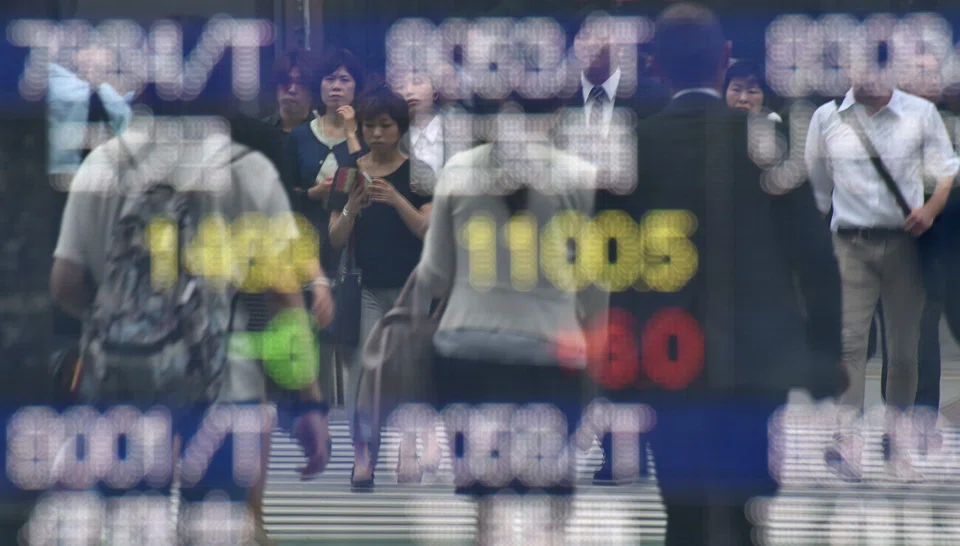
Tokyo
THE global economy is stuck in a "low growth trap" with no single, simple or speedy means of escape at hand, the Organisation for Economic Co-operation and Development (OECD) said on Wednesday in its latest biannual Economic Outlook publication.
The report cited a strongly China-linked slowdown in trade as a major cause of weak economic growth, in Asia especially, but also blamed low levels of investment and declining productivity in many parts of the world for the anaemic state of the global economy.
"Eight years after the (global) financial crisis, recovery remains disappointingly weak," the Paris-based OECD said. "Global GDP growth is projected to be 3 per cent in 2016, unchanged from last year with only a modest improvement foreseen in 2017." Both projections marked a 0. 3 per cent downgrade in the global growth forecasts made by the OECD as recently as last November.
Growth in the US is projected this year at 1.8 per cent, down from 2.4 per cent in 2015, rising to 2.2 per cent next year, while euro-area growth is projected to remain unchanged at 1.6 per cent in 2016, rising only fractionally to 1.7 per cent next year.
China's growth is projected at 6.5 per cent in 2016, down from 6.9 per cent last year with a further slowdown to 6.2 per cent forecast for 2017, while Japan's growth will edge up to just 0.7 per cent this year from 0.6 per cent in 2015, and then slow again to 0.4 per cent in 2017.
The measured pace of China's slowdown masks the severe impact it is having elsewhere on Asia, Japan especially, and on other parts of the world, head of the OECD's Japan / Korea desk, Randall Jones, said during a telebriefing in Tokyo. China's "onshoring" of production is cutting out value-chain trade.
Global trade growth in general remains "very subdued" with many emerging economies losing momentum in line with sharp downturns in commodity prices. Trade is growing at only half the pace it was in the 1970s, said Mr Jones, citing falls in capital goods trade especially.
Meanwhile, "the upturn in advanced economies remains modest with growth held back by slow wage gains and subdued investment", the OECD report said. "Financial instability risks also persist."
Policymaking "is at an important juncture", OECD chief economist Catherine Mann suggested while launching the latest Economic Outlook in Paris.
"Without comprehensive, coherent and collective action, disappointing and sluggish growth will persist, making it increasingly difficult to make good on promises to current and future generations," she said.
"Global growth has languished over the past eight years as OECD economies have struggled to average only 2 per cent per year, and emerging markets have slowed, with some falling into deep recession."
The prolonged period of low growth "has precipitated a self-fulfilling low-growth trap", said Ms Mann.
"Business has little incentive to invest given insufficient demand at home and in the global economy, continued uncertainties, and a slowed pace of structural reform."
At under 3 per cent on average between the beginning of 2015 and the end of 2017, global trade growth "is well below historical rates, as value-chain intensive and commodity-based trade are being held back by factors ranging from spreading protectionism to China rebalancing toward consumption-oriented growth".
In per capita terms, "the potential of the OECD economies to grow has halved from just below 2 per cent 20 years ago to less than one per cent per year, and the drop across emerging markets is similarly dramatic. The sobering fact is that it will take 70 years, instead of 35, to double living standards".
Monetary policy has been "the main tool" of economic policy management, and it has been "used alone for too long", the OECD report said. "Financial markets have been signalling that monetary policy is overburdened. Pricing of risks to maturity, credit, and liquidity are so sensitised that small changes in investor attitude have generated volatility spikes, such as in late 2015 and again in early 2016."
Fiscal policy must be deployed more actively and extensively, taking advantage of the environment created by loose monetary policy, the report said. "Governments today can lock in very low interest rates for very long maturities to effectively open up fiscal space. Prioritised and high quality spending generates the capacity to repay the obligations in the longer term while also supporting growth today."
Investment in both hard infrastructure (such as digital, energy, and transport) and soft infrastructure (including early education and innovation) is called for, the OECD said. This would also "catalyse business investment", it suggested.
A United Kingdom vote to leave the European Union would trigger negative economic effects on the UK, other European countries and the rest of the world, the OECD report said. "Brexit would lead to economic uncertainty and hinder trade growth, with global effects being even stronger if the British withdrawal from the EU triggers volatility in financial markets. By 2030, post-Brexit UK GDP could be over 5% lower than if the country remained in the European Union."
TRENDING NOW

Gas Supply may pursue remedies if contract breached following Indonesia’s export cuts: Tan See Leng

Why the biggest business decision about AI isn’t which model to choose

If Europe goes to war, the fallout will be felt in East Asia

Singapore expects all parties to honour commitments, says PM Wong after Indonesia cuts gas exports

