

Global firms fall short on forest protection vows: report
 Add BT as a preferred source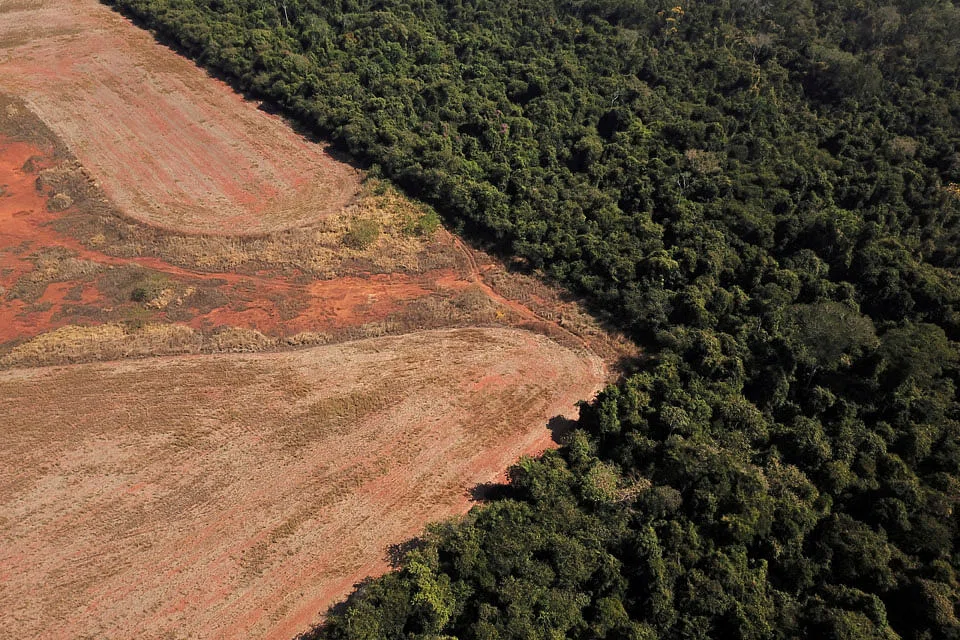
Paris
GLOBAL companies and financial institutions with the highest potential for curbing deforestation are largely failing to do so, undermining pledges to protect forests made at the 2021 United Nations Climate Change Conference (COP26) in November, a report said on Thursday (Jan 13).
The Forest 500 analysis, by non-profit research group Global Canopy, graded 350 companies most responsible for producing, using or trading commodities that drive deforestation, along with the 150 biggest banks, investment firms and pension funds that finance them.
One in 3 companies assessed had no forest commitments at all, and 72 per cent addressed some but not all of the forest-related commodities in their supply chains. Even those with commitments keyed to specific commodities - especially soya, beef and leather - "are failing to provide evidence of how they are implementing them", the report concluded.
Not one among the 350 companies passed muster on a comprehensive approach to human rights.
"Too few companies recognise the climate risks that are caused by deforestation, with few including their supply chains in their reporting," Niki Mardas, executive director of Global Canopy Executive Directory, told AFP.
Navigate Asia in
a new global order
Get the insights delivered to your inbox.
Cargill, Nestle, Unilever, PepsiCo, and Colgate-Palmolive were among 15 companies sharing a favourable ranking, while some 60 companies - many from China, Brazil and Argentina - had the lowest score possible in the 5-tier rating.
Progress is even more halting among financial firms, which provide more than US$5.5 trillion every year to companies in forest-risk supply chains, said the report.
Ninety-three of the 150 institutions analysed did not have a deforestation policy covering investments and lending to companies most reliant on the commodities ravaging forests.
Less than 2 dozen of the banks or investment firms that do have deforestation policies report on progress made.
BNP Paris, Deutsche Bank, HSBC, Mitsubishi UFJ Financial, Societe Generale, Standard Chartered and Nordea of Finland were ranked above other financial institutions, but were still found wanting.
"Halting agriculture-driven deforestation to halve emissions and reverse biodiversity loss by 2030 is not an option but a necessity for companies credibly committed to net zero," said Nigel Topping, former chief executive officer of climate non-profit We Mean Business.
"There is no pathway to keep 1.5 deg C within reach without that." Nations have embraced the goal of capping global warming at 1.5 deg Celsius above preindustrial levels.
Deforestation - driven by commodity crops such as palm oil and soya, cattle pasture and timber exploitation - is a triple threat: to climate, communities and the diversity of life on Earth.
If tropical deforestation were a country, it would be the third biggest source of carbon-dioxide emissions after China and the US, and ahead of the European Union (EU) and India.
Over the last 2 decades, the Amazon basin has lost roughly 10,000 square kilometres every year, showed assessments based on satellite data.In Brazil, deforestation increased by 22 per cent in 2021, reaching the highest level in 15 years. The food, feed and agriculture industries figure hugely in the report.
Companies that produce and sell soya, beef and palm oil make up just over half those on the Forest 500 list - roughly split between manufacturers, retailers and fast-food chains, on the one hand, and agri-business on the other. Many of these are brand names known to consumers worldwide, making them vulnerable to shifting expectations.
"European voters and consumers are making this increasingly clear to us: they no longer want to buy products that are responsible for deforestation or forest degradation," European Commission president Ursula von der Leyen told world leaders at the COP26 summit.
New laws and regulations reflecting these new priorities are coming online. In Britain, companies are required as of November to ensure there is no illegal deforestation in their supply chains. A draft EU regulation will, if it becomes law, require corporate due diligence for 6 key commodities.
"The ranking shows that too many companies are ill-prepared for the regulatory changes coming down the track," the report concluded.
The Glasgow Leaders Declaration on Forests and Land Use was signed during COP26 by 141 countries committing to halting and reversing forest loss and degradation by 2030, including China and Brazil. AFP
Decoding Asia newsletter: your guide to navigating Asia in a new global order. Sign up here to get Decoding Asia newsletter. Delivered to your inbox. Free.
Share with us your feedback on BT's products and services
TRENDING NOW

On the board but frozen out: The Taib family feud tearing Sarawak construction giant apart

OCBC consumer banking chief Sunny Quek aims to double wealth business by 2029

‘We’re not a bubble tea brand’: Chagee aims to double Asia-Pacific footprint to 600 stores by 2027

UMS Integration closes 10.2% higher after posting ‘strong’ double-digit sales growth in Q1

