As global liquidity tide recedes, hazards in financial system are laid bare: IMF
Its report says Japan is especially vulnerable due to its "weak growth and demographic headwinds"
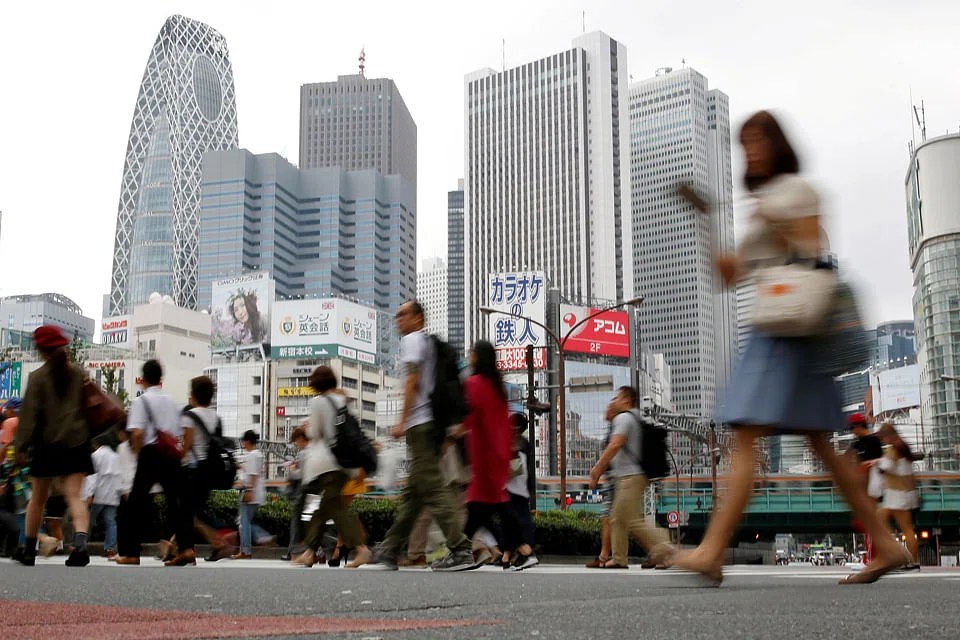
Tokyo
CENTRAL banks "saved the world" after the global financial crisis of 2008 by flooding it with money, enabling the financial institutions that underpin economic activity to survive. But now that the tide of liquidity is receding, hazards are being exposed among banks and finance houses.
The US Federal Reserve revealed last week that overlending by US banks during a long period of historically low interest rates has left them vulnerable now that rates are rising again, while former Fed chairman Alan Greenspan has warned of a "bubble" in global bond markets.
Now, the International Monetary Fund (IMF) has turned the spotlight on Japan which it said in a report last week "has one of the largest and most sophisticated financial systems in the world" and where, as in the US, potential hazards are lurking, hidden by record-low interest rates.
"Weak growth, low interest rates and demographic headwinds are posing chronic challenges for Japan's financial system," the IMF said. Since many advanced economies "are likely to face similar headwinds, the importance of Japan's response extends beyond its borders", it added.
Using words which analysts saw as designed to alert authorities while not alarming financial markets, the IMF suggested that "while the financial system has remained stable, the low profitability environment is creating new risks and pressures are likely to persist".
"A search for yield among banks has led some to expand their overseas activities and more generally to a growth in real-estate lending and foreign securities investments," it said. The Bank of Japan (BoJ) has revealed meanwhile that it is monitoring such risks closely.
The IMF alert came at a time when the Washington-based Institute of International Finance (IIF) and others have drawn attention to risks arising from the fact that corporate borrowing in Asian and other emerging economies has reached record levels relative to the size of economies.
There is "ample liquidity" in Japan, thanks to the BoJ's easy money policies since 2013, the IMF's Financial System Stability Report on Japan noted. "But potential vulnerabilities exist in foreign-currency positions, particularly for some internationally active regional banks," it added.
The risks exist because Japanese banks - from the nation's three "mega banks" down to smaller regional lenders - have found it more attractive to lend in vibrant overseas economies than in a sluggish domestic market where interest rates are at rock-bottom levels.
Relatively few overseas borrowers are willing to accept yen loans so Japanese banks are forced to borrow or buy dollar in interbank markets or in currency-swap markets in order to lend. Lately, the IMF noted, they are also turning to securities markets to acquire dollars via bond issues.
"Heightened international activities have increased reliance on potentially volatile wholesale foreign currency funding.
"The three largest banks have not only increased their access to foreign currency (largely wholesale) customer deposits through overseas acquisitions, but also their reliance on capital markets to finance the growth of their overseas balance sheets."
With dollar interest rates rising now, the cost of foreign currency risk hedging via swaps has also begun to rise, the IMF report noted. This poses the risk not only of a further squeeze on Japanese bank-lending margins but also on continued access to dollar funds.
In Japan too, "profitability of banks is persistently low and net interest margins are on a downward path. Very low interest rates - combined with a de facto zero lower bound on deposit rates and a flattening of the yield curve - and low credit demand are pressuring bank profitability".
Banks are lending more money to small- and medium-sized companies in Japan in order to maintain business operations. But this increase in lending has not been matched by improvements in the ability of banks to assess credit risks of smaller borrowers.
Japanese banks are meanwhile lending more for property, the report said. "Some overheating in the housing market is suggested by house price-to-income ratios. Growth in real-estate loans has been higher than other loans and the amount outstanding by domestic banks reached a record high at end-2016."
The "prolonged low domestic interest rate environment has also made life insurers turn to foreign investments to provide the yield needed to meet interest guarantees". Insurers still have a large stock of old policies in force with high interest guarantees.
"To obtain higher yields, insurers have ventured abroad. As at end-2016, foreign investments accounted for about 20 per cent of total assets of the four major life insurers. This carries risks through exposure to currency hedges, mostly shorter-term currency swaps," the IMF said.