

Global migrant remittances growth to slow: World Bank
Tokyo
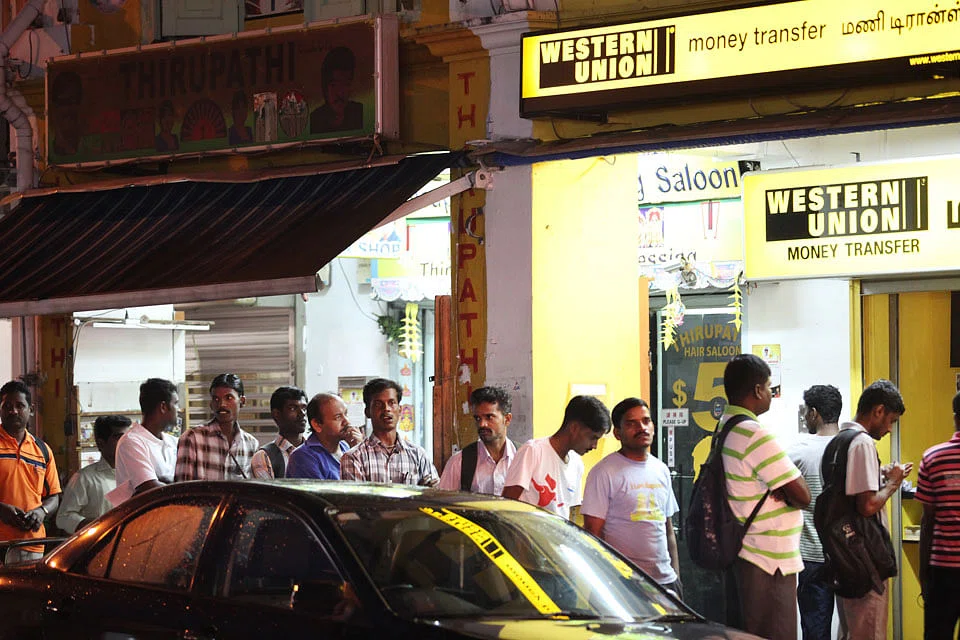
THE growth of the massive wave of financial remittances to Asian and other emerging economies from overseas migrants will slow sharply this year because of various problems in the global economy, according to a new report by the World Bank.
This will particularly impact the top five remittance recipient countries: India, China, the Philippines, Mexico and Nigeria from where migrants go chiefly to the US, Saudi Arabia, Germany, Russia and the United Arab Emirates, the report said.
The projected slowdown in the value of remittances is due to "weak economic growth in Europe, deterioration of the Russian economy and the depreciation of the euro and rouble".
Officially recorded remittances to the developing world are expected to reach US$440 billion in 2015, an increase of 0.9 per cent over the previous year. Global remittances, including those to high income countries, are projected to grow by 0.4 per cent to US$586 billion.
"The 2015 remittance growth rates are the slowest since the global financial crisis in 2008/09," the World Bank said. "Nonetheless, the number of international migrants is expected to exceed 250 million in 2015, and their savings and remittances are expected to continue to grow."
Meanwhile, the volume and value of migrant remittances remain huge in both absolute and relative terms, the World Bank's Migration and Development Brief pointed out, noting that total remittances in 2014 reached US$583 billion.
"This is more than double the ODA (official development assistance) in the world," said Kaushik Basu, World Bank chief economist and senior vice-president, at the launch of the report. India received US$70 billion, China US$64 billion, the Philippines US$28 billion.
"With new thinking these mega flows can be leveraged to finance development and infrastructure projects," Mr Basu suggested. "Israel and India have shown how macro liquidity crises can be managed by tapping into the wealth of diaspora communities", he said.
Mexican migrants have boosted the construction sector. Tajikistan manages to nearly double its consumption by using remittance money. Migrants and remittances are clearly major players in today's global economy."
The report estimated that as much as US$100 billion in migrant savings could be raised annually by developing countries through reducing remittance costs and migrant recruitment costs, and mobilising diaspora savings and philanthropic contributions from migrants.
In line with the expected global economic recovery next year, global flows of remittances are expected to accelerate by 4.1 per cent in 2016, to reach an estimated US$610 billion, rising to US$636 billion in 2017.
Remittance flows to developing countries are expected to recover in 2016 to reach US$459 billion, rising to US$479 billion in 2017.
In addition to sending money to their families, international migrants hold significant savings in their destination countries, the World Bank noted. Diaspora savings attributed to migrants from developing countries were estimated at US$497 billion in 2013, the latest data available.
The global average cost of sending US$200 held steady at 8 per cent of the value of the transaction, as at the last quarter of 2014, the World Bank observed.
"Despite its potential to lower costs, the use of mobile technology in cross-border transactions remains limited, due to the regulatory burden related to combating money laundering and terrorism financing, said the report.
"International remittances sent via mobile technology accounted for less than 2 per cent of remittance flows in 2013, according to the latest available data."
TRENDING NOW

Nvidia reinstates Jensen Huang as CEO; Trump says move poses no national security risk

Indonesia’s coal tycoon Low Tuck Kwong replaced as Bayan Resources president-director

Nvidia surges 33% after reinstating Jensen Huang, reviving AI trade; stocks soar in US and Europe

Consider lowering homeownership barriers for some non-resident foreigners

