

Adrian Cheng’s exit as New World Development’s CEO bodes well for family-linked listed groups
Regardless of a group’s ownership, delivering performance matters
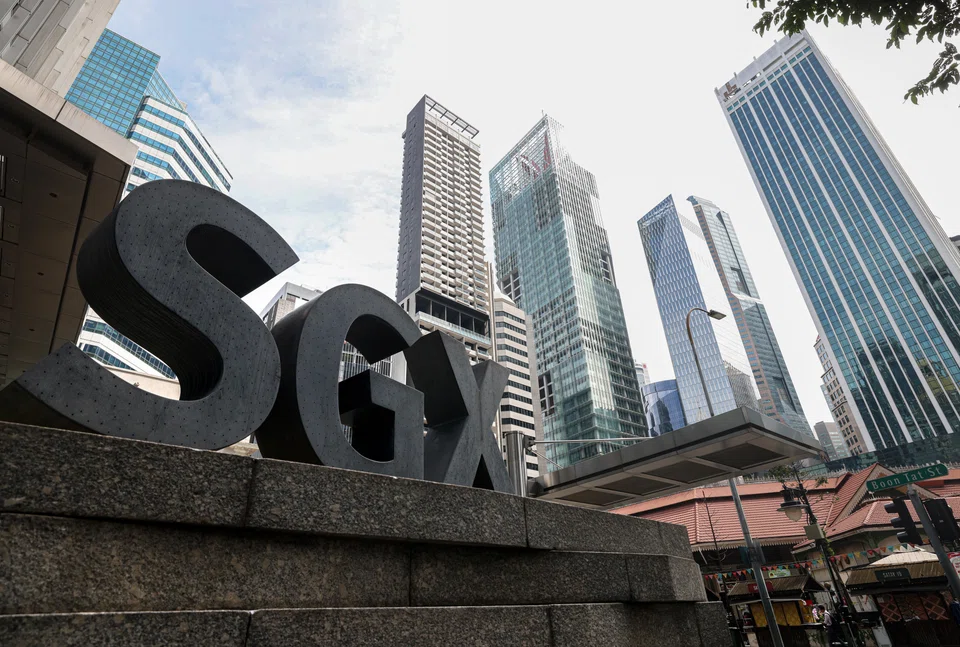
MANY larger Singapore-listed groups count either state investor Temasek or a family as a major shareholder. The holding of a major stake in a listed entity – possibly amounting to a controlling interest – by Temasek or a family affects the entity’s trading liquidity.
Still, small investors can benefit from a listed group having a strong major shareholder. A large shareholder has plenty of skin in the game and much incentive to help ensure a business is well-run and delivers good returns to investors. Also, a focus on growing a company’s dividends helps both the major shareholder as well as small investors.
However, might family-owned groups be less well-managed than Temasek-linked entities because family members hold top executive positions possibly when they are not the best candidates, or occupy such positions for too long?
Increasingly, the quality of corporate leadership matters as many sectors see fierce competition and thin profit margins. Moreover, business leaders today confront myriad challenges, such as geopolitical uncertainties, possible weakness in global growth, supply-chain disruptions, the green transition and the rise of artificial intelligence.
New World Development’s travails
Late last month, Adrian Cheng resigned as chief executive officer of Hong Kong-listed New World Development to “devote more time on public services and other personal commitments”. This development, which rocked Hong Kong’s corporate circles, should give investors here second thoughts about applying a discount to family-owned listed businesses due to concerns over governance and quality of leadership.
Cheng was New World’s CEO for over four years. He stepped down as the group, whose core business includes property, hotels and other strategic businesses, reported a loss of HK$11.8 billion (S$2 billion) for the financial year ended June.
Cheng was instrumental in rapidly expanding the group’s business in Hong Kong and China with large-scale projects including malls and offices. He is closely linked with bringing art, culture and nature into New World’s retail projects, and differentiating them by redefining luxury. For example, New World owns ornate K11 Musea, located in Hong Kong’s Victoria Dockside and boasts a cultural-retail concept.
However, New World came under pressure amid concerns over its relatively high level of leverage against a backdrop of an uncertain property market in Hong Kong and China, and higher financing costs. During Cheng’s term as CEO, New World’s shares fell by about 78 per cent. The shares rallied when trading resumed after the announcement of results and his departure as CEO.
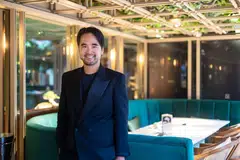

Cheng, who is in his mid-40s, boasts blue-chip credentials, having graduated from Harvard University in the US and worked in leading banks. His family holds a major interest in New World, which was founded by his grandfather Cheng Yu Tung, a former gold shop apprentice, who became one of Hong Kong’s richest persons. Cheng’s father Henry is New World’s chairman.
Lessons from Adrian Cheng’s departure
Despite his pedigree and his family being synonymous with New World, Cheng paid for the group’s weak financial and share price performance under his watch. This episode holds valuable lessons for Singapore-listed family-linked companies.
First, a family member’s position as the CEO of a listed group, where the family is a large shareholder, is not guaranteed. Any CEO must continuously earn the right to lead by delivering sound financial performance and win the support of key stakeholders such as investors, staff and lenders. After all, faltering results and a weak share price hurt both a major shareholding family as well as other shareholders.
Second, boards of directors of family-owned listed companies must be fully aware of their fiduciary duties. The boards need to be thorough and objective in evaluating and appointing family members versus outsiders to top positions. Getting such decisions wrong can seriously harm a business and possibly open the board to heavy criticism.
Third, a scion of a wealthy family needs to carefully weigh whether to step forward to lead a listed group owned by his family. Carrying a famous surname can both be a boon and a bane. The scion will face intense scrutiny and will need to work assiduously to deliver results should he assume corporate leadership.
Ultimately, investors need not apply any governance or management discount to family-linked listed companies if they are confident that executive positions are held by family members only when they are the best fit, and that family members with executive positions will need to earn their spurs by delivering sound financial performance.
Bottom-line focus
At the recently held ceremony and dinner for the Sustainability Impact Awards, where City Developments Limited (CDL) was lauded for its capacity-building and thought leadership in climate action, CDL’s group CEO Sherman Kwek was spot on to remark that while environmental, social and governance issues matter, the group is deeply focused on its economics.
Kwek is a third-generation business leader whose family is a major shareholder of listed property and hotel group CDL. His father Kwek Leng Beng is CDL’s executive chairman, and his grandfather Kwek Hong Png founded Hong Leong Group.
Indeed, regardless of a listed group’s ownership and how it excels on various fronts, it must deliver sound financial returns. While the needs of multiple stakeholders may differ, a business doing well financially can go far in winning over capital markets, lenders, suppliers, customers and staff. Sound profitability also allows a company to spend on helping the wider community.
The local bourse has numerous family-linked companies, including groups where family members hold executive positions. The boards of family-linked listed groups must appoint the right leaders, hold such persons accountable and proactively unlock shareholder value.
If the above is done right, investors need not fear that a family-linked listed group will necessarily fall short in areas such as governance, quality of leadership, innovation, shareholder friendliness, financial strength and so forth.
As various family-linked listed groups here undergo generational leadership change, may they continuously do right by shareholders so as to win the backing of investors who have plenty of choice.
Decoding Asia newsletter: your guide to navigating Asia in a new global order. Sign up here to get Decoding Asia newsletter. Delivered to your inbox. Free.
Copyright SPH Media. All rights reserved.
TRENDING NOW
Temasek’s Wan Chee Foong to helm PIL, Lars Kastrup to be board adviser
Chagee, Mixue and Luckin won the market. Sustaining their edge is the harder part

He built the Vingroup empire. Now South-east Asia’s richest man is handing some key roles to his sons

One-third of Singapore-listed firms at risk in severe AI downturn: MAS

