AI frenzy drives Hong Kong share sales to record US$47.5 billion in Q3 despite stock sell-off
Share sales have topped US$120 billion in Q3 as boom extends across Asia-Pacific
[HONG KONG] Bankers in Hong Kong skipped the summer break as an artificial intelligence-fuelled rush for capital sent share sales to a record, defying a bruising sell-off in the city’s stocks.
Initial public offerings, placements and block trades raised US$47.5 billion in July-September, the biggest haul ever for the period, according to data compiled by Bloomberg.
That pushed fundraising this year above US$92 billion and within reach of the US$112.5 billion record set in 2021, though the recent surge in bond yields and poor deal performance are making investors and issuers more cautious.
AI has been at the heart of Hong Kong’s deal revival, but this summer brought a new level of intensity. Chinese companies raised ever-larger sums and returned to the market more quickly as they sought to fund expansion in the fast-growing industry.
Alibaba Group Holding’s US$10.2 billion follow-on offering was the biggest transaction during the period, while Zhongji Innolight raised almost US$8 billion in Hong Kong’s largest listing in nearly seven years.
Others tapped investors repeatedly: AI model maker Z.AI has raised US$9.6 billion in 2026 through its IPO, placements and convertible bonds.
“People raise capital right out of lock-up and tend to do so more frequently,” said James Wang, head of Asia ex-Japan equity capital markets at Goldman Sachs Group. “Before, they did it once and it would be quiet for one to two years. Now they do it and three months later they come back. This will continue for a couple of years because of AI. I don’t see that pace slowing down.”
Aside from Z.AI, rival model maker MiniMax Group, as well as chipmakers Shanghai Iluvatar CoreX Semiconductor and Shanghai Biren Technology all returned to the market during that feverish July, soon after their IPO lock-ups expired.
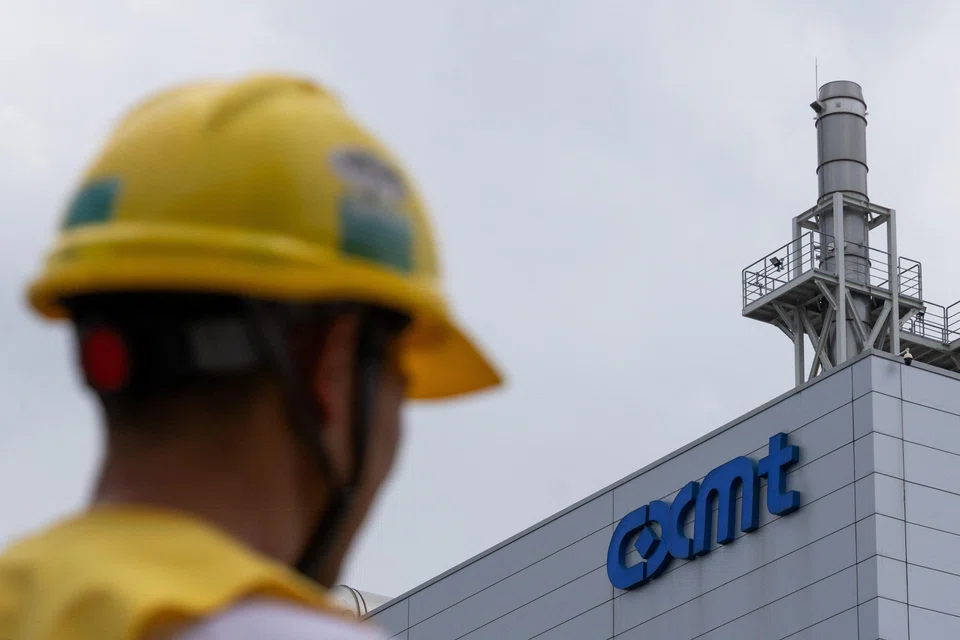
The boom extended across Asia-Pacific, where share sales topped US$120 billion in the third quarter, the most for the period in six years. Mainland China produced some of the region’s biggest deals, including memory chipmaker CXMT’s 66.6 billion yuan (US$9.9 billion) IPO, the country’s second-biggest ever.
SEE ALSO


India roars back
India also staged a comeback after starting 2026 under pressure from the Middle East war, falling stocks and persistent foreign selling.
Share sales raised a record US$26 billion since July, making it the country’s best quarter. The biggest transactions included a US$3.2 billion government sell-down in insurer Life Insurance and the long-awaited $2.4 billion IPO of National Stock Exchange of India, the country’s second-biggest ever.
The rebound came even as the Nifty 50 Index slumped almost 9.5 per cent from its early August peak. Ample domestic liquidity supported demand for new offerings.
The pipeline remains busy. Billionaire Mukesh Ambani’s Jio Platforms is meeting investors ahead of an expected November debut that could rank among India’s biggest IPOs, Bloomberg News has reported.
“We expect to see more IPOs before the year-end,” said Harish Raman, Citigroup’s head of equity capital markets execution, origination and solutions, adding that international investor interest in IPOs was cautiously optimistic despite recent deal performance.
Year-end caution
The fundraising boom has unfolded against a much shakier market backdrop.
The MSCI Asia-Pacific Index slumped as much as 7 per cent in July as investors questioned whether heavy AI spending could generate sufficient future returns, while Hong Kong’s Hang Seng Tech Index has been on a downward trend in 2026.
Weak deal performance is now testing investor appetite. Of the 10 largest deals in Hong Kong since the start of July, just two are trading above water, while expectations for further US Fed rate hikes are tightening financial conditions globally.
“If you look at overall sentiment, having large transactions trading through the offer price is not helpful for risk appetite,” said Martin Zoll, global head of equity capital markets and global co-head of strategic equity and financing at HSBC Holdings. “So as we go into year-end, I would expect that investors potentially become more selective about where they put their money to work.”
Several recent Hong Kong listings have traded down on their first day, including fast-fashion retailer Shein Global Holdings and chipmaker Longsys Electronics.
Still, the pipeline remains substantial, including in markets that have so far played a smaller role in 2026’s boom. Mynt, the company that owns the Philippines’ most popular mobile payment app GCash, has priced what’s set to be the largest-ever IPO in the country.
Australia will also grab a slice of the AI action thanks to the upcoming US$5 billion IPO of data centre operator Firmus Grid, which will be one of the country’s biggest-ever listings.
“Investors will be more selective,” Goldman’s Wang said. “But from the supply side, there’s still a monster amount of deals coming to the market. The question is which will get picked by investors”. BLOOMBERG
Decoding Asia newsletter: your guide to navigating Asia in a new global order. Sign up here to get Decoding Asia newsletter. Delivered to your inbox. Free.
Share with us your feedback on BT's products and services