
Alibaba pushes into robotics AI with open-source ‘RynnBrain’
With the release, Alibaba takes on AI leaders including Alphabet’s Google and Nvidia
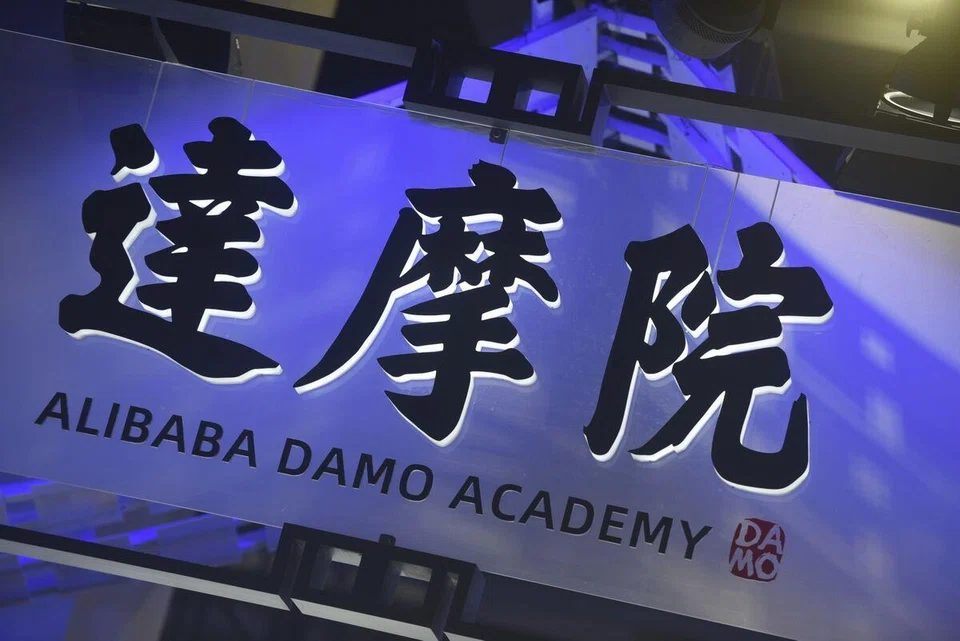
[BEIJING] Alibaba Group Holding debuted an AI model that can help robots and other devices perform real-world tasks, taking another step towards an eventual goal of leading multiple artificial intelligence spheres.
The Chinese company’s Damo Academy introduced an open-source foundation model that engages with the environment, understands space in relation to time and can figure out steps towards completing a task. Dubbed RynnBrain, the description suggests the model can help map objects, predict trajectories and navigate cluttered environments such as a kitchen or factory assembly line.
With the release, Alibaba takes on AI leaders including Alphabet’s Google and Nvidia. The Chinese firm claimed state-of-the-art results on benchmarks against Google’s Gemini Robotics-ER 1.5 and Nvidia’s Cosmos-Reason2.
Trained on Alibaba’s Qwen3-VL vision language model, RynnBrain is available on platforms like Hugging Face and GitHub in multiple versions starting as small as two billion parameters to a more efficient mixture-of-experts version.
It is designed partly for use in a field in which China and the US are vying for supremacy. Beijing has emphasised robotics, including humanoids, as a key prong of a strategic plan to dominate physical AI and reshape sectors from manufacturing to hospitality.
Chinese companies have largely focused on open-source AI, a contrast to the US approach of keeping cutting-edge technology behind proprietary walls.
SEE ALSO




The open sourcing strategy in physical AI – until now mainly confined to releases by academic institutions like Stanford University and University of California, Berkeley – could encourage developers and researchers around the world to refine the technology, eroding the West’s leadership. BLOOMBERG
Decoding Asia newsletter: your guide to navigating Asia in a new global order. Sign up here to get Decoding Asia newsletter. Delivered to your inbox. Free.
Share with us your feedback on BT's products and services