

Apac airlines to increase net profit by 6.5% to US$6.6 billion in 2026: Iata
But overcapacity remains a challenge in the region, putting pressure on yield

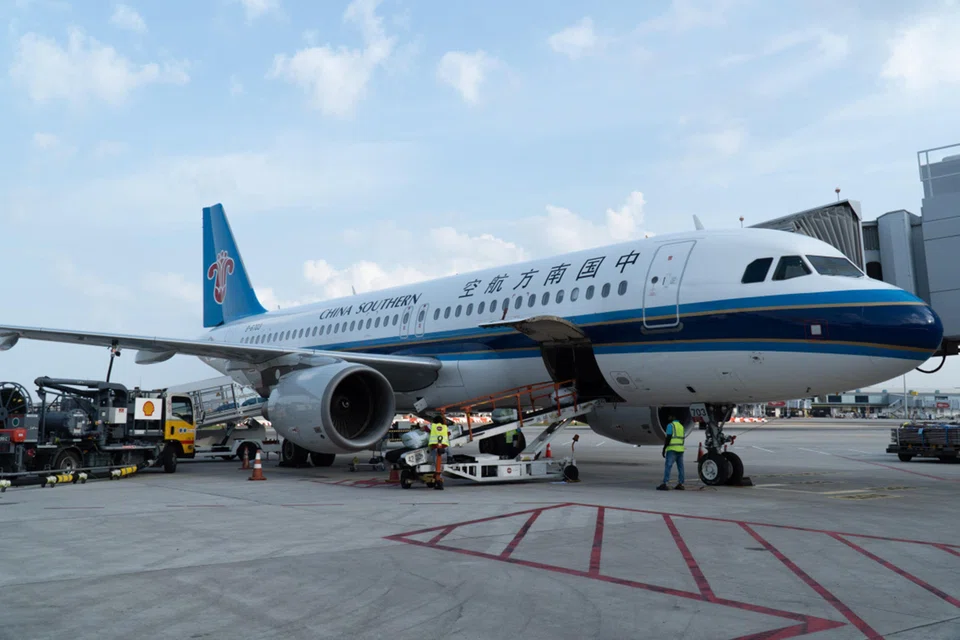
[SINGAPORE] Asia-Pacific airlines are projected to record US$6.6 billion of net profit in 2026, up from S$6.2 billion in 2025, the International Air Transport Association (Iata) said in a media release on Tuesday (Dec 9).
It is relatively on par with its Middle East counterparts’ expected net profit of US$6.8 billion for 2026, while surpassing Latin America’s US$2 billion.
Globally, airlines are expected to record US$41 billion in net profit for 2026, up from US$39.5 billion this year.
To Willie Walsh, Iata’s director general, these numbers are “extremely welcome news”. “(This is) considering the headwinds that the industry faces, (such as) rising costs from bottlenecks in the aerospace supply chain, geopolitical conflict, sluggish global trade, and growing regulatory burdens among them,” he explained.
Walsh said that airlines have built “shock-absorbing resilience” into their businesses that is delivering “stable profitability”.
As for Europe, the region’s airlines are expected to perform strongly in 2026, with an estimated net profit of US$14 billion.
Apac tailwinds for global traffic growth
As for global traffic growth, Apac remains the largest contributor, with the region’s load factors projected to reach 84.4 per cent in 2026 – an all-time high.
This comes amid a positive global forecast for load factors, with airlines around the world expected to fill 83.8 per cent of all seats next year.
However, Iata indicated that overcapacity remains a challenge in Apac amid a slower recovery in international traffic, putting pressure on yields.

Passenger demand stayed “robust” in Apac, with China and India leading regional expansion. This was fuelled by rising tourism activity and a growing middle class.
The Iata report also noted that easing visa requirements for Chinese group tours to South Korea and for visitors to China are expected to stimulate short-term inbound demand, especially during peak holiday periods.
Positive global performance for 2026
On a global scale, operating profit is expected to reach US$72.8 billion in 2026, up from US$67 billion in 2025, which would mean net operating margin rising to 6.9 per cent, from 6.6 per cent.
Total industry revenues are forecasted to reach about US$1.05 trillion in 2026 – a rise of 4.5 per cent from US$1.01 trillion in expected revenues this year.
As for return on invested capital (ROIC), it is expected to stay flat at 6.8 per cent for 2026.
“Despite deleveraging and improved operating profitability, ROIC is expected to remain below the weighted average cost of capital estimated to be 8.2 per cent in 2026,” said Iata.
Passenger numbers are forecasted to reach 5.2 billion in 2026, an increase of 4.4 per cent year on year.
According to the airline trade body, cargo volumes are expected to reach 71.6 million tonnes in 2026, a 2.4 per cent rise on the year.
Air cargo performance had “defied many predictions of gloom” to hold its own amid rapidly changing trading conditions this year.
“The resilience in air cargo has been particularly impressive,” said Walsh. “Notably, air cargo enabled front-loading to deliver products ahead of tariff deadlines, and it flexibly accommodated demand surges as tariffed goods normally destined for the US found new markets.”
Mixed macroeconomic outlook
On a whole, the expected revenue growth of 4.5 per cent in 2026 for the airline industry would outpace operating expense growth of 4.2 per cent to US$981 billion.
This would lead to a US$1.5 billion improvement in industry-wide net profitability in 2026, said Iata.
Macroeconomic factors impacting airlines are mixed for 2026, noted the report. While gross domestic product growth is expected to be largely stable at 3.1 per cent, and inflation is expected to ease slightly to 3.7 per cent, world trade growth is expected to be “anaemic” at 0.5 per cent.
Infrastructure constraints are also not expected to ease significantly in 2026, Iata added.
However, a weaker US dollar is expected to benefit non-US dollar-based airlines’ profitability and margins, by reducing US dollar-denominated costs such as fuel, aircraft leases and maintenance.
Based on Iata estimates, 55 to 60 per cent of global airline costs are denominated in US dollars, compared to 50 to 55 per cent on the revenue side.
“A 1 per cent weakening of the US dollar against global currencies hence may lift global airline profits by 1 per cent and improve operating margins by around 0.05 percentage point,” the report indicated.
Decoding Asia newsletter: your guide to navigating Asia in a new global order. Sign up here to get Decoding Asia newsletter. Delivered to your inbox. Free.
Copyright SPH Media. All rights reserved.