
Global Enterprise logo
BROUGHT TO YOU BYsc logo

Asia-Pacific infrastructure investing is a long game at KKR

That is the only way to reap rewards down the road, says Projesh Banerjea, a director at the asset manager and a member of its Asia-Pacific infrastructure team

Joan Ng
Published Mon, Sep 23, 2024 · 05:15 PM
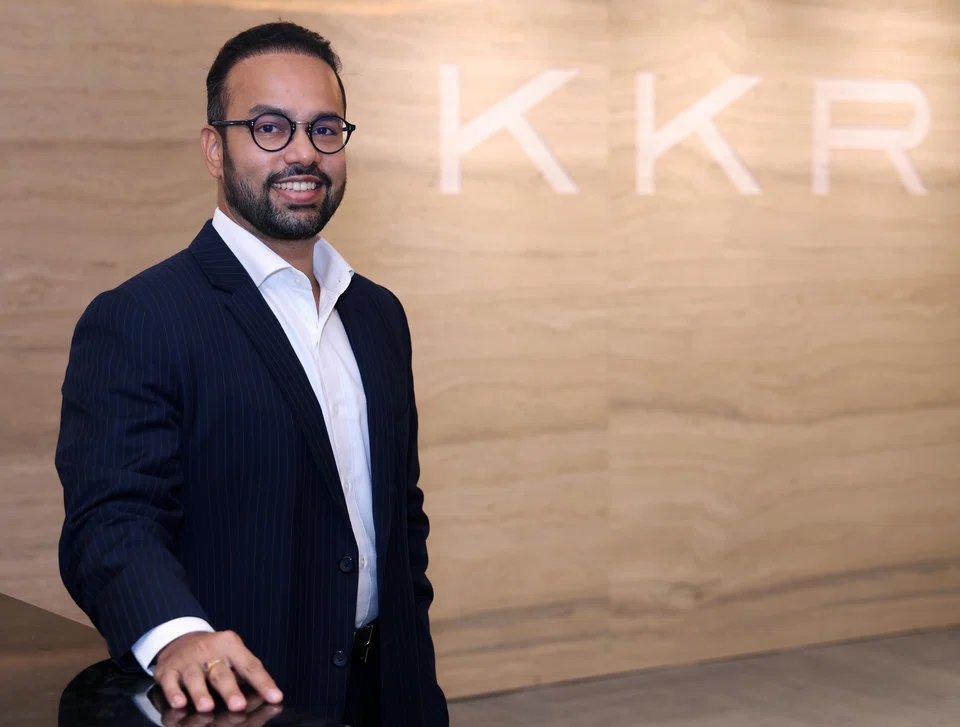
    • Projesh Banerjea, a member of KKR’s Asia-Pacific infrastructure team, says that people misunderstand or underestimate how difficult it is to build critical mass and to build a competitive advantage.
    • Projesh Banerjea, a member of KKR’s Asia-Pacific infrastructure team, says that people misunderstand or underestimate how difficult it is to build critical mass and to build a competitive advantage. PHOTO: YEN MENG JIIN, BT

    IT WAS 2021 when KKR’s South-east Asia infrastructure team first started talking to Singtel about data centres. The introduction came through other KKR colleagues, who had been building a relationship with Singtel since the asset manager set up a Singapore office in 2012.

    Those conversations continued for a while, but it was not till the third quarter of 2022 that discussions turned more serious and substantive. It would take another year before a deal was done.

    Projesh Banerjea, a director at KKR and a member of its Asia-Pacific infrastructure team, said this measured pace should be seen as an indication of the deep commitment KKR has to the region.


    “People misunderstand or underestimate how difficult it is to build critical mass and to build a competitive advantage,” said Banerjea.

    Markets such as North America or Europe are relatively homogeneous, he said, and it would be possible to do a “pretty good job” covering each of those regions with an office or two.

    “(But) you can’t have 10 or 20 people based in Singapore and say I want to cover all of Asia-Pacific,” he added. “You need to invest in deep expertise in each of the markets that you’re in, and really have boots on the ground and a local presence.”

    Asean Intelligence

    Get insights into businesses across South-east Asia

    Get the free report

    The Asian market is also very much based on trust, which takes time to develop. “It’s only if you play the long game that you can reap the rewards down the road,” he said.

    Banerjea’s understanding of the region’s investment scene has been developed over a decade at the Abu Dhabi Investment Authority (Adia), where he was responsible for investing across the transport, energy, and digital infrastructure sectors globally but with a focus on Asia.

    He joined KKR in 2022, and is now part of the team overseeing the largest pan-regional infrastructure fund in Asia-Pacific.

    In February, KKR announced it had closed its second Asia-Pacific infrastructure fund at US$6.4 billion – 64 per cent more than the US$3.9 billion raised for its first infrastructure fund in the region in 2021.

    To deploy those funds, KKR will be turning to those boots it has cultivated on the ground over many years – which Banerjea sees as a significant advantage.

    “That’s the only way to really generate differentiated deal flow. You can wait for banks to come to you with pitch books, and frankly you could be sitting anywhere in the world,” he said, adding that he had been on the receiving end of many such pitches at Adia.

    “But what we were not getting was bilateral conversations, differentiated conversations with the highest echelons of the blue-chip corporates who are looking for a trusted partner; who don’t want to go through the hassle of a large auction process; who are looking specifically for more than just capital.”

    That was just how KKR inked its deal with Singtel a year ago. The day after the 2023 Formula 1 Singapore Grand Prix, KKR announced one of its funds would buy a 20 per cent stake in Singtel’s data centre business. KKR has the option to take this stake to 25 per cent by 2027.

    “There were no banks involved,” Banerjea said, adding that KKR has had a relationship with Singtel for years.

    “That trust and mutual respect is very deep. They were looking for expertise outside of just capital, in terms of helping to build out a platform and support that business as it expands beyond Singapore. We have a track record of delivering on exactly that.”

    That deal soon led to another. In June this year, the two companies announced that a KKR-Singtel consortium will invest S$1.75 billion in data centre provider ST Telemedia Global Data Centres (STT GDC).

    The investment comes with warrants that, if fully converted for an additional investment of S$1.24 billion, would give the consortium an 18.3 per cent stake in STT GDC. The KKR fund’s share of that would be 14.1 per cent.

    According to reports, rivals Apollo Global Management, Blackstone and Stonepeak had also put in bids for the stake.

    STT GDC owns more than 95 data centres across 11 geographies, making it an attractive business in a region with underdeveloped data centre infrastructure.

    Data centres have become a hot asset class on the back of artificial intelligence-driven demand for computing power, but they require large and stable supplies of power – which is harder to find in Asia-Pacific than in the US or Europe.

    This dynamic is true for most of the Asia-Pacific infrastructure story: Quality assets are harder to come by because many economies are relatively less mature.

    Assets also tend to be smaller, which creates diseconomies of scale – just as much due diligence and paperwork is necessary for a large deal as a small one.

    Banerjea said, however, that it is a myth that regulatory risk is higher in this part of the world. “The perception of regulatory risk in Asia is higher, but the reality of that risk is that it’s inherent in a lot of infrastructure assets.”

    KKR has nevertheless tried to stay away from regulated consumer-facing assets. Instead, it has focused more on contracted assets, professional counterparties and markets with long and deep track records. In India, for instance, it owns toll roads, which have a long history of privatisation.

    There is also a conscious effort to stay out of hot markets or to find differentiated ways to enter, leaning on the foundation that KKR has taken the time to build.

    “If it gets too hot, we will sit it out for a while or look at differentiated ways to access that market – lean on existing relationships for differentiated deal flow.”

    The art of investing in Asia often comes down to “building like and trust”, he added. Those are attributes that do not get developed overnight.

    Decoding Asia newsletter: your guide to navigating Asia in a new global order. Sign up here to get Decoding Asia newsletter. Delivered to your inbox. Free.

    Copyright SPH Media. All rights reserved.