Asia’s export growth may slip into negative territory in early-2023

Angela Tan
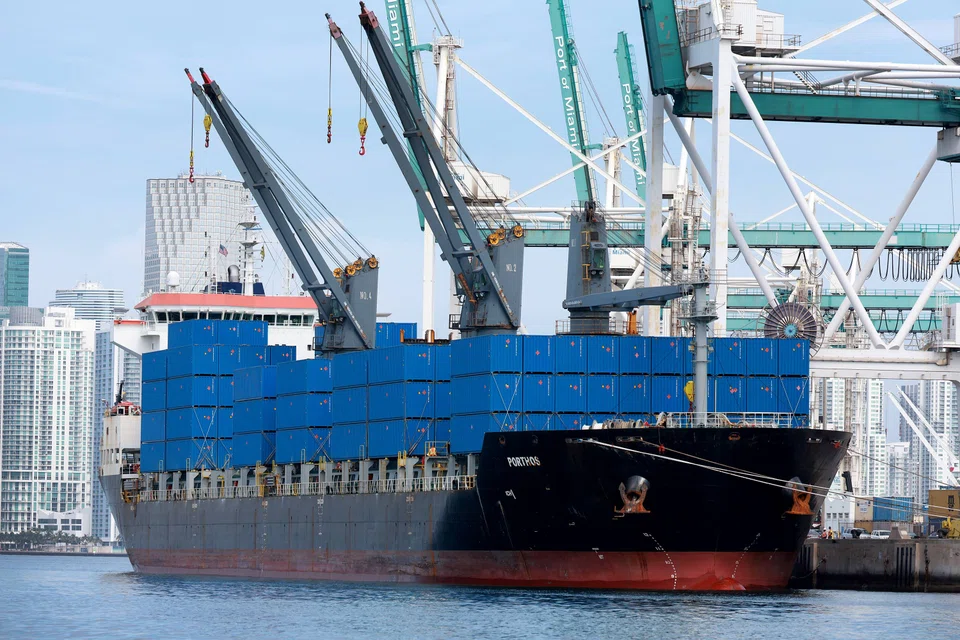
ASIA’S export growth is likely to slump from its mid-teens to the low single-digits by the end of this year, and fall into negative territory in early-2023, as demand from China, the US and Europe slows down, economists warn.
According to Nomura, China’s credit impulse - the ratio of new credit to gross domestic product (GDP) flows - is pointing to a continued slowdown. China’s credit impulse has been a reliable leading indicator of turning points in Asia’s export growth cycle. Past cycles have shown that the spillover effects from China to the rest of Asia have a lag of about 14 months.
Economists Sonal Varma and Toh Si Ying said: “This reflects the importance of China’s own demand in driving Asian exports, but also its indirect effects on global industrial cycles and commodity prices.”
In its 2022 outlook unveiled last December, Nomura had flagged that Asia’s export growth downturn was likely to begin from mid-2022.
Since then, the evidence of weakening export demand has gathered momentum, and export volume growth at 1.5 per cent year-on-year in the second quarter is already much weaker than value growth at 13.8 per cent, the economists said.
“Nomura’s export leading index is pointing south until September. Beyond that, China’s credit impulse suggests that Asia’s export growth is likely to slump from the mid-teens currently to low single-digits by year-end, and into negative territory early next year. Moreover, the trough in the export growth downcycle appears likely to occur only around mid-2023,” Varma and Toh said.

On Wednesday (Aug 17), Nomura cut its 2022 GDP growth forecast for China to 2.8 per cent from 3.3 per cent, on the back of negative developments. These include China’s worsening Covid-19 situation in the past week; the worst heatwave in 6 decades that has led to several provinces either limiting electricity usage or conducting power rationing; and expectations that Beijing will keep its zero-Covid policy until March 2023.
Nomura’s chief China economist Ting Lu cautioned that the Chinese government’s policy response to boost economic growth may be “too little, too late and too inefficient”.
“Beijing will likely do more to arrest the slowdown, but rolling out a comprehensive stimulus package is of low probability in a year of government reshuffle, while the need for maintaining zero-Covid strategy makes conventional stimulus measures much less effective,” he said.
Asia’s exports to China are almost equal to its total exports to the US and Europe combined.
In a note titled ‘Plop’ - What the latest electronics indicators signal for Asia, Frederic Neumann, chief Asia economist at HSBC, said key indicators show a precipitous slide in global new orders for electronics. Asian electronics exports are set to decline in the coming months, pointing to a broader pull-back in shipments that will intensify external headwinds to growth.
Neumann said: “Things are coming back down to earth - fast. True, the headline electronics PMIs (Purchasing Managers’ Index), freshly released for July, don’t look quite so alarming at the surface. But dig deeper, and the stumble becomes apparent.”
Worldwide, new orders relative to inventory - an indicator of near-term production growth - have slumped after a pandemic-related spike, he said.
Global new orders for consumer and industrial electronics have also stumbled. The former has now essentially stalled after its pandemic-induced surge. The latter, after holding up much better in recent months, has started to contract, an early sign of a pull-back in global capital expenditure spending.
The broader pullback in the electronics sector is also evident in the readings for individual markets.
Neumann noted that while the headline measures have only contracted in Taiwan last month, elsewhere the indicators have weakened notably, including in Singapore where underlying shipments especially of chips have stayed rather resilient.
He reckoned that the slump in Taiwan’s new orders could reflect lingering disruptions from stringent Covid-19 control measures in mainland China, and also hints of a broader economic weakness in the mainland. The recent spike in geopolitical tensions is not captured in the survey for July.
“All of this suggests that Asia export growth is bound to weaken notably in the near future,” said Neumann.
Decoding Asia newsletter: your guide to navigating Asia in a new global order. Sign up here to get Decoding Asia newsletter. Delivered to your inbox. Free.
Copyright SPH Media. All rights reserved.