



Asia’s factories stumble as US trade deals fail to revive demand
China, Japan, South Korea and Taiwan are all reporting declines in activity
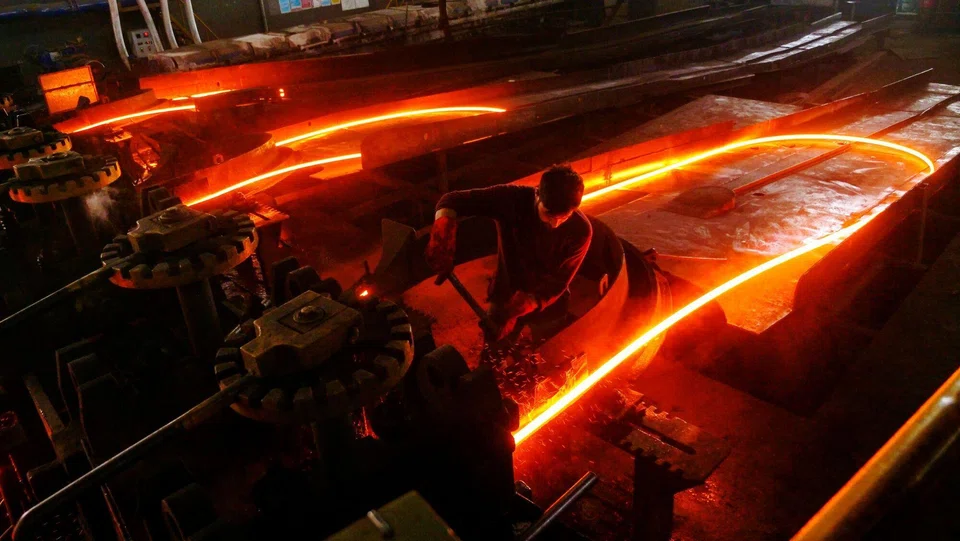
ASIA’S manufacturing powerhouses struggled with sluggish demand in November, extending declines in factory activity as progress in US trade negotiations failed to translate into a significant recovery in orders.
A raft of purchasing managers’ indexes (PMIs) on Monday (Dec 1) showed diverging conditions across the region, with China, Japan, South Korea and Taiwan all reporting declines in activity while South-east Asian economies mostly saw growth.
In China, the world’s largest manufacturer, factory activity slipped back into contraction, a private-sector PMI showed, a day after Beijing’s official measure showed activity falling for the eighth consecutive month, albeit at a slower pace.
“Container throughput at Chinese ports was little changed last month compared to October. To the extent that demand did improve, it didn’t do much to support production amid already high inventory levels – the output component dropped to a four-month low,” Zichun Huang, China economist at Capital Economics, said in a note.
“And while the output price component edged up slightly, it stayed at a low level, pointing to persistent deflationary pressures.”
Still, Capital Economics noted a general disconnect between the PMIs and hard trade data from across Asia.
“Exports from most of Asia have been surging in recent months and we think the near-term outlook for export-driven manufacturing sectors in the region remains favourable,” Shivaan Tandon, Asia economist at Capital Economics, said in a separate report.
Exporters navigating murky trade conditions
Across Asia this year, businesses in major exporting nations have been scrambling to navigate the uncertainty created by US President Donald Trump’s sweeping tariffs.
While Trump’s trade deals with countries such as Japan and South Korea and lowered tensions with China have given firms some confidence, many are still adjusting to the new US trade reality.



Japan’s PMI showed new orders continued to decline, stretching the downturn to two-and-a-half years, blamed on factors such as a sluggish global business environment, tighter client budgets and subdued capital investment.
Official data on Monday also showed Japanese corporate spending on factories and equipment rose 2.9 per cent in July to September versus the same period a year prior, slowing from the previous quarter.
South Korea’s factory activity contracted for a second month in November, though a finalised trade deal with the United States brought some clarity for manufacturers.
Separate data showed South Korean exports rose in November for a sixth consecutive month, beating market expectations, as chip sales hit a record on strong technology demand, while autos also jumped after a US trade deal.
Taiwan’s PMI showed factory activity continued to fall, but at a slower pace.
Meanwhile, Asia’s emerging-market manufacturers remained outperformers with Indonesia and Vietnam both reporting brisk growth in factory activity and Malaysia swinging back to growth.
India’s factory activity growth slowed from October’s strong reading, however, the country’s PMI remained well above those of its peers, aligning with other indicators that show strong growth in Asia’s third-largest economy.
Gross domestic product in the South Asian nation grew at its fastest pace in 18 months in the July-September period, data released on Friday showed, lifted by robust consumer spending. REUTERS
Decoding Asia newsletter: your guide to navigating Asia in a new global order. Sign up here to get Decoding Asia newsletter. Delivered to your inbox. Free.
Share with us your feedback on BT's products and services
TRENDING NOW

Government to bring forward raising of retirement age, give employers more financial support to create flexi-load jobs

If Europe goes to war, the fallout will be felt in East Asia

Former minister Maliki Osman, Revolut chairman join Asia Gulf Holdings advisory board

Small nuclear reactors could boost the Asean Power Grid: GE Vernova executive

