


Australian markets assume business as usual under new government
 Add BT as a preferred source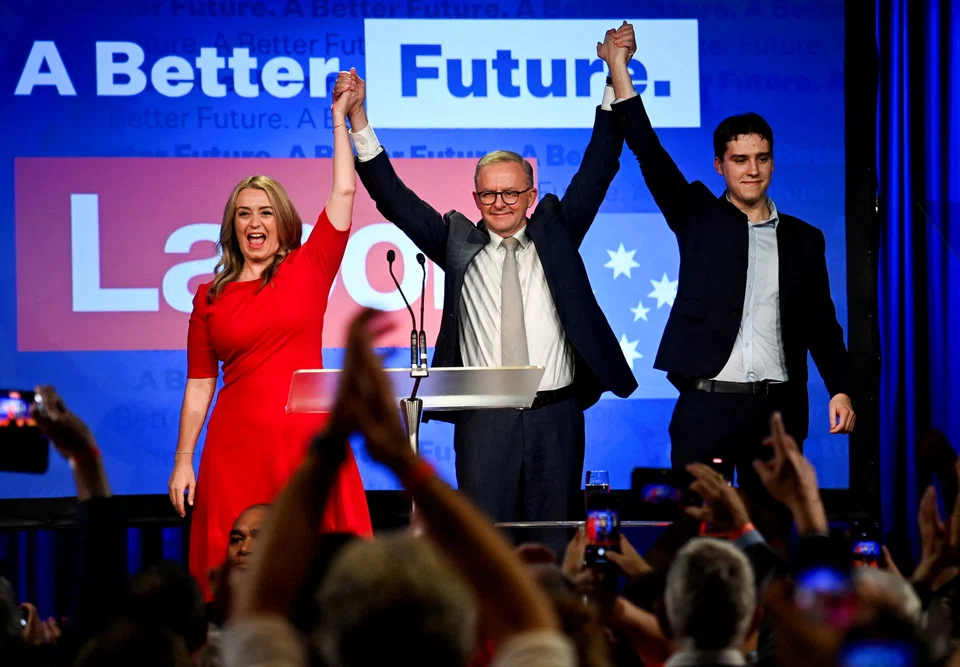
DeeperDive is a beta AI feature. Refer to full articles for the facts.
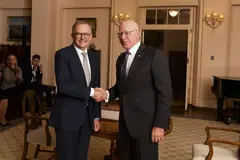
AUSTRALIAN financial markets offered a muted reaction to a change of federal government on Monday (May 23) with the outcome already priced in and no radical change in economic course expected.
The victory of the centre-left Labor Party after 9 years of rule by the Liberal National Coalition had been flagged by opinion polls for weeks. It also seemed likely Labor could hold majority control and thus avoid a hung Parliament.
“A majority government carries the advantage of more certainty around the policy formation process and the government’s fiscal strategy more broadly,” said Gareth Aird, head of Australian economics at CBA.
“In our view there was little proposed by the incoming government during the election campaign that at this stage requires us to revisit our economic forecasts,” he added.
In particular, he saw few implications for the independent Reserve Bank of Australia (RBA) which this month began its first tightening cycle in more than 11 years.
The market continues to wager on another quarter-point rate increase to 0.60 per cent in June, and a string of moves to around 2.5 per cent by year-end.
Navigate Asia in
a new global order
Get the insights delivered to your inbox.
The Australian dollar was 0.7 per cent firmer at US$0.7088, though that had more to do with an improvement in global risk appetite than the election.
The ASX 200 share index was a shade firmer, while debt markets were equally unfazed with 10-year bond futures up 3 ticks at 96.700.
“Our base case is that the election outcome will not have major near-term fiscal implications,” said Andrew Boak, an economist at Goldman Sachs.


“Our analysis suggests Australian elections tend to have a modest temporary negative impact on ‘soft data’ such as consumer/business confidence, and very little real impact on ‘hard data’ such as consumer spending or business investment.”
Boak noted the success of the Green Party and climate-focused independents could eventually push the Labor government towards more ambitious targets on emission reductions.
Australia’s largest electricity provider and biggest polluter, AGL Energy, said it shared Labor’s ambitions for decisive action on climate change and would review whether it could accelerate the closing of its coal-fired plants.
AGL is looking to split its coal-fired power plants from its other businesses, but faces opposition from billionaire shareholder Mike Cannon-Brookes. REUTERS
Decoding Asia newsletter: your guide to navigating Asia in a new global order. Sign up here to get Decoding Asia newsletter. Delivered to your inbox. Free.
Share with us your feedback on BT's products and services
TRENDING NOW

Shelving S$5 billion office redevelopment plan proved ‘wise’ as geopolitical risks mount: OCBC chairman

Eurokars Group introduces rental car franchises Enterprise Rent-A-Car, National Car Rental, and Alamo to Singapore

20 photos that show how dramatically Singapore has changed in two decades
Singapore’s key exports up 15.3% in March from electronics surge, exceeding forecasts

