Back to Earth for SpaceX? Why the US$2 trillion titan shed US$600 billion in 3 days
Shares of the Elon Musk-led company fall 16% on Tuesday

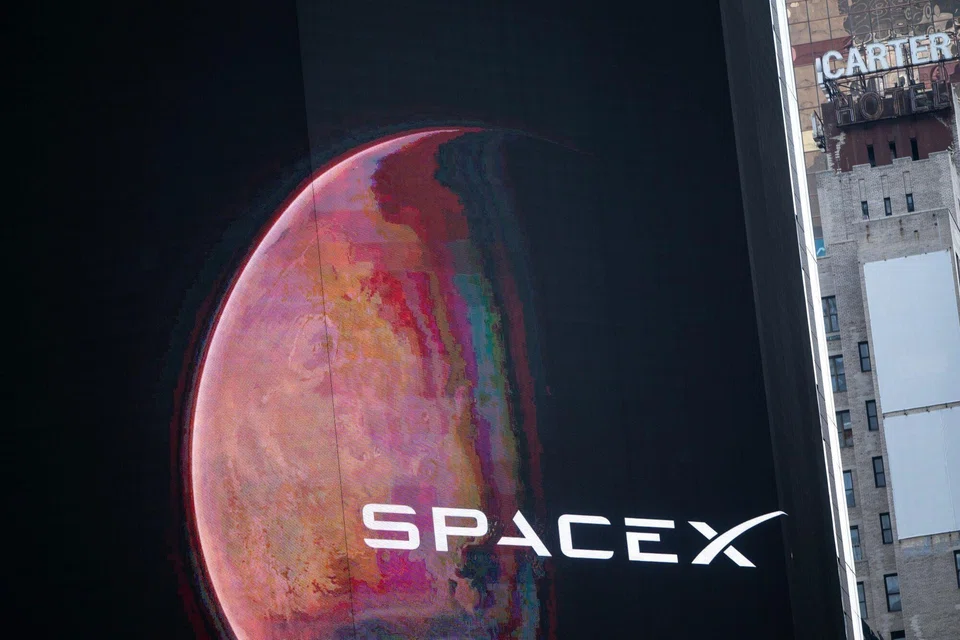
[SINGAPORE] SpaceX’s highly anticipated debut in the public markets ended its first week on a euphoric high, but gravity has since caught up with the space exploration and artificial intelligence giant.
On Tuesday (Jun 23), shares of the Elon Musk-led company slipped for a third consecutive day, falling 16 per cent to close at US$154.60 after its announcement that it is selling investment-grade bonds for the first time.
Over this three-day period, the counter erased US$600 billion in market value, bringing its market capitalisation to just above the US$2 trillion mark.
The sudden reversal comes mere days after a US$75 billion initial public offering (IPO) that was reportedly more than four times subscribed.
Why is SpaceX suddenly falling, and what does its recent foray into the debt market have anything to do with it? The Business Times breaks down what is driving the sell-off, and what it means for retail and institutional investors.
SpaceX: a valuation bubble?
SpaceX’s rapid appreciation positioned it as the sixth-largest public company in the US as at the Jun 22 market close, trading just below Microsoft and Amazon.
Some analysts flagged that its asset prices may be detached from tangible fiscal metrics – that the prices no longer reflect actual or forward-looking values such as sales, revenue, earnings or profits.
Ipek Ozkardeskaya, senior analyst at Swissquote bank, saying that “speculative excess is becoming impossible to ignore”, warned of an impending market correction. “SpaceX can’t be worth US$2.66 trillion, full stop.”
She highlights that unlike its mega-cap peers – such as Nvidia, Alphabet, Apple and Microsoft, which post annual net incomes ranging from US$73 billion to US$132 billion – SpaceX remains unprofitable, posting a US$5 billion loss over the same fiscal period.


The post-IPO spike and drop were also fuelled by a supply squeeze.
Swiss bank Lombard Odier noted in a Jun 16 market note that “the free float of SpaceX – at around 4 per cent of its market capitalisation – is meaningfully below typical levels, offsetting the fact that the value of shares floated is the largest offering on record.”
New debt launch triggers sell-off
Monday’s sell-off was triggered by the news that SpaceX was looking to borrow up to US$20 billion through a bond sale.
Ozkardeskaya called this move “quite unusual for a company that is burning cash”.
“The fact that it is jumping on the bond train to fund excessive AI and infrastructure spending revives earlier concerns that Big Tech may be spending too much on AI infrastructure and increasingly financing that spending through debt,” she said.
S&P, which grades SpaceX lower than Moody’s equivalent grading at BBB, expects the company to remain cash-flow negative until 2030, with the burn rate rising sharply in 2027, and again in 2028.
To finance that gap, SpaceX is expected to lean much more heavily on debt, with borrowings climbing to US$132 billion in 2028.
While the debt issuance gives the cash-burning company ample leeway to fund its capital-intensive operations, it has spooked equity investors.
The introduction of high-grade debt adds fixed-interest obligations to a company already posting losses, raising questions about its fiscal sustainability.
Ross Pamphilon, chief investment officer for fixed income at Impax Asset Management, told Bloomberg that SpaceX is asking investors to finance a business that is both unusually strong and unusually hard to model.
Much of SpaceX’s near-term spending is tied to projects that its supportive credit investors expect would pay off sooner rather than later.
SpaceX’s dominance in the launch market and its other promising prospects in AI-related deals have kept investors willing to take a leap of faith, even as the equity cushion sitting beneath bondholders is facing scrutiny.
For others, it may appear a “problem for risk management”, Ozkardeskaya said.
“If major stock and bond indices are driven by the same factors, they can no longer effectively balance each other. If anything goes wrong on the AI front – whether due to disappointing revenues, excess capacity, or slowing adoption – a seemingly well-diversified portfolio could start taking in water from both ends,” she said.
What’s next for SpaceX?
For retail investors wondering if it is too late to get in on the action, the current landscape leans towards a seller’s market, given the restricted initial free float.
This dynamic may shift once post-IPO lock-up agreements expire and the new shares hit the market.
Institutional investors will then likely be forced to buy SpaceX stock to match major index weights.
Lombard Odier expects SpaceX’s inclusion in the benchmark indices to rise from 0.1 per cent to between 1 and 1.5 per cent. Analysts warn, however, that if the company’s operations disappoint, this high index concentration could pose risks to the broader market.
Despite near-term volatility and the risk of temporary equity oversupply, wealth managers remain broadly optimistic about the sector’s structural demand.
Lombard Odier suggested that the broader equity market remains supported by robust corporate earnings and a resilient macroeconomic backdrop.
Its note said: “This year, geopolitics, inflation and AI bubble concerns have all failed to derail equity markets. We do not expect the new IPO wave to be any different.”
Julius Baer analysts echoed this sentiment in a Jun 5 note, suggesting that fears over whether markets can absorb the additional supply of shares are overstated.
They view the current IPO revival as evidence of improving confidence in capital markets, noting: “Selectivity will remain essential, but the next generation of public companies is likely to create attractive opportunities for both active and passive investors.”
Decoding Asia newsletter: your guide to navigating Asia in a new global order. Sign up here to get Decoding Asia newsletter. Delivered to your inbox. Free.
Copyright SPH Media. All rights reserved.