



Bhutan’s double bet: Mindfulness and nature to drive tourism and investment
At the heart of the country’s transformation is the Gelephu Mindfulness City, an urban project thrice the size of Singapore

[THIMPHU, BHUTAN] Bhutan, long regarded as one of the world’s most serene and isolated destinations, is opening a new chapter – one that seeks to blend its spiritual heritage with modern economic ambitions.
At the heart of this transformation is the Gelephu Mindfulness City (GMC), a massive urban project in southern Bhutan, designed to attract high-quality foreign direct investment while preserving the kingdom’s ethos of Gross National Happiness.
Envisioned as both an economic and spiritual hub, the Mindfulness City represents a bold experiment in development, in which governance is rooted in Bhutanese values, yet informed by globally recognised frameworks for transparency, regulation and innovation.
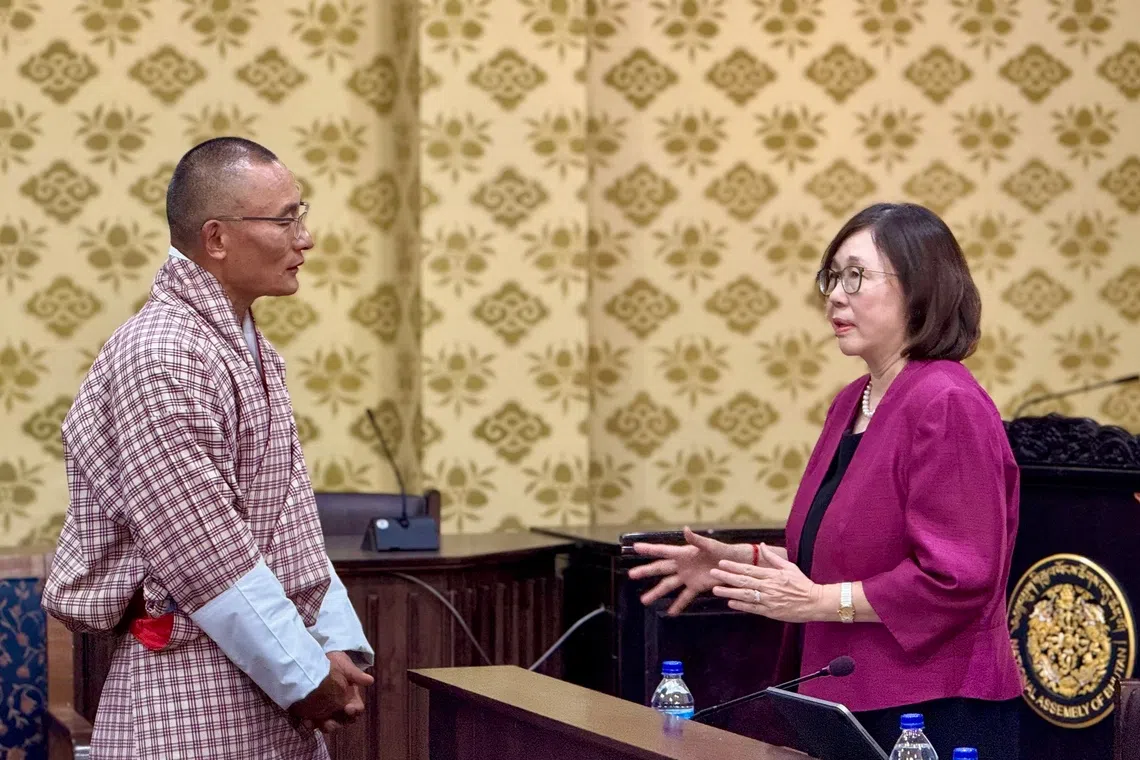
In June, Bhutan Prime Minister Tshering Tobgay welcomed about 20 guests, including members of Singapore media who were there at the invitation of Chan Brothers Travel, to a meeting in his office at the capital city Thimphu.
He said that construction of an international airport in Gelephu begins in July, marking a significant milestone for the US$100 billion GMC development.
Located strategically near the Indian border, the airport is intended to serve as Bhutan’s second international gateway, easing the burden on Paro International Airport – currently the only port of entry for air travellers.
Spanning nearly 732,000 square feet, the new airport is designed to handle up to 123 flights daily and 1.3 million passengers annually, said Danish architecture firm Bjarke Ingels Group, which is leading its design.
Though modest by regional standards, the facility is a major leap for a Himalayan kingdom that caps tourist arrivals at 300,000 a year.
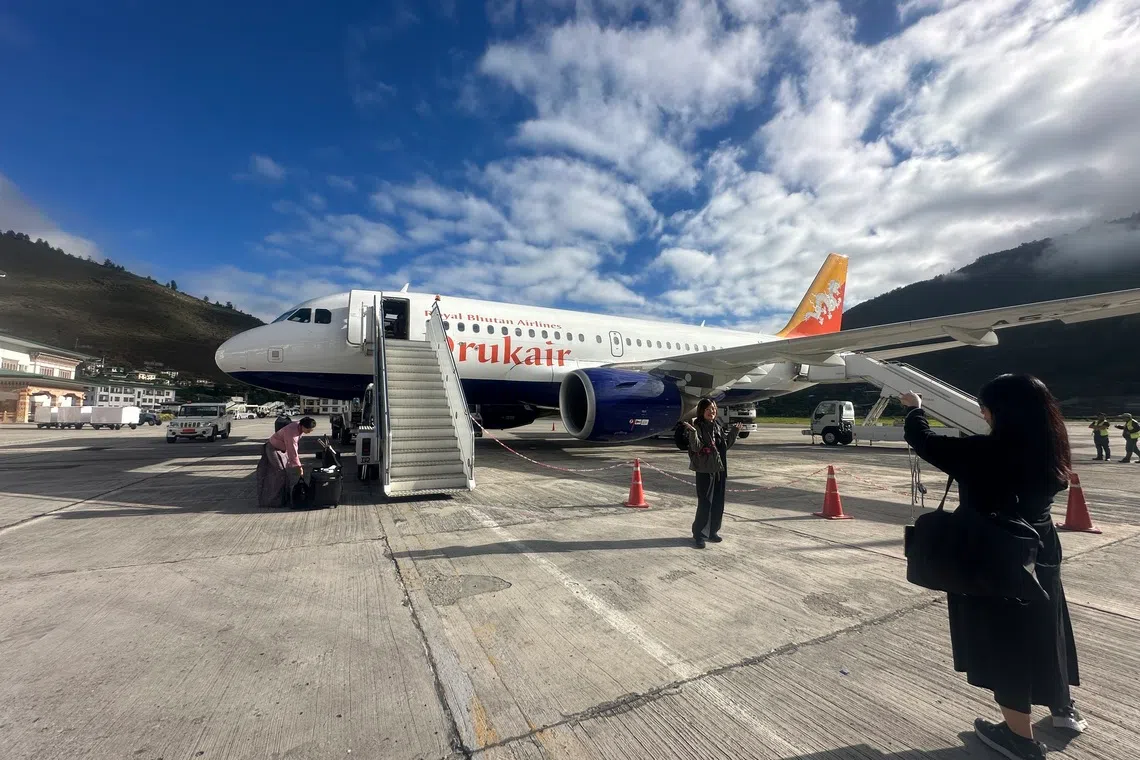
Nestled among 5,000-m-high peaks, Paro International Airport demands exceptional skill of pilots. Globally, only about 50 of them are certified to take off and land in this challenging airport – on manual mode and with no help from radars.
SEE ALSO





The new Gelephu airport is expected to transform accessibility and signal Bhutan’s readiness to welcome a new wave of visitors, investors and innovators.
Former CapitaLand chief executive officer Liew Mun Leong was appointed as CEO of GMC in October 2024. He now oversees the city’s strategic direction, infrastructure roll-out and global partnerships.
“GMC is a carefully designed special administrative region – what I call our micro state, three times the size of Singapore, with its own set of rules and regulations,” said Tobgay.
A gateway to growth
GMC, more than 2,500 sq km in size, will be developed in phases over the next 21 years. It is envisioned as a future-ready city, hosting sectors as diverse as finance, green energy, education, healthcare, logistics and spirituality – all anchored in sustainability and well-being.
To fund its early development, the Bhutanese government launched the Gelephu Mindfulness City Nation Building Bond in December 2024. By June 2025, the initiative had raised 3.3 billion ngultrum (S$49.1 million), well above its original target of two billion ngultrum.
Singapore has played an instrumental role in advising Bhutan on the legal and institutional design of GMC. The city-state’s legal system has inspired the adoption of 18 Singaporean laws into GMC’s framework. These cover company incorporation, employment law and taxation.
“Singapore is a role model we would like to adopt,” said Tobgay, pointing to the country’s strengths in governance, regulation and long-term planning.
Reversing the brain drain
Beyond economic development, GMC is a strategic response to one of Bhutan’s most pressing challenges: brain drain.
In 2024, youth unemployment was at 19 per cent, prompting many young Bhutanese to seek opportunities overseas – particularly in Australia.
The trend has deepened over the past decade, with estimates suggesting that between 50,000 and 65,000 Bhutanese have migrated abroad in the last eight years.
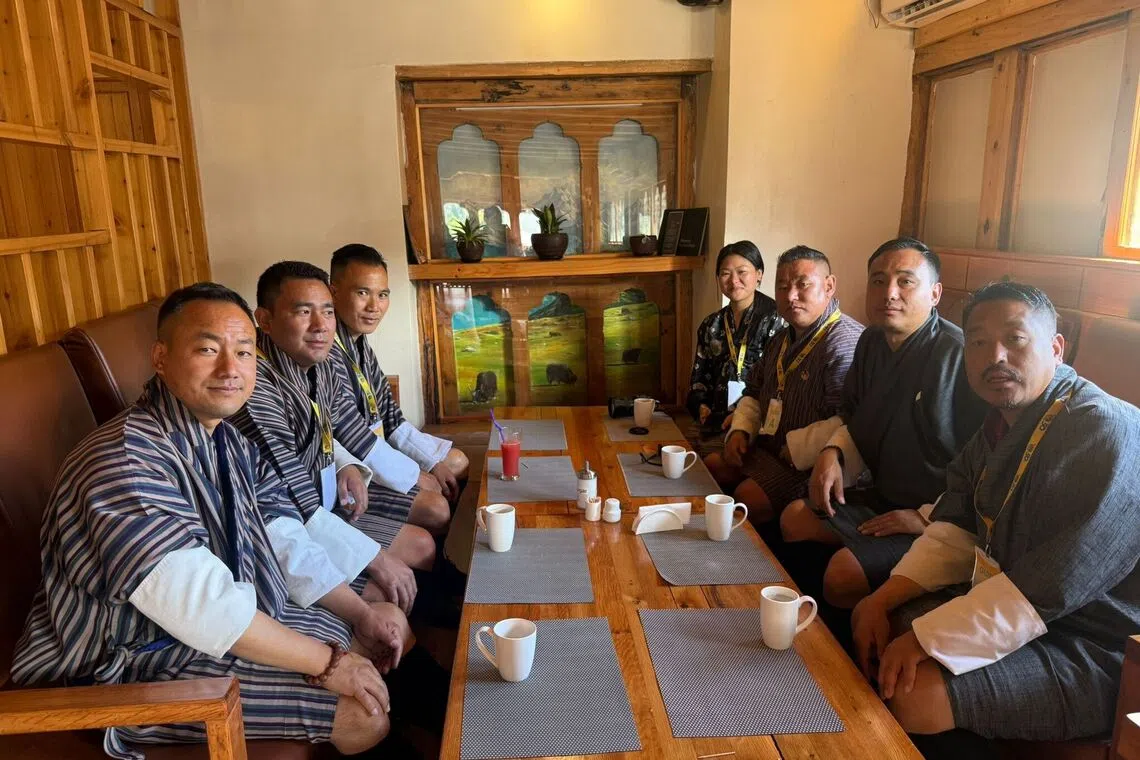
“We are not stopping young talent from going out and exploring the world… But if they don’t return, a small country like ours will suffer. In some ways, we are the victims of our own success,” Tobgay said.
Bhutan offers 12 years of free public education, and youth literacy rates are nearing 100 per cent. Enrolment among children aged six to 12 in the country’s 1,100 schools exceeds 98 per cent.
“We hope to create more job opportunities, good-quality and higher-paying jobs for Bhutanese via GMC,” said Tobgay, who once disclosed that he struggled to find a suitable job after returning to Bhutan from Harvard University in the US.
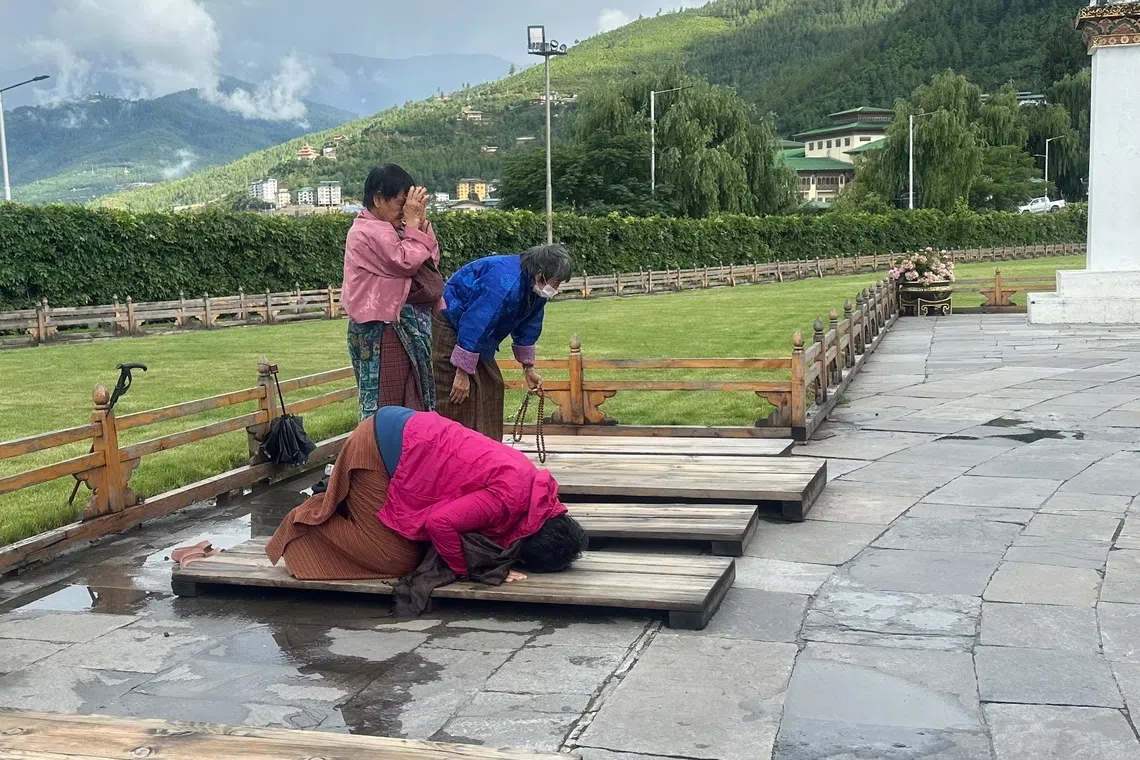
Bhutan’s cultural identity remains resilient despite the external pull factors. Traditional attire – gho for the men and kira for the women – is common in everyday life.
Despite the country’s rustic charm, its people show an openness to learning languages not native to them. Travellers are frequently amazed by the locals’ command of English and other languages; many tour guides are proficient in at least four languages.
Dago Tshering, the guide to members of the visiting media, is fluent in six: Dzongkha, English, Mandarin, Hindi, Japanese and German. Despite receiving offers to work overseas, he has chosen to remain in Bhutan. His reasons were straightforward – family and the simplicity of life back home.
Echoing this principle, Minister of Industry, Commerce and Employment Lyonpo Namgyal Dorji emphasised that, even with Bhutan opening its doors to foreign investment, collaborations will be carefully selected to align with the country’s values-driven development approach.
“In principle, it is not necessary for us to import foreign brands if we have our own alternative and better options,” he said in a meeting with the media.
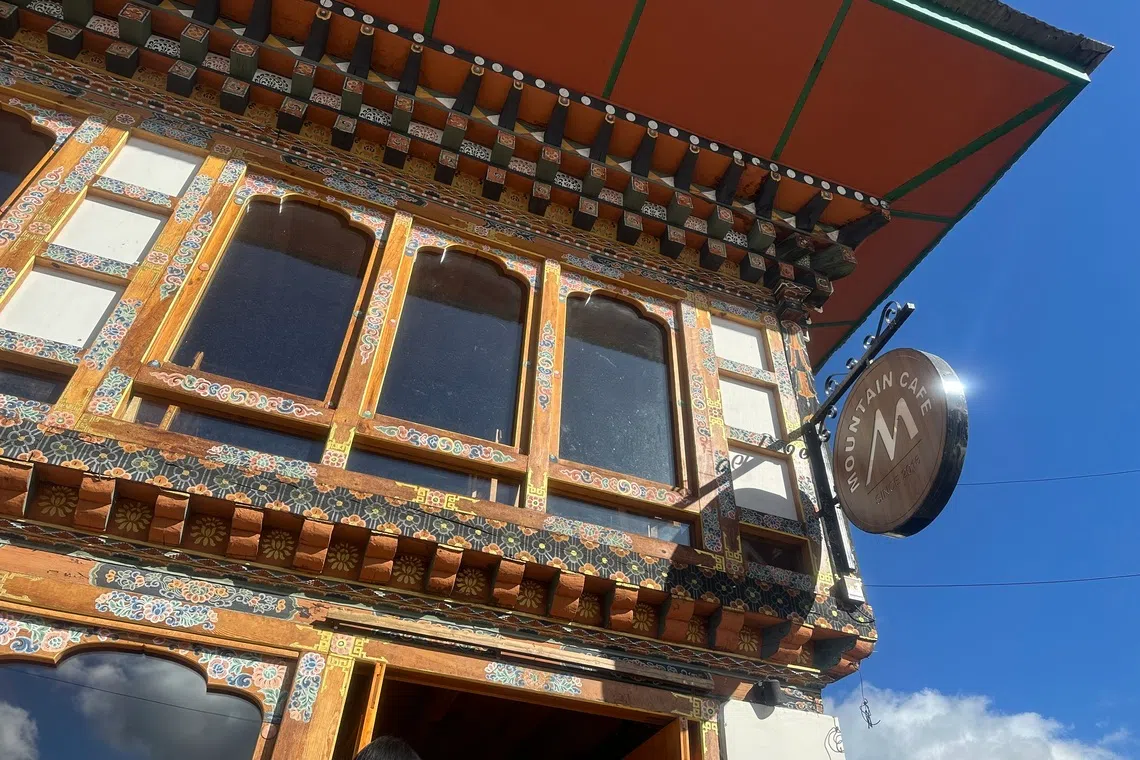
He pointed to the home-grown brand Mountain Cafe, which sources and roasts beans from local farmers. “Even without international franchises like Starbucks, we are not feeling deprived. We hope to offer tourists something unique, which can only be found in Bhutan.”
South-east Asian tourists in focus
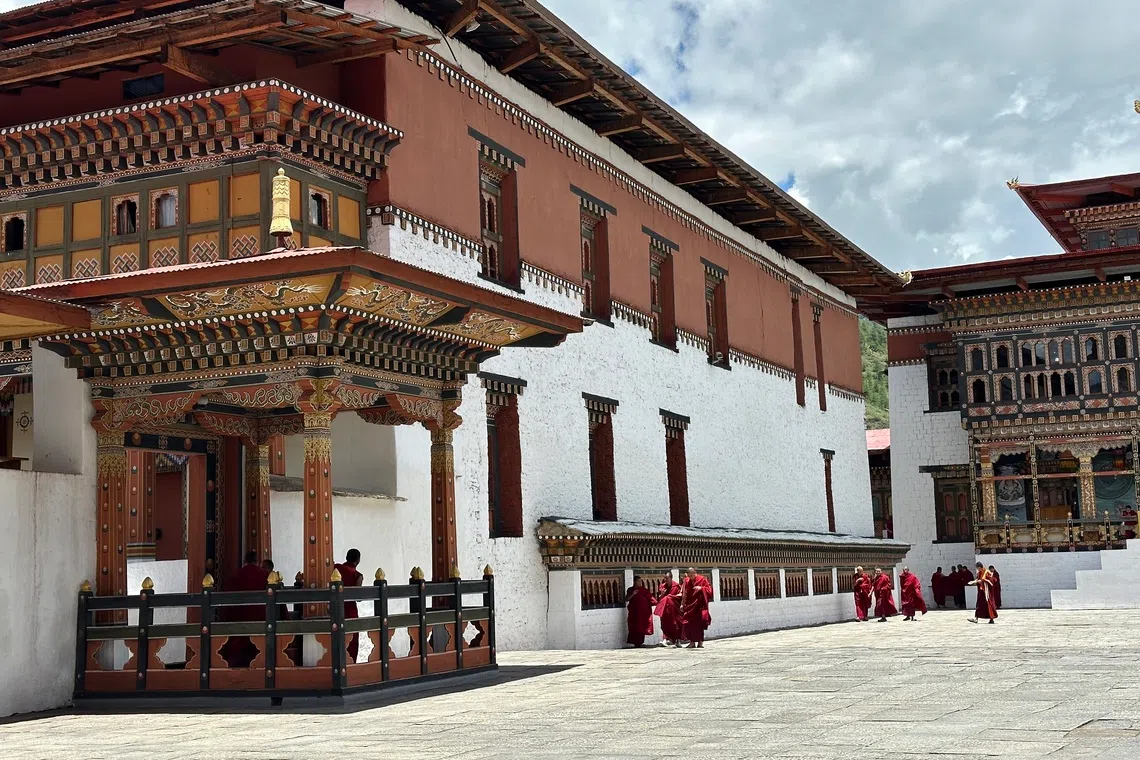
As hydropower and agriculture continue to dominate its economy, Bhutan’s government recognises diversification as being crucial for sustainable growth and long-term resilience.
Tourism, which accounts for about 10 per cent of Bhutan’s gross domestic product, is targeted for revitalisation. An ambitious goal has been set: to boost its contribution to 15 per cent by 2030, returning to pre-pandemic levels.
But Bhutan remains committed to its “low-volume, high-value” approach. Rather than attracting mass tourism, the country aims to offer curated experiences focused on culture, wellness and nature.
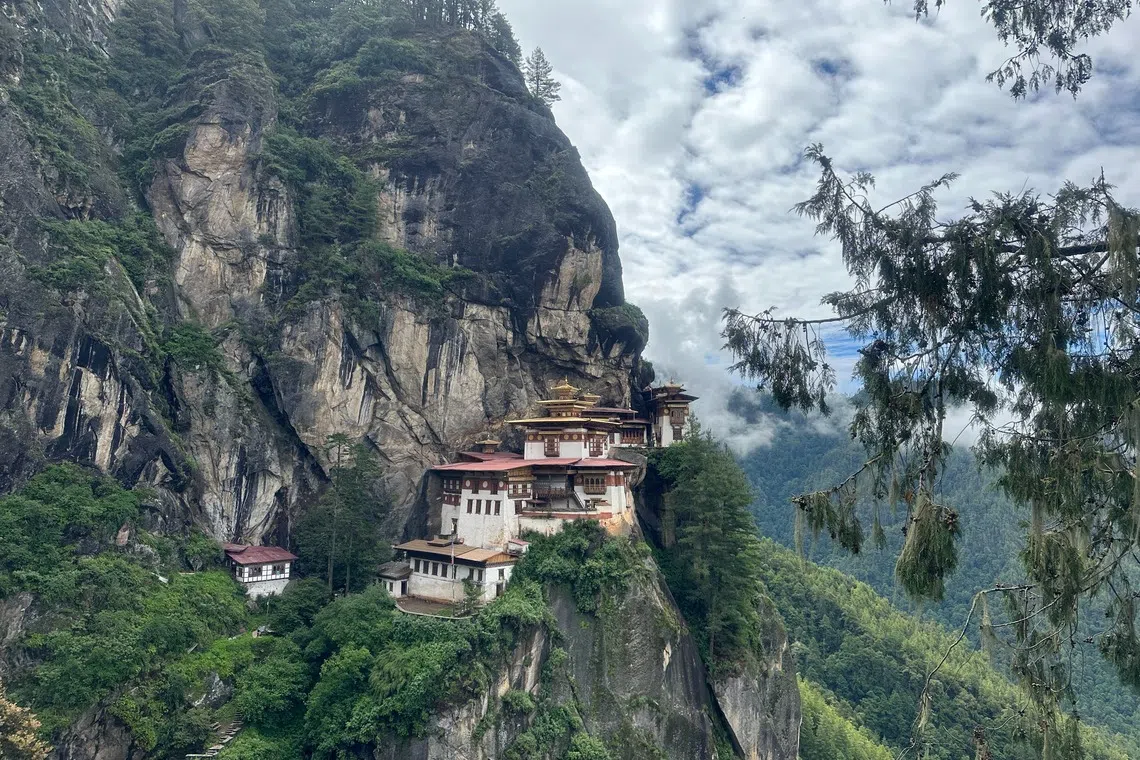
Known as the “Land of the Thunder Dragon”, Bhutan is home to more than 2,000 monasteries and temples. One of the most famous, the Tiger’s Nest Monastery, is perched 3,120 m above sea level and draws thousands annually.
But the prime minister said there are still more hidden gems for tourists to explore in Bhutan. “We want visitors to go beyond the monasteries. Cycling through our valleys, engaging with local farmers, going for a concert, or even having a memorable wedding in Bhutan – these are the kinds of experiences we want to offer.”
While India remains the top source of visitors, accounting for around 70 per cent of all arrivals, Bhutan is actively courting travellers from South-east Asia, in hopes of rebalancing the ratio to 50:50 within the next few years.
“India will always be an important partner, but for Bhutan to grow as a global destination, we need to diversify,” said Dorji.
To encourage more tourists to come to Bhutan, the government reduced its sustainable development fee to US$100 a person a night from Sep 1, 2023, from US$200 a night.
In 2024, Bhutan welcomed 145,065 tourists, around 40.7 per cent higher than the 103,066 in 2023. But tourist arrivals still fall short of the 150,000 target. For 2025 and 2026, the country hopes to attract 300,000 tourists.
Rising interest from Singapore travellers
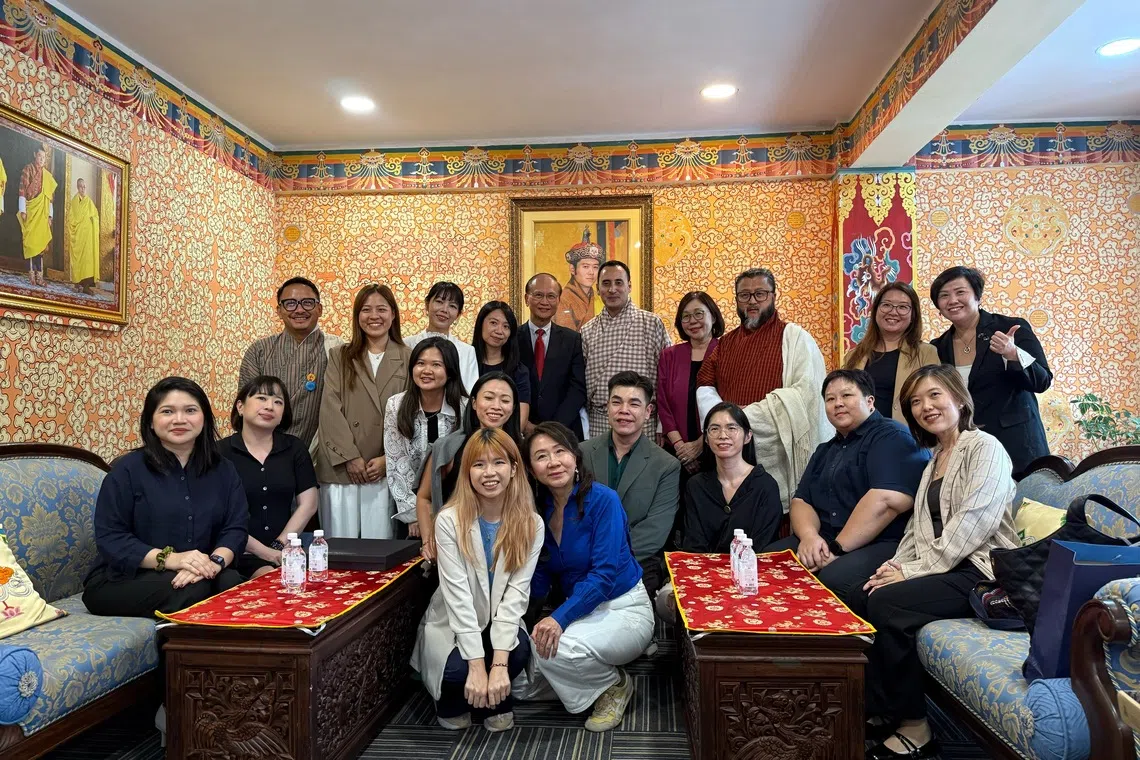
Singapore, Bhutan’s third-largest source of tourists after China and India, is a key focus. Last year, 3,200 Singaporeans visited Bhutan, up from the typical 2,000 annually. As at June this year, 1,200 had already arrived, the number suggesting continued growth.
Chan Brothers Travel’s executive director Chan Guat Cheng emphasised Bhutan’s unique appeal: “Singapore alone has more than five million outbound tourists annually… With a rising number of tourists seeking more nature, peace and spiritual and adventurous travel, Bhutan stands out from others to attract more tourists.”
On Jul 4, Chan Brothers Travel and Bhutan’s national carrier, Drukair, formalised their partnership in Singapore with a memorandum of understanding laying the groundwork for more exclusive chartered flights between Singapore and Bhutan.
Chan noted that in response to growing interest, the number of chartered flights has expanded significantly, from six last year to a total of 30 scheduled this year and the next, reflecting strong demand for travel to Bhutan.
As Chan Brothers Travel celebrates its 60th anniversary this year, the Singapore-based agency is advancing its strategic vision with a series of Bhutan tours. These tours will be operated via exclusive chartered direct flights by Drukair.
“As the sole travel agency offering such privileged air access, we are looking at deepening collaboration with Bhutan’s Department of Tourism,” she said.
Decoding Asia newsletter: your guide to navigating Asia in a new global order. Sign up here to get Decoding Asia newsletter. Delivered to your inbox. Free.
Copyright SPH Media. All rights reserved.






