Can China’s ‘six little dragons’ slay their AI, robotics rivals from the US?
DeepSeek and its Chinese peers have lower cost and national support on their side


[SINGAPORE] At the start of this year, China’s DeepSeek burst onto the artificial intelligence (AI) scene and rocked perceptions around the world that the West was ahead in the AI game.
Today, DeepSeek and other players in the world’s second largest economic superpower are neck and neck with US players in the race for AI superiority.
KPMG praises the Hangzhou AI startup’s open-source model for its high performance, cost-effectiveness, accessibility and transparency.
China-developed large language models (LLMs ) now offer performance comparable to the best in class from OpenAI and Google, JPMorgan’s Alex Yao told The Business Times.
“(These Chinese LLMs) are at a fraction of Western prices, too, due to advances in model efficiency,” said Yao, the head of China equity research and co-head of Asia technology, media and telco research at JPMorgan.
The positive sentiment around DeepSeek also comes on the back of China President Xi Jinping’s meeting on Feb 17 with the country’s tech leaders, including formerly sidelined Alibaba founder Jack Ma, and DeepSeek founder Liang Wenfeng, according to sources. A resurgence of China tech stocks followed shortly after.
China’s AI game goes beyond price points. Charles Yonts, head of Asian sustainability research at Macquarie Capital, said the open models themselves are the nation’s “biggest advance” in its competition against the US since DeepSeek.
Open models
Open models are AI systems with publicly accessible code, architecture, weights and occasional training data.
China’s models may have trailed Europe and the US at the beginning of 2025, said Yonts – but by August, downloads of Chinese open models surpassed that of the US.


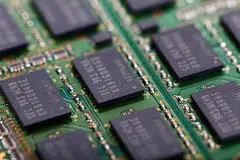
“China is leading (in) open models – from DeepSeek and Kimi – which are cheaper and nearly on a par with leading closed models from the US, such as OpenAI, Google, Anthropic,” he said.
“(These Chinese models) continue to gain share with global developers – including those in the US.”
Beyond human intelligence
Kimi is a chatbot by Beijing-based Moonshot AI, founded in 2023. It is striving to achieve AI that reaches or overtakes “human level intelligence” – also known as “artificial generative intelligence” – its co-founder Yang Zhilin said.
As at December 2025, China’s open source models have clawed their way to hit 30 per cent of international usage, with models by Alibaba’s Qwen and Deepseek taking the lead. This is a significant jump from a low base of 1.2 per cent in late 2024.
That said, proprietary Western models still occupy the remaining 70 per cent, in terms of global share. The US’ strength and dominance in frontier models such as ChatGPT and Gemini, and hyperscaler capital expenditure, still remain unmatched, analysts said.
Macquarie analysts estimate that the country’s projected US$270 billion in data centre infrastructure (excluding IT) spending for 2026 to 2030 is also a formidable one.
China’s ‘little dragons’
The attention around Deepseek has paved the way for other China AI tech and robotics-focused companies to take centre stage, too.
Dubbed the “six little dragons”, the group includes Unitree Robotics, Deep Robotics, BrainCo, Manycore Tech and Game Science, in addition to Deepseek.
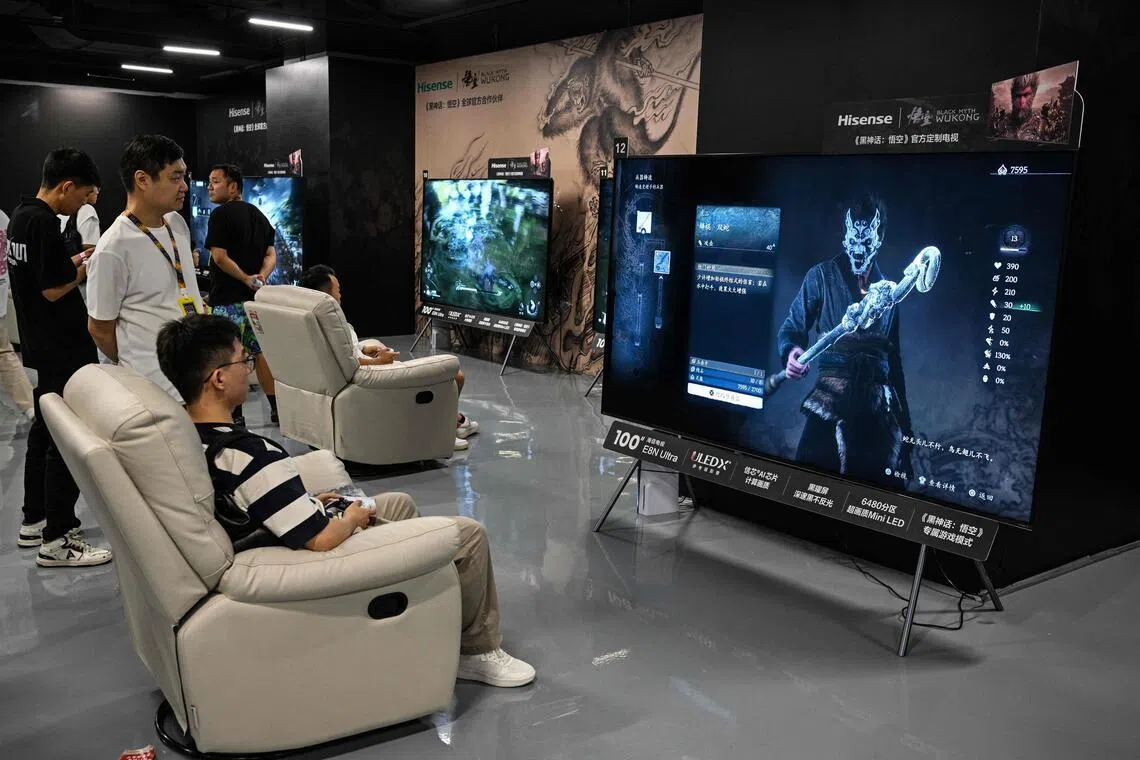
Eugene Hsiao, head of China autos and China equity strategy at Macquarie Capital, notes that the concept of “privately held advanced technology companies regaining prominence” in China this year is striking. This was especially so from February to March 2025, with Deepseek attracting the most attention.
“We see that Deepseek is still viewed as first among equals within this group of six companies,” he told BT.
A general trend expected in the year ahead is for China policymakers to prioritise AI applications over core models, experts told BT.
“This could see additional policy support for the two robotics-focused six dragons – Unitree and Deep Robotics,” Hsiao said.
Focus on humanoids
In particular, companies such as Deep Robotics and Unitree have a focus on humanoid robot development – a new frontier of AI which promises “superintelligence”.
The latter company on Dec 14 launched the first humanoid robot app store in the world, and previously indicated plans for an initial public offering between October and December on Shanghai’s Star Market.
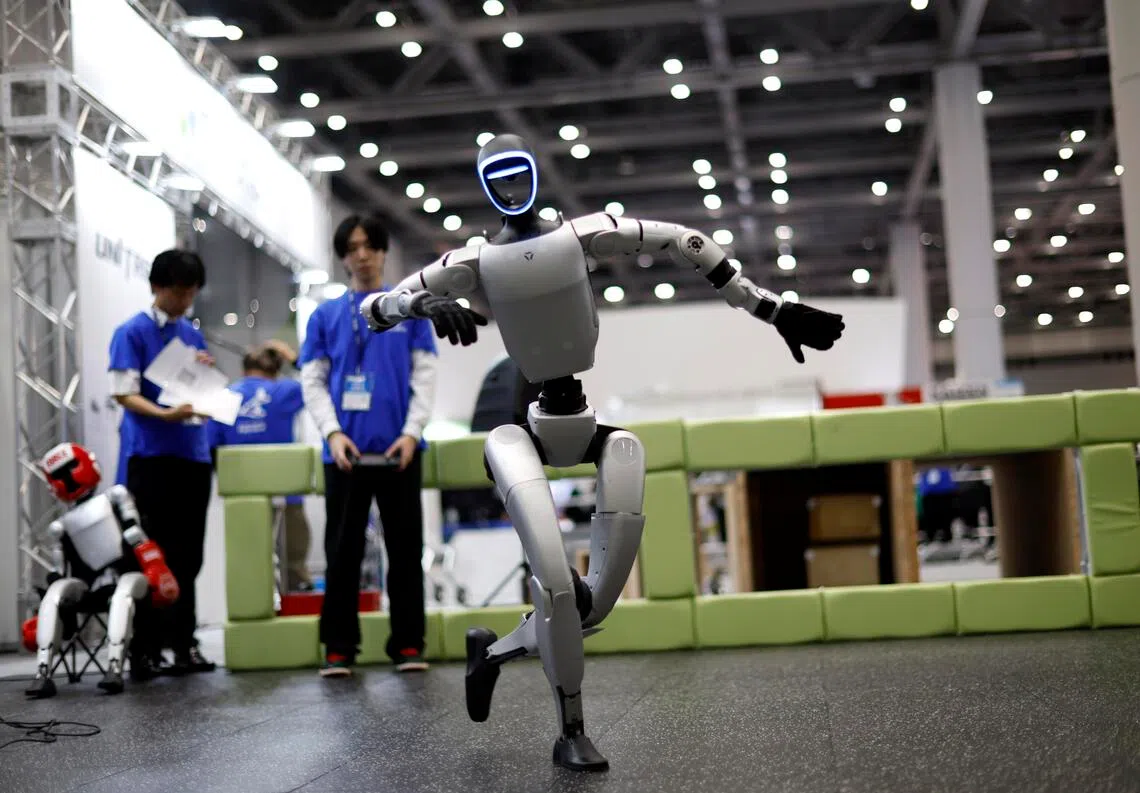
China’s push to stay ahead of the curve – via AI applications and superintelligence development – culminated as early as January this year. The Chinese government created the Hangzhou AI Industry Chain High-Quality Development Action Plan, designed to certify over 2,000 high-tech enterprises, initiate more than 300 major tech projects and invest over 300 billion yuan (S$54.9 billion) per year.
Magnificent 10
The hype around China’s AI prowess has in turn impacted analysts’ takes on various tech, AI-powered firms in the country.
The “Terrific 10” counters, often compared to America’s “Magnificent Seven” tech stocks from the US, include Alibaba Group and Tencent, in terms of their valuation for 2026.
Both received “outperform” ratings from Macquarie analysts in November this year, with the Hong-Kong listed counters recording upsides of 44 per cent and 24 per cent, respectively.
For Alibaba, the AI cloud leader’s domestic e-commerce business provides a “strong free cash flow” to support its “aggressive AI and quick commerce investment” – a prerequisite of success in these markets, noted Morningstar analysts.
“(This means) it is well positioned to capture AI business opportunities in the long run that we think the market has not fully priced in,” explained Chelsey Tam, senior equity analyst at Morningstar.
Tencent also stands to benefit from China’s rally in AI developments, with the tech company’s social network of 1.3 billion users offering considerable opportunities for increased monetisation.
“AI has the potential to enhance advertising targeting, improve efficiency in game development and drive innovation across Tencent’s ecosystem,” Morningstar’s senior equity analyst Ivan Su told BT.
An example was how ongoing government support for consumer loans could “further boost” its payment service WeChat Pay’s lending business, said the analysts, providing an additional layer of growth for Tencent as well.
Another stock Morningstar is positive on is Internet company Baidu, due to its “long-term market position as one of the leading hyperscalers” which stand to benefit from AI tailwinds and enthusiasm.
“Its cloud AI business is (also) increasingly accounting for a greater part of its revenue mix, and has recently increased its market share in the industry,” said Kai Wang, senior equity analyst at Morningstar.
Other counters within the Terrific 10 that analysts are less bullish on are Semiconductor Manufacturing International Corporation (SMIC) and Xiaomi.
“We think Xiaomi and SMIC are overvalued with much of the potential growth well reflected in their share prices,” director of equity research, Asia at Morningstar Lorraine Tan told BT.
While Tan is optimistic on the performance of the China/Hong Kong markets in 2026, given “relatively comfortable valuations and supportive fiscal and monetary policies”, she flags how lingering geopolitical risks could add volatility.
“But we think names (such as Tencent and Alibaba) have largely domestic-driven income and, thus, are largely sheltered,” she said.
Decoding Asia newsletter: your guide to navigating Asia in a new global order. Sign up here to get Decoding Asia newsletter. Delivered to your inbox. Free.
Copyright SPH Media. All rights reserved.