



Carmakers slash prices again in China, defying regulators
Prices for new cars keep falling as automakers compete to clear out inventory in a sluggish market
GLOBAL automakers and their dealers in China are pressing ahead with aggressive price cuts and purchase incentives in early 2026, defying Beijing’s efforts to rein in discounts that have roiled the market for more than three years.
BMW slashed its official price guide last week on 31 models sold in China, with reductions of as much as 301,000 yuan (S$55,220) on its flagship pure-electric i7 M70L model. The German automaker’s steepest cut outlined was for its iX1 eDrive25L, which saw a 24 per cent drop to 228,000 yuan.
The German luxury automaker said that the adjustment was part of its “regular price management”, according to a statement on Wednesday (Jan 7). “Final transaction prices are independently negotiated and determined between authorised BMW dealers and customers,” it added.
Dealers for brands under the joint ventures with Volkswagen and General Motors have also rolled out renewed discounts and “fixed-price” offers on select models in the first week of the year, according to local media reports, signalling that renewed competitive pressure is spreading beyond premium brands.
While car buyers in the US face an industry-wide affordability crisis as prices remain stubbornly high, China has the opposite problem: Prices for new cars keep falling as automakers compete to clear out inventory in a sluggish market.
Last month, the China Passenger Car Association said sales contracted in November for a second month in a row. That has left automakers with little choice but to sweeten deals, even at the risk of regulatory scrutiny.
China’s State Administration for Market Regulation last month unveiled draft guidelines aimed at curbing price cuts, including prohibitions on selling vehicles below production cost and banning dealer rebates that effectively push prices under cost.
The Chinese government is worried a deflationary spiral could damage the country’s supply chain by forcing auto parts makers to switch to cheaper, lower-quality components and also hold down wages for workers.
But carmakers have bucked that initiative as they struggle with overcapacity. And the latest wave of discounting indicates that is unlikely to change in the new year.

For one thing, analysts suggest the industry has technically avoided selling for less than it costs them to make a vehicle, something that Beijing policymakers consider a red line.
The price adjustments from BMW and some other brands are more about aligning recommended pricing to be closer to the final transaction price, which can be much lower after rounds of haggling at showrooms. The new prices are not lower than the actual transaction price at the dealer level last year, so that does not count as a price war, said Yale Zhang, managing director of consultancy Automotive Foresight.
In principle, BMW’s price cut helps alleviate pressure on dealers resorting to further negotiation at the retail level, said Li Yanwei, an adviser to the China Automobile Dealers Association.
But it is unclear how persuasive that logic will be when car buyers seek to drive a hard bargain in showrooms and dealers are anxious to move vehicles off their lots.
Li added that automakers looking to meet their first-quarter sales targets by March are expected to launch even more discounts, particularly in the run-up to the Chinese New Year in February.
Rather than outright price cuts, some manufacturers are leaning on financial incentives and value-added perks.
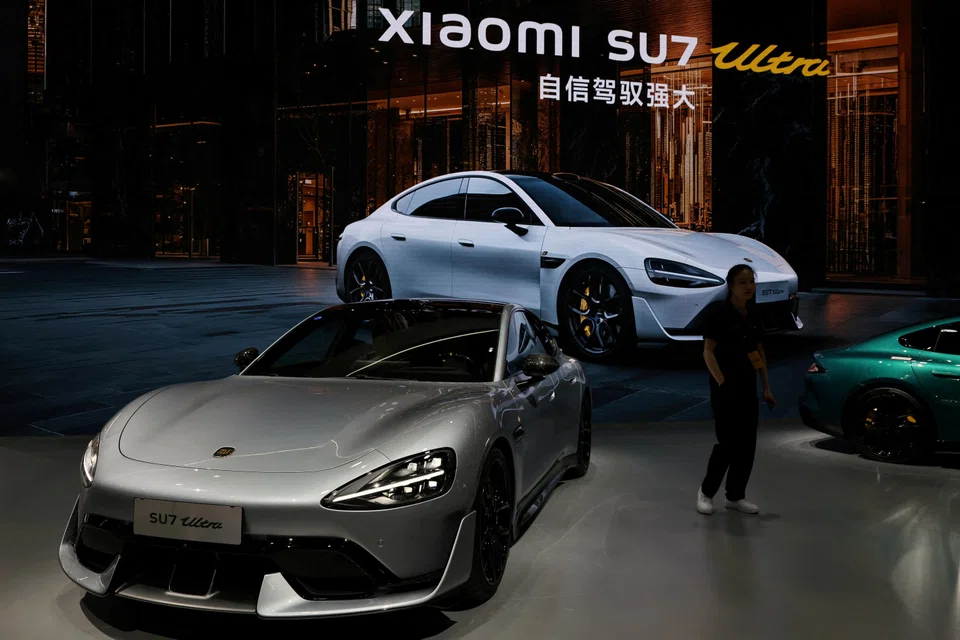
Tesla on Tuesday rolled out a seven-year low-interest financing plan, along with a five-year zero-interest option. Xiaomi has offered a three-year interest-free loan for its YU7 sport utility vehicle, as well as various feature add-ons to its SU7 Ultra variant, including carbon-fibre upgrades.
Similarly, Chery Automobile and other carmakers are offering factory-backed trade-in subsidies to spur demand, as authorities have updated the conditions in a way that limits the amount of national subsidies being handed out via a government cash-for-clunkers programme.
While the timing may be linked to pre-Chinese New Year promotions, the scale and breadth of these incentives point to deeper structural pressures, with at least 14 car brands having launched some form of discount or incentive since the start of 2026, according to Chinese media reports.
“Various kinds of promotional activities may ebb and flow in the market from time to time, but they are here to stay,” said Automotive Foresight’s Zhang. BLOOMBERG
Decoding Asia newsletter: your guide to navigating Asia in a new global order. Sign up here to get Decoding Asia newsletter. Delivered to your inbox. Free.
Share with us your feedback on BT's products and services
TRENDING NOW

The only common thing in S-E Asia is that we all eat rice: Cisco’s Asean president

Philippine power giant First Gen rebuffs foreign offers, plans up to US$2.6 billion in expansion

Singapore to use ‘every legal and regulatory lever’ against companies linked to haze: Shanmugam

Once staunchly pro-China, Malaysian Chinese businesses are now distancing themselves from Beijing

