



China debt-laden corporates may pose contagion risk if economic conditions worsen
Asia-Pacific corporates more sensitive than Europe, Latin America or US

Angela Tan
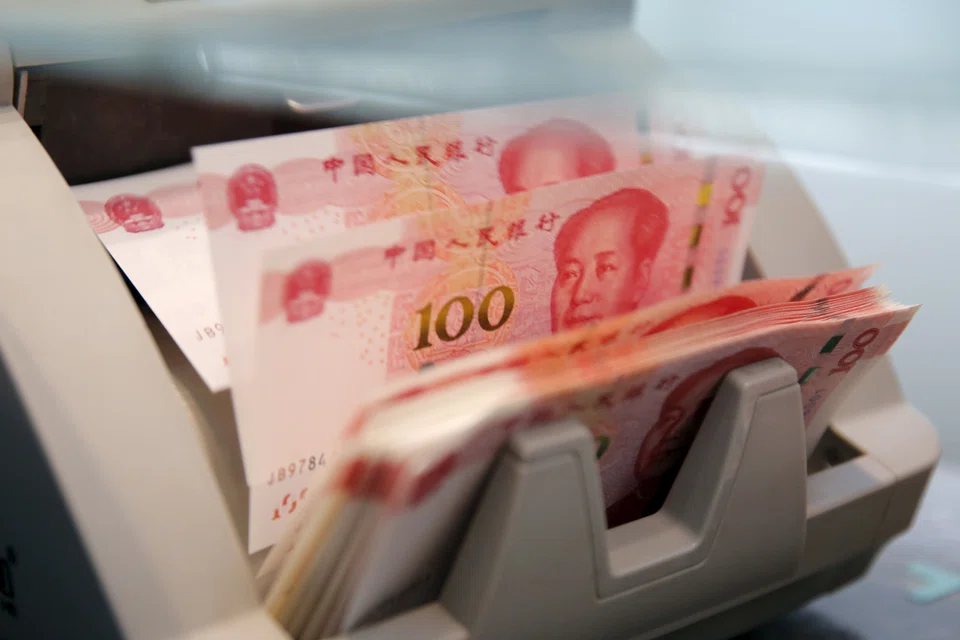
China’s debt-laden corporates, which make up more than 30 per cent of global corporate debt, pose a contagion risk if global economic conditions worsen, a newly-published report from S&P Global Ratings’ global research team warns.
“With nearly a third of global corporate debt, China’s challenge is the world’s challenge,” said S&P Global Ratings senior research fellow Terry Chan.
China’s US$28 trillion of corporate debt is estimated at around 140 per cent of gross domestic product (GDP) and is the largest among countries. In contrast, total US corporate debt is US$19 trillion, or around 75 per cent of the country’s GDP. Almost 50 per cent of China’s corporate debt is of high risk or worse, more than double the US’s.
China’s strict Covid measures, including the 2-month lockdown of the financial centre and port of Shanghai, have hit companies hard.
“The transport, retail, leisure and property sectors have seen the biggest hits on demand. Supply-chain disruptions for auto and technology are likely to persist,” Chan said.
Companies, especially in energy and commodities sectors, could still face production and transport problems in late 2022 and into 2023, keeping the pressure on supply chains.
S&P conducted a stagflation-related stress test to see how the wider global unrated corporates might handle worsening conditions. The sample comprised 20,000 corporates (93 per cent unrated), with debt totalling US$37 trillion, or 41 per cent of total global corporate debt.
The stagflation stress involved economic activity in the US slowing sharply in second half 2022 and contracting to produce a recession in 2023; eurozone GDP growth slowing down to 1 per cent in 2023, the United Kingdom experiencing a growth recession in 2023 with growth slipping to 0.6 per cent; and China’s GDP about 0.4 percentage points lower in 2023.
According to the findings, the worsening inflation situation may see potential defaulters more than double. Those in Asia are more exposed to inflation and interest rate shocks than those in Europe and North America.


“In our severe stress test, the loss-maker (potential defaulter) ratio for the China sample jumps to 22 per cent from 12 per cent, while the Asia ex-China sample’s ratio rises to 20 per cent from 12 per cent. In comparison, the global average goes to 17 per cent from 10 per cent,” Chan said. Europe fares better, at 14 per cent.
Compared to an earlier stress test last December, the potential defaulter list more than doubled to 17 per cent by 2023 from 7 per cent in 2021. In December 2021, the ratio rose only to 12 per cent by 2023.
Stagflation is also more of a threat now compared to December, and inflation may persist in 2023 if supply problems drag on, S&P analyst said.
Globally, consumer discretionary, industrials and real estate sectors have not fully recovered from the Covid years and are thus more vulnerable to resurfacing credit headwinds.
In the severe scenario, the loss-maker ratio for consumer discretionary rises to 23 per cent, industrials to 27 per cent and real estate to 24 per cent. The energy sector also hits 14 per cent.
Within the sectors, significant variations are present as well. Within the consumer discretionary sector, distributors and hotels, restaurants and leisure industries would have relatively more potential defaulters in the severe scenario than other industries in the same sector.
Within the industrial sector, trading companies and distributors, and aerospace and defence fare the worst. The airline industry is already well underwater.
As for the real estate sector, it is again the real estate developers industry taking the hit. In the energy sector’s case, the higher energy prices are expected to hit downstream players while benefiting upstream.
Chan said many businesses are still finding it hard to recoup higher costs from still-recovering customers, and warned that high debt levels mean that small changes in rates can significantly raise borrowing costs. Late 2022 to late 2023 may be a time of credit stress.
Decoding Asia newsletter: your guide to navigating Asia in a new global order. Sign up here to get Decoding Asia newsletter. Delivered to your inbox. Free.
Copyright SPH Media. All rights reserved.
TRENDING NOW

Two Singapore-listed palm oil firms named in Greenpeace report on Indonesian plantation fires
Singapore Airlines flight returns to San Francisco after ‘unruly’ passenger incident

Singapore looking into which companies responsible for haze-causing fires: PM Wong
Deluge IPO 3.86 times subscribed ahead of SGX debut

