China decides to protect Hong Kong as a financial centre
Political unrest in the special administrative region has subsided, while Beijing’s interest in attracting external investment has risen
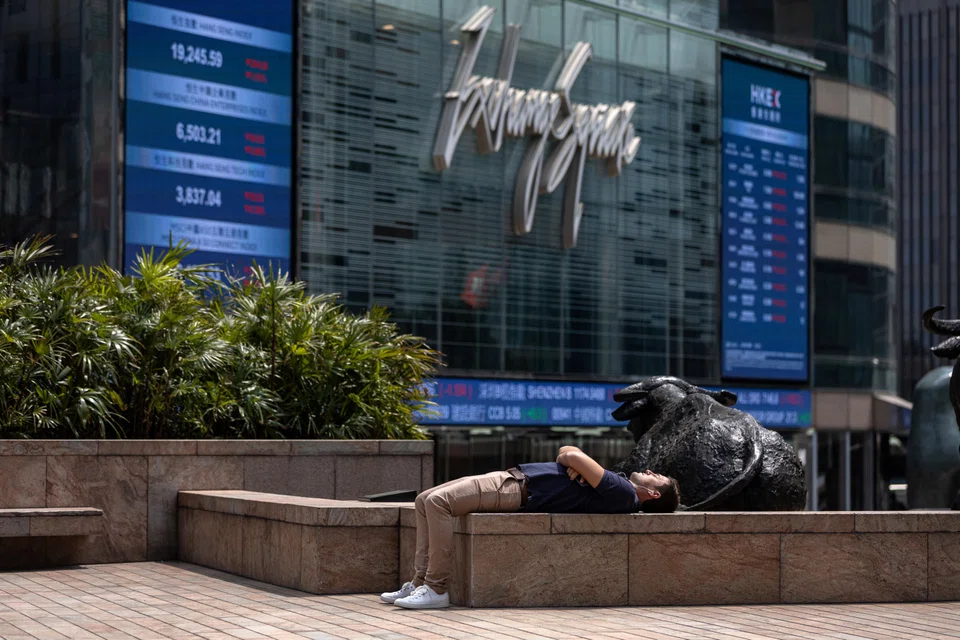
WESTERN visitors returning to China for face-to-face meetings – as the Official Monetary and Financial Institutions Forum (OMFIF) did last week – will find a country as keen to attract outside investment as it is to develop a self-sufficient financial and technological ecosystem. Hong Kong’s role in this complex process seems more important than before.
Hong Kong has noticed a marked outflowing of wealth management operations to Singapore and is now putting together a well-funded campaign to try to reverse the trend.
To hear this from the Hong Kong Monetary Authority, InvestHK and others based in the special administrative region (SAR) isn’t surprising. To hear it from the People’s Bank of China (PBOC) and the major Chinese banks perhaps is. The clarity and uniformity of the message sounded like Chinese government policy. Why?
The quest for investment
The wealth management migration is attributed to political risk, as some high-level financiers have disappeared in Hong Kong and found themselves helping Chinese authorities with their enquiries. Departing expats grumble about the national security law, although a Hong Kong official contended that it is less stringent than the US Patriot Act.
Before Covid-19, when civil unrest in Hong Kong was more of a visible nuisance for Beijing than it is now, financiers suggested that Hong Kong would eventually become merely a suburb of neighbouring Shenzhen on the mainland, now a 15-minute train ride away.
The political unrest has subsided, while China’s interest in attracting external investment has risen.
A senior regional government official – who managed to attract a foreign whisky producer to his city despite the challenges of doing business during Covid-19 – enquired how serious a problem China’s indebtedness is, in OMFIF’s view. The country has a 273 per cent economy-wide debt to gross domestic product ratio.
Another mentioned state belt-tightening after Covid-19, alongside a keenness to re-engage foreign direct investment in China’s expected resumption of growth: 5 per cent in 2023, versus a little more or less than 1 per cent in the US and euro area respectively.
A central banking official also raised the idea of converting troubled Belt and Road Initiative debts into bonds to move them off Chinese bank balance sheets and into the capital markets at large.
China’s capital account remains materially closed. Investment in onshore securities requires qualified foreign institutional investor status. But the Shanghai Stock Exchange enables international investors to access some Chinese securities via its Stock Connect programmes, including with Hong Kong – and the SAR remains a key venue for major Chinese companies.
Alibaba has moved there from the US as geopolitical rivalry increases. The US Inflation Reduction Act includes a provision to prevent subsidies drifting towards Chinese battery makers, for example.
Foreign tensions
Though some suggested that the resumption of face-to-face business meetings would improve East-West estrangement by osmosis, most Chinese bankers are under no illusions about American political antipathy.
The idea that politics lives in a separate universe to the US$700 billion mutual trade relationship is beginning to erode. We heard anecdotal evidence of US asset management investment decisions being withdrawn.
Our interlocutors are still trying to work out whether Europe is in the same camp. While Germany, for example, has said it is in no rush to decouple, European receptiveness probably depends on the materiality of Chinese support for Russia’s military operations in Ukraine.
Those officials hosting OMFIF did not need prompting to raise this prickly theme, though they greeted with mild acquiescence – rather than enthusiastic endorsement – the idea that China might hold the answer to ending the war.
Trade and investment with the UK are even more ambiguous for Chinese business people. There is pragmatic acceptance, in private, that mutual investment in strategic technology is moving off limits.
But there is also frustration at the unpredictable nature of the rules as the ruling Conservative party, under an assortment of prime ministers, zigzags between crass mercantilism and American-sponsored Sinophobia.
The UK remains an interesting case for the Chinese. It is home to a global bank with Chinese roots, has longstanding business links via Hong Kong and is a well-developed global financial centre. China sends the largest cohort of foreign students to British universities.
OMFIF met officials who expected this to continue despite geopolitical divergence and the UK’s perceived tutelage to US priorities, which include the ring-fencing of key technologies, protection of the leading global reserve and trading currency, and defence of interests in the Pacific region.
The PBOC, which emphasised to OMFIF the importance of Hong Kong to the Chinese capital markets ecosystem, dismissed the idea that China seeks to supplant the dollar. But it raised the not unreasonable suggestion that China’s US$18 trillion economy might conduct trade with partners in its own currency.
Meanwhile the mBridge cross-border central bank digital currency project, which includes the United Arab Emirates as well as PBOC, looks to some like the potential evolution of a financial ecosystem outside the control of the West – as Swift is perceived to be and was obliged to sanction Russia.
mBridge includes Hong Kong, whose currency remains pegged to the dollar and whose financial markets are still underpinned by common law, which was praised by President Xi Jinping last year despite its colonial origins.
Hong Kong’s twin life between Chinese and Anglo-Saxon financial systems is only going to become more important as those ecosystems diverge, while still needing to do business. OMFIF
The writer is chief executive officer of the Official Monetary and Financial Institutions Forum.
Decoding Asia newsletter: your guide to navigating Asia in a new global order. Sign up here to get Decoding Asia newsletter. Delivered to your inbox. Free.
Share with us your feedback on BT's products and services
TRENDING NOW
He built the Vingroup empire. Now South-east Asia’s richest man is handing some key roles to his sons
Can CDL become a powerhouse in fund management?
Canada is upping oil flows to Asia, but South-east Asia’s refineries aren’t ready to handle them yet
Data centre energy demand from Asean telcos not a ‘big risk’, says industry group