



China earns US$500 million per hour from exports supercharged by AI
The country has emerged as the world’s largest supplier of AI-related goods last year
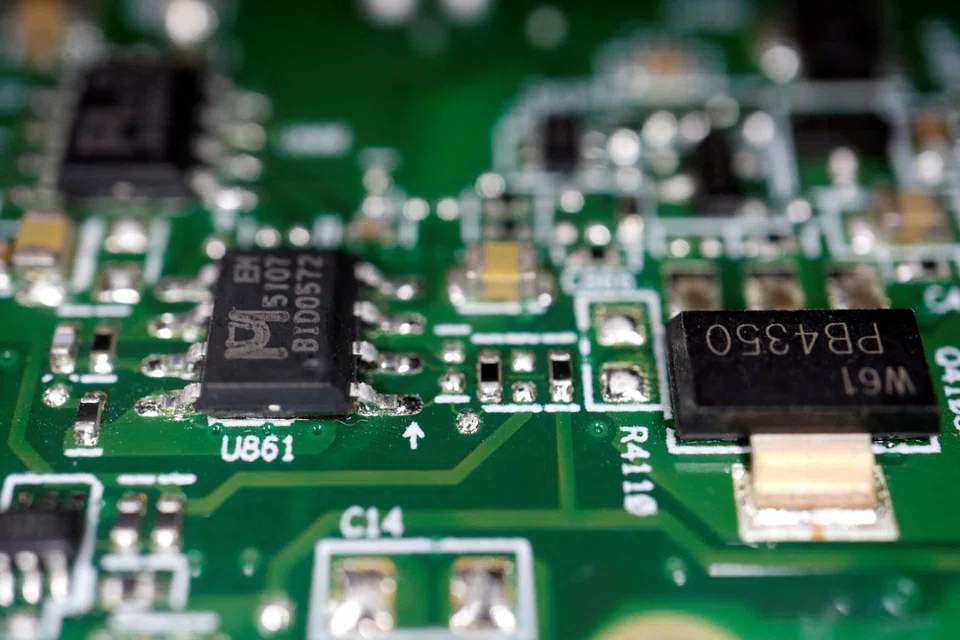
THE US and Chinese economies may still be on their way to decoupling but both are drawing strength from the same source.
Just as an AI-driven boom in business investment bolstered US economic growth at the start of this year, Goldman Sachs Group and Nomura Holdings estimate China’s overseas sales of semiconductors, computers and other products closely related to artificial intelligence accounted for about half of China’s export growth in April.
In total, Chinese shipments abroad climbed 14 per cent from a year ago to a monthly record of US$359 billion, meaning companies were reeling in roughly US$500 million on average every hour.
Chip exports surged 100 per cent and sales of automatic data processing equipment and parts, which include laptops, tablets and their components, jumped 47 per cent, the latest customs data showed.
AI is also transforming the flow of goods into China, with its purchases of foreign high-tech products soaring 42 per cent.
President Donald Trump, who will arrive in Beijing this week for his long-awaited summit with Xi Jinping, had a hand in the investment bonanza that’s now juicing China’s exports and lifting other major Asian economies from South Korea to Taiwan.
This year alone, giant US tech firms including Alphabet and Meta Platforms plan to pour as much as US$725 billion into capital expenditures, primarily on AI data centre equipment.
An economic divorce between the US and China is still in full swing, with tech curbs, sanctions and other hurdles in place. While Trump’s tariffs have come down from as high as 145 per cent last year, the US share of China’s total exports has reached a historic low of near 9 per cent, about half its peak in 2017–2018.
But the explosion of trade around AI reveals the extent of integration that still pulls the world’s two biggest economies closer through the global tech supply chain.
SEE ALSO

With the US leading all countries in AI investment, China has emerged as the world’s largest supplier of AI-related goods last year, according to research by economists at Standard Chartered, though it’s still a net importer of some critical technologies such as advanced chips.
During Trump’s current term in office, China’s exports of integrated circuits have roughly doubled in value, topping US$31 billion in April for the first time ever. Though skewed by a low base effect, total shipments to the US jumped the most in over a year after double-digit declines through most of 2025.
Similarly, semiconductor sales from major producers South Korea and Taiwan have also soared in recent months.
US export controls have long been a sticking point in trade discussions between Washington and Beijing. Limits on China’s ability to acquire American technology fuelled a standoff last year that saw Beijing impose curbs on shipments of rare earths to US customers.
The two sides unveiled a truce in October after Trump’s last meeting with Xi where the US agreed to pause for a year some of its tech-related restrictions in exchange for renewed access to rare earth elements. Those measures will likely be up for discussion later this week.
While China doesn’t have the know-how to produce the most cutting-edge components because of export bans imposed by the US, it’s been gaining increasing dominance in so-called legacy chips, which tend to use older technology and remain essential to a wide array of electronics.
And as trade across Asia tilts more toward high-tech, it’s providing relief to economies including China as manufacturers struggle to cope with rising raw material costs linked to the war in Iran.
Besides heaping pressure on traditional labour-intensive industries ranging from toymakers to apparel manufacturers, the conflict is also causing broader disruptions. Though the value of China’s imports of crude oil increased 13 per cent from a year ago, their volume plunged 20 per cent, reflecting a surge in prices.
“While AI-linked exporters enjoy the surging prices of chips, the whole of China is shouldering the burden of rising oil and gas prices,” Nomura economists led by Ting Lu said in a report.
Shipments to the Middle East and North Africa likely continued to decline after plummeting 43 per cent in March from a year ago. The extent of any further declines will become clearer when China releases its detailed export data later this month.
The oil crisis has also offered an opportunity to Chinese automakers and especially manufacturers of electric vehicles. That’s turned cars into another major source of strength for exports, especially as auto sales plunge at home.
China’s vehicle exports soared 54 per cent in the first four months of 2026, after gaining 21 per cent last year. The value of vehicles shipped overseas hit the second-highest in history in April at over US$16 billion.
The AI boom is meanwhile pushing both Chinese exports and imports to record highs, with foreign purchases in April soaring 25 per cent from year ago to US$275 billion. Imports from South Korea grew more than 60 per cent and those from Taiwan increased over 20 per cent.
Even before the surprise surge in trade last month, economists already upgraded their forecasts for full-year import growth in China, expecting it to overtake the pace of exports for the first time since 2021.
Chip prices swollen by a global shortage of semiconductors were a significant contributor to the blowout numbers in April. While chips contributed 4.9 percentage points to China’s headline export growth, the price effect alone accounted for 4.5 percentage points, according to Nomura.
“China’s export outlook remains positive in the near term, but the long-term outlook will depend on China’s ability to overcome the technology bottleneck,” especially its development of high-precision chips, according to Australia & New Zealand Banking Group economists including Raymond Yeung.
“A swift increase in chip self-sufficiency could lead to relaxed US chip export controls,” they said in a report. “This suggests that scope for commercial engagement remains and indicates a possible move from total disengagement toward selective containment.” BLOOMBERG
Decoding Asia newsletter: your guide to navigating Asia in a new global order. Sign up here to get Decoding Asia newsletter. Delivered to your inbox. Free.
Share with us your feedback on BT's products and services






