China’s trade ends 2025 with record US$1.2 trillion surplus despite Trump tariff jolt
A policy push for Chinese firms to look beyond US market pays off as they expand into South-east Asia, Africa and Latin America
 Add BT as a preferred source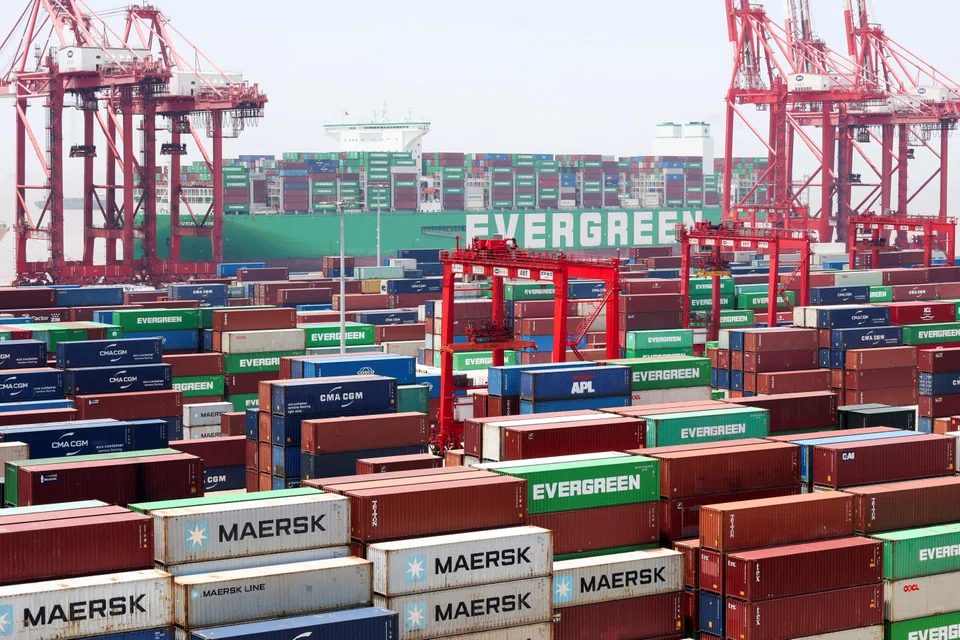
[BEIJING] China on Wednesday (Jan 14) reported a record trade surplus of nearly US$1.2 trillion in 2025, led by booming exports to non-US markets as producers looked to build global scale to fend off sustained pressure from the Trump administration.
A push by policymakers for Chinese firms to diversify beyond the world’s top consumer market by shifting focus to South-east Asia, Africa and Latin America paid dividends, cushioning the economy against US tariffs and intensifying trade, technology and geopolitical frictions since President Donald Trump returned to the White House last year.
“China’s economy remains extraordinarily competitive,” said Fred Neumann, chief Asia economist at HSBC. “While this reflects gains in productivity and the rising technological sophistication of Chinese manufacturers, it is also due to weak domestic demand and attendant excess capacity.”
Heading into 2026, the challenges for Beijing are aplenty, including deflecting concerns from an increasing number of global capitals about China’s trade practices and overcapacity, as well as their overreliance on key Chinese products.
One of the key questions facing policymakers is for how long the US$19 trillion economy can continue to counteract a property slump and sluggish domestic demand by shipping ever cheaper goods to other markets.
“Rising Chinese trade surpluses could raise tensions with trade partners, especially those reliant on manufacturing exports themselves,” Neumann said. The manufacturing juggernaut’s full-year trade surplus came in at US$1.189 trillion – a figure on par with the GDP of a top-20 economy globally like Saudi Arabia – customs data showed on Wednesday, having broken the trillion-US dollar ceiling for the first time in November.
“With more diversified trading partners, (China’s) ability to withstand risks has been significantly enhanced,” Wang Jun, a vice-minister at China’s customs administration, said at a press briefing following the data release.
Outbound shipments from the world’s second-biggest economy grew 6.6 per cent in value terms year on year in December, compared with a 5.9 per cent increase in November. Economists polled by Reuters had expected a 3 per cent increase.
Imports were up 5.7 per cent, after a 1.9 per cent bump the month earlier and also beat a forecast for a 0.9 per cent uptick.



“Strong export growth helps to mitigate the weak domestic demand,” said Zhiwei Zhang, chief economist at Pinpoint Asset Management.
“Combined with the booming stock market and stable US-China relations, the government is likely to keep the macro policy stance unchanged at least in Q1.”
Exports up as China set to gain more global share
China’s yuan held steady following the upbeat data even as equity investors welcomed the forecast-beating numbers. The benchmark Shanghai Composite index and blue-chip CSI300 index both rose more than 1 per cent in morning deals.
The Asian powerhouse economy’s monthly trade surpluses exceeded US$100 billion seven times last year, partially underpinned by a weakened yuan, up from just once in 2024, underscoring that Trump’s actions have barely dented China’s broader trade with the wider world even if he has curbed US-bound shipments.
Exports to the US slumped 20 per cent in US dollar terms in 2025, while imports from the world’s top economy were down 14.6 per cent. Chinese factories managed to make inroads in other markets, with exports to Africa jumping 25.8 per cent and those to the Asean bloc of South-east Asian nations up 13.4 per cent. EU-bound shipments grew 8.4 per cent.
China’s rare-Earth exports in 2025 surged to their highest level since at least 2014, even as Beijing began curbing shipments of several medium to heavy elements from April – a move analysts saw as an effort to showcase its leverage over Washington while negotiators wrangled over soybean purchases, a potential Boeing aircraft deal and the fate of TikTok’s US operations.
The world’s top agricultural importer purchased a record volume of soybeans in 2025, buoyed by a sharp increase in shipments from South America, with Chinese buyers holding off from US crops for much of the year as trade tensions lingered.
Trump factor still looms large
Economists expect China to continue gaining global market share this year, helped by Chinese firms setting up overseas production hubs that provide lower-tariff access to the US and the European Union, as well as by strong demand for lower-grade chips and other electronics.
Beijing, however, has shown signs of recognising it must moderate its industrial largesse if it is to sustain its success, and address the image problem outsized exports are causing.
Last week, it scrapped subsidy-like export tax rebates for its solar industry, a long-standing point of friction with EU states.
The Trump challenge to China is not going away in a hurry either, analysts note, even as the US Supreme Court could rule against the president’s tariff hikes later on Wednesday.
On Tuesday, Trump said he thinks China can open its markets to American goods, after threatening a day earlier to slap a 25 per cent tariff on countries that trade with Iran, risking reopening old wounds with Beijing, Teheran’s biggest trading partner.
“Trump’s threat to impose a 25 per cent tariff on countries doing business with Iran underscores the potential for renewed trade tensions between the US and China,” said Zichun Huang, China economist at Capital Economics. REUTERS
Decoding Asia newsletter: your guide to navigating Asia in a new global order. Sign up here to get Decoding Asia newsletter. Delivered to your inbox. Free.
Share with us your feedback on BT's products and services