



China escalates Takaichi feud by blacklisting more Japan firms
The new restrictions expand on curbs introduced on Feb 24
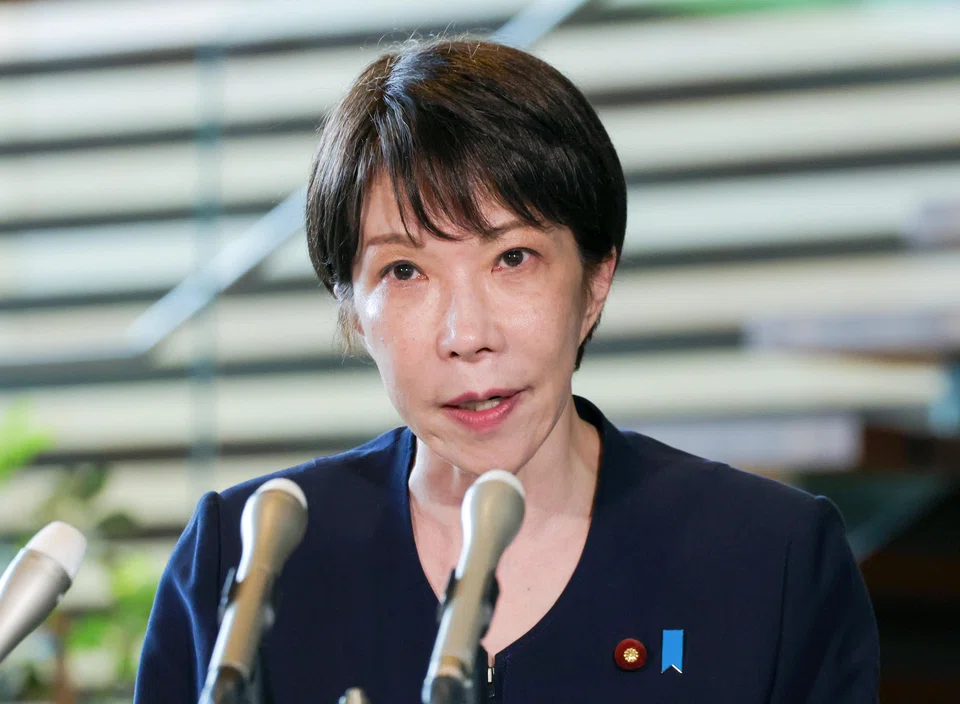
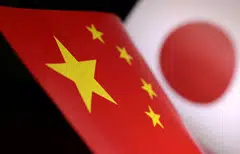
[BEIJING] China expanded its export-control offensive against Japan, doubling the number of Japanese entities subject to curbs and deepening a feud with Prime Minister Sanae Takaichi’s government.
The Ministry of Commerce on Monday (Jun 29) added 20 Japanese organisations to its control list, imposing a general ban on Chinese exports that can be used for both commercial and military purposes.
In a parallel measure, Beijing placed another 20 entities on its monitor list. While not an outright ban, this subjects them to stricter scrutiny for importing dual-use items from China.
The moves mark the latest escalation in a dispute over comments on Taiwan by Takaichi last year, when she suggested Tokyo could deploy its military if China attempts to seize Taiwan, a self-ruled democracy claimed by Beijing.
Takaichi has refused to withdraw her comments and insisted Tokyo’s policy hasn’t changed.
The new restrictions are an expansion of curbs introduced on Feb 24, which initially took aim at 40 firms. The additional targets of the control list include the state-run National Institute for Defense Studies, military systems research centres as well as affiliates of Mitsubishi Electric and Mitsubishi Heavy Industries.
Mitsubishi Electric was down 1.4 per cent, while Mitsubishi Heavy was up 1.9 per cent as at 2.45 pm in Tokyo. Shares of Mitsui E&S, which was put on the monitor list, briefly dropped as much as 3 per cent, then pared their decline to trade near levels seen before China’s announcement.
“Export controls had been anticipated to some extent and were already on investors’ radar,” said Hiroshi Namioka, chief strategist at T&D Asset Management in Tokyo.
The order also bans any overseas entity from providing the Japanese companies on the control list with dual-use technology that originated in China, effectively extending the scope of curbs beyond Chinese borders – though it remains unclear how they would be enforced.

A spokesperson for the Commerce Ministry said in a statement that Japan had “shown no remorse” since the February restrictions and instead accelerated the push for “remilitarisation”, including deploying offensive weapons and launching missiles overseas. Takaichi’s administration has rejected those claims.
Earlier this month, Defence Minister Shinjiro Koizumi said that Japan would take a transparent approach to investing in new methods of warfare that are needed to keep up with the changing nature of conflict, while questioning the accuracy of China’s own official military spending figures.
The government in Tokyo has also protested activity by Chinese coast guard vessels asserting Beijing’s claims to maritime borders close to a southern Japanese island, after having to scramble fighter jets in response to flights by Chinese and Russian bombers around Japan’s south.
During a regular press conference on Monday in Beijing, Chinese foreign ministry spokesman Guo Jiakun said China’s measures are “fully justified.”
“We hope Japan will turn back from the wrong path, correct its erroneous words and deeds,” Guo said, adding that they target only a small number of Japanese entities.
The latest curbs and the escalation in rhetoric have yet to cool off trade between Asia’s two biggest economies.
The total value of Chinese exports to Japan rose 7 per cent to almost US$69 billion in the first five months of this year. The increase is especially surprising because it coincided with a drop in China’s shipments of mineral fuels and fertilisers due to the war with Iran.
China imposed a ban in January on all dual-use exports to Japan for military use, or any other end-use purposes that could enhance Japan’s military capabilities.
Under that blanket restriction, dual-use exports to Japanese military suppliers are already prohibited. The question is how much the latest restrictions will affect Japan’s commercial manufacturing.
One key area of exposure is rare earths, where China dominates the global supply chain. Beijing has been choking shipments of some rare earth elements and other critical minerals to Japan in recent months, forcing firms to eat into stockpiles and scramble for alternatives.
“For now, Beijing is increasing pressure on Tokyo to take visible steps toward improving ties,” said George Chen, partner for Greater China practice at The Asia Group. “In the short term, Japan-China relations remain fragile – not yet stabilising, and at risk of slipping further if neither side moves to arrest the downward trend.” BLOOMBERG
Decoding Asia newsletter: your guide to navigating Asia in a new global order. Sign up here to get Decoding Asia newsletter. Delivered to your inbox. Free.
Share with us your feedback on BT's products and services
TRENDING NOW

Two Singapore-listed palm oil firms named in Greenpeace report on Indonesian plantation fires
Singapore Airlines flight returns to San Francisco after ‘unruly’ passenger incident

Singapore looking into which companies responsible for haze-causing fires: PM Wong
Deluge IPO 3.86 times subscribed ahead of SGX debut

