



China finds dangerous cure for record deflation in war oil shock
Official data shows the share of loss-making industrial companies in China climbed to 24 per cent in 2025, the highest this century
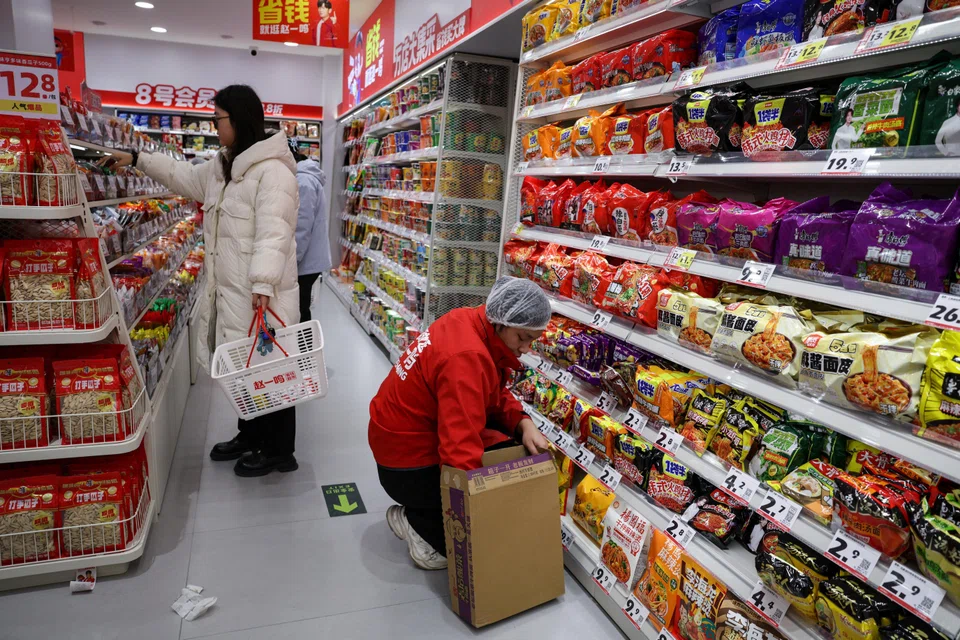
SURGING global oil prices stemming from the war with Iran have put China on the cusp of exiting a record streak of deflation well ahead of schedule. But it’s not clear if the economy is better off.
In the weeks before Donald Trump began his barrage, most economists expected China’s producer prices to extend their three-and-a-half year negative streak in 2026.
Now, as global energy costs surge, factory prices could snap that funk as soon as this month, according to Wall Street banks including Citigroup and Goldman Sachs Group. Consumer prices are already edging up.
An official exit from economy-wide deflation would be a big moment for China.
Since the country’s Covid reopening in late 2022, a manufacturing glut and sluggish consumer demand have led to intense price wars that eroded company profits and slowed wage growth. Authorities earlier this month issued their strongest pledge yet to end deflation.
The problem is inflation driven by commodity costs isn’t always a good thing. While a similar spike in energy prices helped jolt Japan out of decades of deflation after the war in Ukraine began, China is facing different conditions.
A one-time shock that comes without draining excess industrial capacity or revving up household spending could leave factories footing the bill.
“Not all inflation is the same. Imported inflation will be bad for downstream industries,” said Larry Hu, head of China economics at Macquarie Group. “We want to see higher inflation due to better organic domestic demand.”
China is more insulated than many other economies from the oil spike after years of investment in renewables and efforts to secure stable supplies.


Even so, a 10 per cent on-year rise in oil would translate into an increase of about 0.4 percentage point in China’s producer price index, according to estimates by Gavekal Dragonomics and Yuekai Securities.
Since the hostilities began in Iran, crude has soared to over US$100 a barrel — an increase of more than 50 per cent from 2025.
With the outlook looking stronger for prices, some global lenders like Goldman are pushing back their forecasts for easing by China’s central bank. Policymakers will likely hold off from using tools such as cuts to the policy interest rate or banks’ required reserves until growth comes under greater pressure.
In combination with faster consumer inflation, the turnaround in the PPI will probably break a three-year drop in the GDP deflator — a broad measure of price changes in the economy — a record-long that’s almost unmatched in major economies except for Japan.
The deflator is usually close to the average of consumer and producer price changes.
‘Cost-push inflation’
A more immediate risk for China is what economists call “cost-push inflation” that further hurts factories. In the absence of stronger demand, manufacturers may find it difficult to pass on the higher costs to buyers and end up with even thinner profits.
Sectors most exposed to the upheaval include oil extraction and processing, chemicals, fibers, plastic and rubber manufacturers — industries hit by US tariffs last year and now struggling with higher costs and export curbs imposed by the government after the war.
It’s a worry given official data shows the share of loss-making industrial companies in China climbed to 24 per cent in 2025, the highest this century.
A 20 per cent increase in imported oil prices would reduce overall margins in manufacturing by up to a percentage point, according to Gavekal Dragonomics, after the profit rate for onshore-listed firms fell to 4.5 per cent last year.
“Manufacturing profits and investment would be hit, notably carmakers focusing on traditional fuel cars, and a broad range of downstream manufactures using plastics,” said Duncan Wrigley, chief China economist at Pantheon Macroeconomics.
As China enters a new inflationary era, what’s clear is that the outcomes will vary across the economy.
Spillovers from the war are likely to have a more muted effect on the consumer price index, since oil-related items have a weighting of less than 2 per cent in the CPI basket, according to Barclays.
Economists at the British bank estimate that even if crude averages near US$100 this year, China’s consumer inflation will likely stay below or around 1 per cent, far below the goal set by the government.
On the bright side, some economists expect even a temporary price jolt to reset inflation expectations among households and businesses. If successful, that may pull China from a spiral of falling prices and weakening demand.
Japan’s escape from decades of deflation and stagnation is a precedent cited by those upbeat about the outlook.
In 2022, Russia’s invasion of Ukraine sent global energy prices soaring, helping spark inflation in Japan.
As a result, Japanese companies such as rail operators hiked prices for the first time in four decades, the stock market rallied and the Bank of Japan ended 14 years of negative rates.
But the differences between Asia’s biggest economies are equally striking. In Japan, the yen’s depreciation and years of policy stimulus were in place, with its property sector already on the mend and shortages widespread in the labour market.
Still, the parallels offer a hint of how a spike in oil prices may play out in China. For economists at CF40, a Beijing-based think tank, China similarly stands to benefit given improving domestic demand and healthier household balance sheets.
A supply-driven acceleration in prices could help China “enter a positive feedback loop,” they said. “It won’t necessarily be ‘bad’ inflation if the oil price hikes are temporary.” BLOOMBERG
Decoding Asia newsletter: your guide to navigating Asia in a new global order. Sign up here to get Decoding Asia newsletter. Delivered to your inbox. Free.
Share with us your feedback on BT's products and services
TRENDING NOW

DBS, OCBC, UOB rout lops billions off STI as inflation, rate concerns spook investors

Grab CEO’s wife Chloe Tong on life with Anthony Tan and finding her purpose

OCBC sheds S$8 billion in value as shares close nearly 6% down; analysts cautious on banks

Deal between tycoon friends sparks scrutiny of Philippine power sector

