China imposes export controls on 20 Japanese entities to curb ‘remilitarisation’
The restrictions are also aimed at curbing Japan’s nuclear ambitions
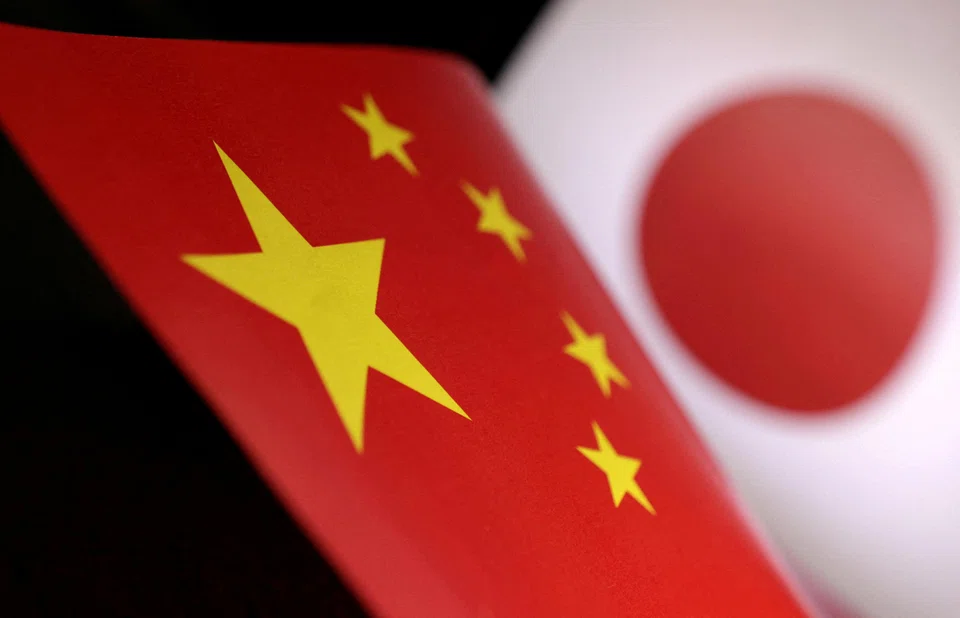
[BEIJING] China has prohibited the export of dual-use items to 20 Japanese entities that it says supply Japan’s military, the commerce ministry announced on Tuesday (Feb 24), in the latest escalation of a dispute with Tokyo.
China is using its influence over supply chains to ratchet up pressure on Tokyo even after Prime Minister Sanae Takaichi, who angered Beijing with comments about Taiwan in November, won a sweeping mandate in a landslide election victory this month.
The measures target units of major Japanese industrial conglomerates such as Mitsubishi Heavy Industries’ shipbuilding and aero engines divisions, the ministry said.
The rules effectively cut companies off from the seven rare earths and associated materials currently on China’s dual-use control list, along with a swathe of other controlled critical minerals. The new rules bar exports of rare earths like dysprosium, yttrium or samarium which play tiny but vital roles in cars, planes, weapons and consumer electronics.
It is not clear how long it might take for shortages to become an issue. Japanese companies are well-known for maintaining rare earth stockpiles and until at least December, the latest date for which export data is available, China was regularly sending large shipments to Japan.
China has an export control list of around 1,100 dual-use items and technologies and manufacturers need to secure a licence to be able to ship them overseas, wherever the end user may be.
“The measures announced today are completely unacceptable and deeply regrettable,” Japan’s Deputy Chief Cabinet Secretary Kei Sato told a press briefing.
The government in Tokyo has demanded their withdrawal, Sato said.
New defence strategy
The restrictions were aimed at curbing Japan’s “remilitarisation” and nuclear ambitions, China’s commerce ministry said, adding overseas organisations and individuals were also banned from transferring Chinese-origin dual-use items to the listed entities.
SEE ALSO




Firms could apply to sell to the listed entities under “special circumstances” that required them to export, the ministry said.
China has assured that entities operating “in good faith” have no reason to worry, and that the measures announced would not affect normal economic and trade exchanges between the two countries.
“You could say it’s a check against the Japan-US relationship and at Japan’s additional defence efforts,” said Ryo Sahashi, a professor at the University of Tokyo.
Takaichi has pledged to revise Japan’s three core security documents to produce a new defence strategy and accelerate a review of military export rules to expand overseas sales and strengthen defence companies.
She has accelerated a military build-up launched in 2023 that will double Japan’s defence spending to 2 per cent of GDP by the end of March, making the country one of the world’s biggest military spenders despite its pacifist constitution.
China’s commerce ministry also added another 20 Japanese entities, including Subaru, Itochu Aviation and Mitsubishi Materials to a watch list, saying it could not verify the end-users or end-uses of the entities’ dual-use items.
Subject to stricter scrutiny, companies exporting to these entities would have to apply for individual export licences for dual-use items and provide a written commitment that the items would not contribute to enhancing Japan’s military capabilities.
None of the affected Japanese companies contacted by Reuters had an immediate comment on the trade measures.
Market reaction in Tokyo was mixed, with Subaru shares falling 3.5 per cent while Mitsubishi Materials shares rose 3.8 per cent and Mitsubishi Heavy shares were down 3.1 per cent. REUTERS
Decoding Asia newsletter: your guide to navigating Asia in a new global order. Sign up here to get Decoding Asia newsletter. Delivered to your inbox. Free.
Share with us your feedback on BT's products and services