China launches US$113 billion free trade experiment on Hainan island
Foreign firms will also be able to operate in service sectors that are restricted on the mainland
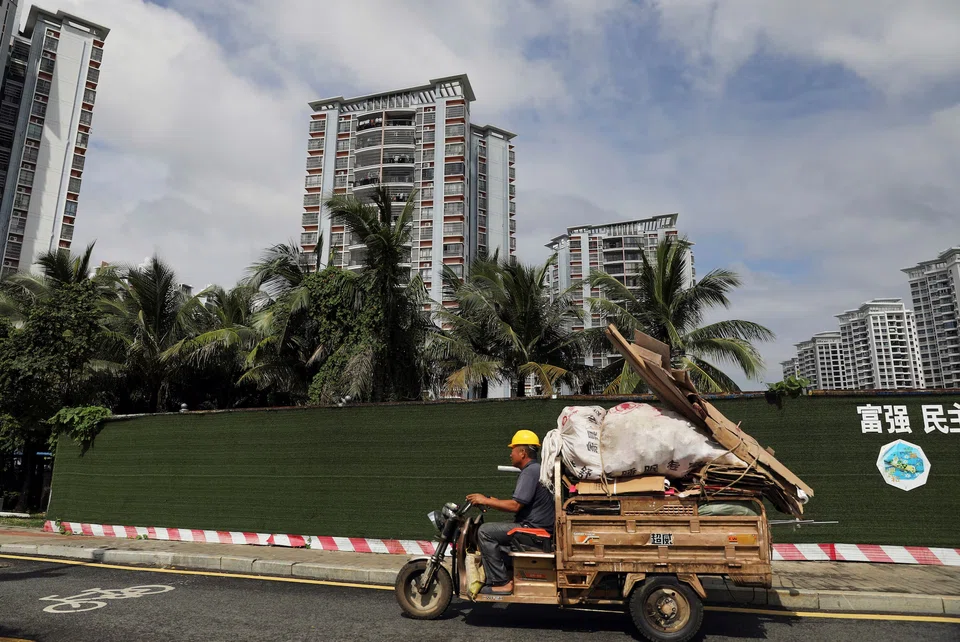
[BEIJING] China on Thursday (Dec 18) split off a Belgium-sized island with an economy comparable to a mid-sized country from the mainland for customs processing, part of a bid to join a major trans-Pacific trade deal and establish a new Hong Kong-style commercial hub.
Officials hope that turning the southern province of Hainan into a duty-free zone will spur foreign investment, with goods that achieve at least 30 per cent local value-add able to move on into the world’s second-largest economy tariff-free.
Foreign firms will also be able to operate in service sectors that are restricted on the mainland.
China is also seeking to boost its free trade credentials to convince members of one of the world’s largest free-trade deals, the Comprehensive and Progressive Agreement for Trans-Pacific Partnership (CPTPP), that it can meet the bloc’s high standards for trade and investment openness through pilot projects, such as the Hainan Free Trade Port.
China’s Vice-Premier He Lifeng called on local officials to “build Hainan Free Trade Port into a vital gateway leading China’s new era of opening up to the world” during a speech at the port.
The project was a “major strategic decision” taken by the ruling Communist Party “with an eye to the overall situation at home and abroad”, China’s economy tsar said.
That appeared to be a reference to US President Donald Trump’s tariffs, which have pushed policymakers to diversify China’s US$19 trillion economy from the world’s top consumer market and take steps to further consolidate the manufacturing juggernaut’s role in global supply chains.
China’s leaders have made reversing a drop in investment a priority for next year, seeking to shift the economy from its current reliance on stimulus towards a dual focus on consumption and investment to stabilise growth in the near-term, while officials evaluate undertaking painful structural reforms needed to rebalance the economy long-term.
Foreign direct investment into China fell 10.4 per cent year on year in the first three quarters of 2025, official data showed.
If liberalisation succeeds in Hainan, economists say policymakers may feel emboldened to expose more of China’s economy to market forces.
China’s free trade test case
“The benchmark is something similar to Hong Kong,” said Ran Guo, director for consumer economy at the China-Britain Business Council, who has been tracking the plan’s developments for the past five years.
“In addition to boosting Hainan’s tourism sector, the plan should also encourage more foreign investment and manufacturing,” she added. “Hainan also serves as a logistics and trading hub for China towards South-east Asia, which carries an important strategic role.”
Hainan’s gross domestic product stood at US$113 billion last year, official data showed, the equivalent of the world’s 70th-largest economy, according to World Bank data. Even so, it is far short of Hong Kong’s US$407 billion economy.
“The Hainan model basically offers managed liberalisation that will be great for reintegrating supply chains, yet it lacks the legal system and financial openness Hong Kong boasts,” said Xu Tianchen, senior economist at the Economist Intelligence Unit.
The island will also have to compete with South-east Asia and Japan, Xu added, making success far from guaranteed.
Trade negotiators also doubt how seriously CPTPP members will view the Hainan project, noting that membership to the bloc requires opening up the entire economy – something China has yet to demonstrate, no matter how large Hainan is.
“CPTPP members are looking for nationwide steps that accession partners are prepared to take, along with a track record of compliance with other trade agreements,” one Western diplomat said off the record, citing Beijing’s recent trade tensions with Japan amid a feud over Taiwan. REUTERS
Decoding Asia newsletter: your guide to navigating Asia in a new global order. Sign up here to get Decoding Asia newsletter. Delivered to your inbox. Free.
Share with us your feedback on BT's products and services