



China mine disaster, Indonesia policy changes upend global coal market
The Iran war alone is expected to drive an additional 70 million tonnes of coal consumption across the Asia-Pacific
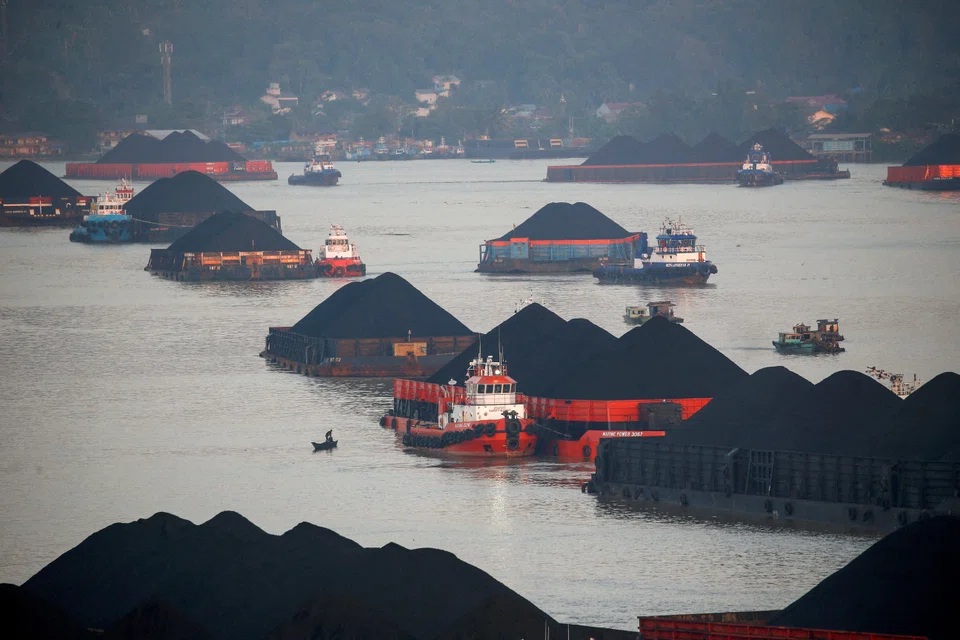
[BEIJING] A deadly mining accident in China’s biggest coal-producing region and mounting policy chaos around Indonesian exports are choking global supplies, which analysts and industry officials say could boost prices as liquefied natural gas (LNG) supplies remain tight due to the US-Israeli war on Iran.
The war in Iran halted shipping in the Strait of Hormuz – through which, during normal times, a fifth of global oil and LNG supplies passes – triggering purchases of high-grade coal by Japan and South Korea and pushing the Newcastle benchmark to near two-year highs of over US$150 a tonne.
However, purchases of lower-grade coal – typically from top exporter Indonesia – have been soft due to tepid demand from China and India, which have leaned upon sufficient inventories and renewable output to meet power demand.
That is changing after a fatal explosion at a Shanxi mine last month, analysts say, with the accident triggering sweeping safety inspections in the province and tightening domestic supplies.
China’s June thermal coal imports are expected to rise 27.6 per cent from a year earlier to 27.8 million tonnes to meet higher seasonal demand as local supply tightens, DBX Commodities CEO Alexandre Claude said – a substantial increase relative to tepid demand until May.
In addition, Indonesia’s plan to bring all coal exports under the control of a new state-run company called Danantara has compounded the uncertainty.
“Shanxi safety curbs, Indonesia’s Danantara transition tightened seaborne supply,” Claude said. “The inventory cushion has thinned. With demand firm and supply constrained, near-term price risk remains skewed to the upside.”
For the first four months of 2026, Indonesia’s thermal coal production was down 7 per cent from a year earlier, said Scott Dendy, the executive director at McCloskey, a consultancy. He added that exports could decline by about 11 per cent this year to 446 million tonnes if production tracks current pace.
The disruptions come as South-east Asian economies that typically buy Indonesian coal are cranking up their coal-fired power capacity.
SEE ALSO


Hotter weather is driving higher coal use in Vietnam and the Philippines, while tighter gas supplies in Thailand are expected to push imports higher this year, said Vasudev Pamnani, director at India-based I-Energy Resources.
Fallout from Iran war, El Nino incoming
The fallout from the Iran war alone is expected to drive an additional 70 million tonnes of coal consumption across the Asia-Pacific region in 2026, consultancy Rystad Energy said in a June note.
While LNG supplies are expected to rise after the US and Iran agreed on a framework to reopen the Strait of Hormuz, officials say a return to normal supply levels will take weeks and getting back to pre-war production levels could take years.
That additional demand comes as global supply is expected to decline 5.7 per cent to 985 million tonnes in 2026, said Bryan Lim, business development manager at Argus, a consultancy, with analysts expecting an approaching El Nino to further boost demand.
Peng Qihua, associate professor at Nanjing University’s School of Atmospheric Sciences, said that drought-like conditions in northern China could hurt hydropower output and hotter weather could drive air-conditioning demand. Lower hydropower output typically pushes coal use higher in China. And major coal producers are also facing issues affecting their exports, McCloskey’s Dendy said.
In Russia, the world’s third-largest coal exporter, output is down as roughly two-thirds of producers are operating at a loss due to a stronger rouble and rising transportation costs, he pointed out.
Dendy expects Australia’s exports to rise this year, but analysts expect higher mining costs and restricted diesel supplies to choke output.
South Africa is drawing increased interest from Indian buyers seeking alternatives to uncertain Indonesian supplies, Pamnani added, but DBX expects “lumpy vessel clearances and shipment timing” to hurt exports in June. REUTERS
Decoding Asia newsletter: your guide to navigating Asia in a new global order. Sign up here to get Decoding Asia newsletter. Delivered to your inbox. Free.
Share with us your feedback on BT's products and services
TRENDING NOW

Grab CEO’s wife Chloe Tong on life with Anthony Tan and finding her purpose

He built the Vingroup empire. Now South-east Asia’s richest man is handing some key roles to his sons

HDB reviewing ‘jumbo’ flat scheme after Telok Blangah unit listed for sale at S$2.18m

What role can Japan play in Asean’s future?

