China needs to lift veil of secrecy on zero-Covid policy

Angela Tan
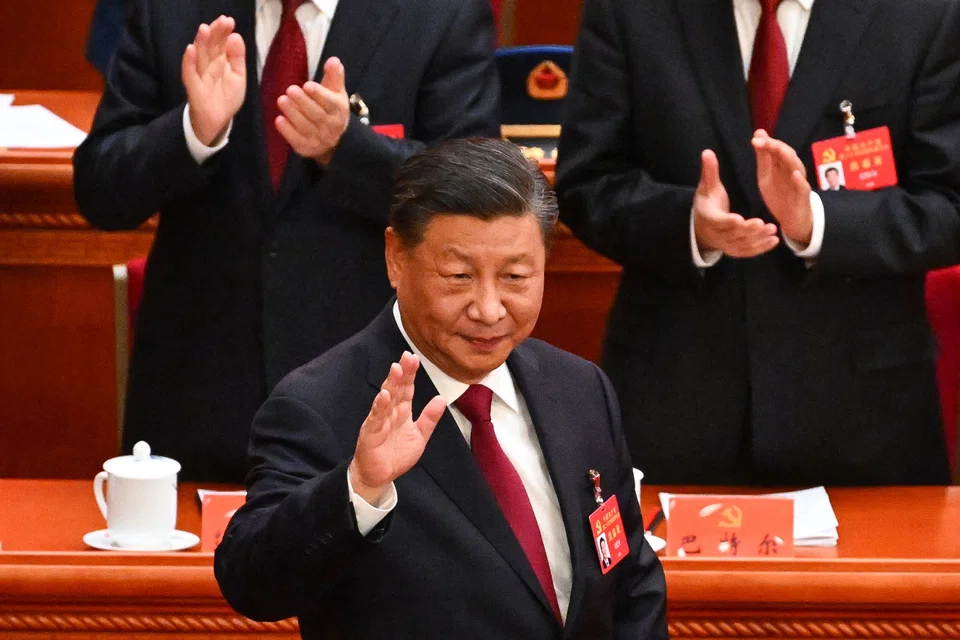
WHEN China failed to release its latest trade data last Friday (Oct 14) and third-quarter gross domestic product (GDP) figures as scheduled on Tuesday, the rumour mill immediately went into overdrive - from a poor report card to a political decision to delay these until after the end of this week’s Party Congress, the once-in-five-years event held to laud the government’s achievements and legitimise the Chinese Communist Party’s rule.
But days into the Congress, the bulls were clearly disappointed at the lack of market support from the national team. The Shanghai Composite Index performance was lacklustre and has been heading downwards since the start of the congress on Oct 16. Historically, the stock market would rally in the three months preceding the congress.
Economists at Goldman Sachs expect China’s real GDP growth in Q3 to be 3.5 per cent on year, higher than the 0.4 per cent growth seen in the second quarter, which was dampened by protracted lockdowns in major cities such as Shanghai and Beijing.
While there were multiple waves of local outbreaks in Q3, Covid-related lockdowns tended to be shorter and mostly outside of Tier 1 cities. Industrial production and fixed asset investment growth are expected to accelerate in September. However, both export and import growth are projected to slow in September. The delay in the release of the Q3 GDP - a new date has not yet been announced - has fuelled speculation over a possible need to recalculate the figures, and this has hurt China’s credibility.
While the congress will close on Oct 22 with President Xi Jinping entrenched in his third term as party leader, the once-in-a-decade reshuffle of China’s leadership will only be completed by mid-March 2023. Those looking for hints of changes will be disappointed as the government looks poised to further push existing policies to tackle the economy, Covid-19 and national agenda with more refinements and a greater confidence.
But any sustained recovery is unlikely as long as Beijing does not present a clear exit strategy from its zero-Covid policy. On Thursday, the market was abuzz with yet another rumour that China could cut its Covid-19 quarantine requirements for inbound travellers to two days in a hotel, followed by five days at home.
If true, the move will provide some relief, as most economists are expecting China to reopen only in Q2 2023 at the earliest. The more pessimistic ones fear this reopening could be delayed even further, especially with the congress emphasising “self-reliance”.
Does this mean the Chinese mRNA vaccine is the answer to the zero-Covid exit? Development on that front has been slow and nobody wants to imagine what will happen to the economy if it takes another year to reopen. A reopening in late 2023 could mean 2023 GDP growth falling below 3 per cent, possibly even hitting 1 per cent.
The Chinese economy is being pummelled both internally and externally. The US Federal Reserve has vowed to bring inflation down with aggressive rate hikes, adding significant downside risks to global demand and China’s exports, while limiting Beijing’s space for policy easing.



China’s inflation stood at a low of 2.8 per cent in September, compared to 8.2 per cent in the US, 13.2 per cent in the UK and 10 per cent in Germany. The latest US ban on chips to China worsens Sino-US tensions, and adds another road bump in China’s ambition to be self-sufficient and climb the technology innovation ladder.
Domestically, despite earlier stimulus rollouts to municipal governments announced this year by the state council, China’s economy shows no sign of sustainable recovery. Home prices remain sluggish and most households expect them to fall further.
According to Natixis economists, the real estate sector will continue to face headwinds given weak demand and poor cash flows. The mortgage boycott was the tip of the iceberg for China’s financial stability – and its dangerous link with social stability, especially as real estate forms 59 per cent of household wealth. But the situation has not exploded because the local government has been buying unfinished projects and it is now harder for households to boycott mortgage payments.
The crux of the problem is lost confidence, which will not come back easily; not with the never-ending mobility restrictions and regulatory changes.
The congress also gave a glimpse of what is in store for the wealthy in Xi’s push for “common prosperity”, spawning nervous jokes of imminent “common poverty”. In his opening address to the congress, Xi spoke about the need to ensure income distribution and wealth accumulation were “well-regulated”, an expression that presumes the wealthy are on his watchlist and more scrutiny and policy measures can be expected.
George Magnus, an associate at the China Centre at Oxford University, sums it up well: “Notwithstanding the rhetoric and fanfare of success that will doubtless ring from the Great Hall of the People this week, China faces testing and, in some ways, troubling times ahead. Its economy is Xi Jinping’s Achilles’ heel.”
Decoding Asia newsletter: your guide to navigating Asia in a new global order. Sign up here to get Decoding Asia newsletter. Delivered to your inbox. Free.
Copyright SPH Media. All rights reserved.