China reveals unease over trade in economic roadmap for 2026
Growth has cooled following months of slowdown in consumption and rapidly falling investment
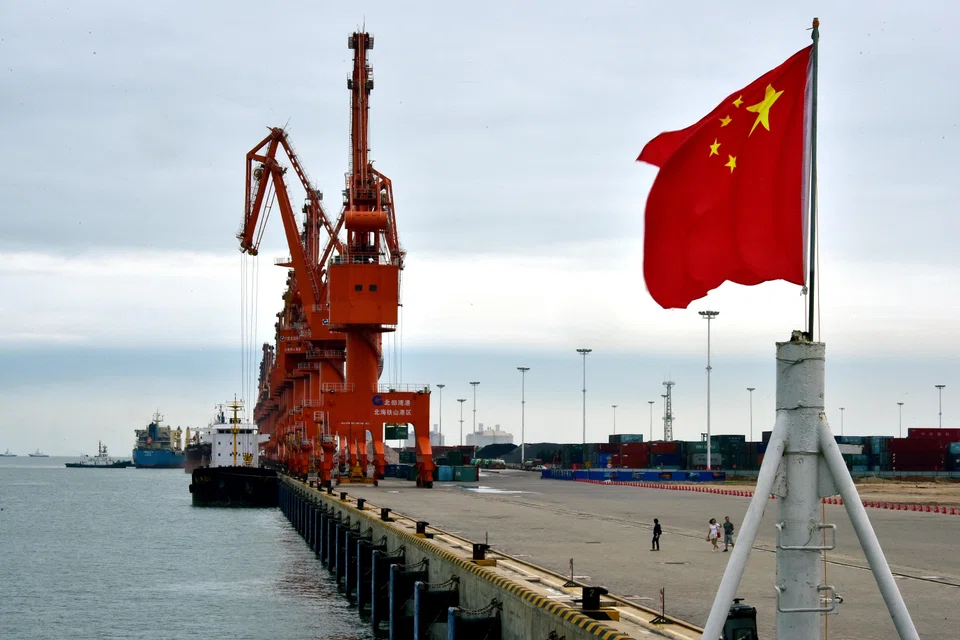
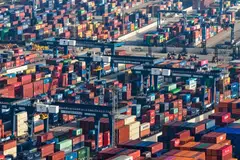
[BEIJING] China’s top leaders are signalling they are on alert for a potential flareup of tensions in global commerce as they draw up economic plans for next year, after amassing a record trade surplus despite the tariff war with the US.
Hours after China announced that its excess of exports to imports has surpassed US$1 trillion in just 11 months, a readout of the Politburo’s meeting on Monday (Dec 8) made a veiled reference to the uncertainty overseas, calling for “better coordination between domestic economic work and an international economic and trade battle”. It vowed to “act without delay” to develop new growth engines.
For analysts parsing the language used by the Communist Party’s decision-making body led by President Xi Jinping, the takeaway is that vigilance will be important for policymakers, even as they’ve withheld bolder stimulus measures this year from an economy in the grip of a slowdown.
More than a year on from Donald Trump’s reelection, the threats looming abroad are more likely to come from countries other than the US, so long as a fragile trade truce holds between the world’s two biggest economies.
Economic countermeasures are on the table as tensions escalate with Japan over the self-governing island of Taiwan, while Mexico’s Congress is set to vote this week on President Claudia Sheinbaum’s proposed tariffs on China. And just days ago, French President Emmanuel Macron said the European Union may be forced to take “strong measures” against China, including potential tariffs, if Beijing fails to address its widening trade imbalance with the bloc.
“Even though the China-US trade relations have eased markedly, some countries in Europe and Asia, such as the Netherlands and Japan, are still taking proactive moves in economic and trade areas,” Huaxi Securities economists, including Liu Yu, wrote in a Monday note. “The anti-globalisation trend is hard to reverse.”
The risk of greater protectionism is scrambling the economic calculus for China after the country exported its way out of the trade war with the US by selling far more to the rest of the world. Looking ahead, however, a lot more will ride on the strength of domestic demand.
China faces a worsening economic picture at home. Growth has cooled following months of slowdown in consumption and rapidly falling investment.
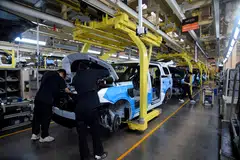
As the new year approaches, China’s government appears mindful of the challenges by signalling an urgent push to strengthen cutting-edge manufacturing. At the same time, analysts expect it to take only incremental steps in pivoting the nation’s growth model towards consumption. The Politburo made boosting domestic demand its top economic priority in the new year, according to the readout. It also urged officials to develop “new productive forces”, a catchphrase for emerging industries such as humanoid robotics, based on what local conditions allow. The strategy implies “China’s intention to further grow its manufacturing, especially high-tech manufacturing, sector and maintain export resilience”, said Goldman Sachs’ economists led by Lisheng Wang. The overall tone of the readout “appears somewhat disappointing, as evidenced by lowered growth concerns and no direct mention of consumption and the property sector”, they said. Further details are likely to emerge this week. The guidelines laid out by the 24-member Politburo during its December huddle typically set the tone for the Central Economic Work Conference, which in turn provides more specifics about policy priorities for the following year. That meeting is expected to take place in the coming days. With infrastructure construction at a saturation point in China, the collapsing property market is adding urgency to the pursuit of new industries to propel the economy in the future. Rebalancing the growth model towards consumption, on the other hand, requires long-term reforms such as expanding the social safety net and a tax overhaul.

Guolian Minsheng Securities’ analysts, including Tao Chuan, noted that the Politburo’s appeal for swift action to develop new growth drivers contrasts with its less intense call in July for “accelerating the cultivation of new pillar industries”.
“The change in that phrase underscores the urgency for fostering new growth engines is increasing,” they wrote. More policies to bolster investment are expected in sectors such as digital infrastructure, according to Shenwan Hongyuan economists, including Zhao Wei. Services will be targeted as part of an effort to boost consumption, they said in a note, adding that per capita spending in the sector remains 1,923 yuan (S$353) below its pre-pandemic trend.
Some economists saw another sign of a possible shift in policy priorities as the Politburo lowered its goal of preventing and resolving risks in key areas – usually a reference to dangers in local government debt, property and financial sectors – to the bottom of a list of major tasks for 2026.
This reflects Beijing’s possible assessment that systemic risks have declined to some extent after an effort to reduce “hidden debt”, analysts at China International Capital, including Fan Yangyang, wrote in a note. “Accordingly, next year’s economic work may focus more on development even as a firm commitment to risk prevention is maintained,” they said.
A total of 1.4 trillion yuan of new local government special bonds has been issued so far this year for provincial authorities to refinance their off-balance-sheet debt and repay arrears owed to companies, according to Bloomberg-compiled data. That’s 71 per cent more than planned in the annual budget and means waning fiscal support for growth.
Nomura Holdings economists, including Lu Ting, said the readout suggests Beijing’s concern is rising about the recent growth slump, urging bolder measures to address the property woes, bolster consumption and business confidence, and improve trade ties.
“Beijing has already exhausted its easily available policy tools,” they said. “Markets will likely have to be patient when expecting a genuine trough in growth and a real end to deflation.” BLOOMBERG
Decoding Asia newsletter: your guide to navigating Asia in a new global order. Sign up here to get Decoding Asia newsletter. Delivered to your inbox. Free.
Share with us your feedback on BT's products and services