Global Enterprise logo
BROUGHT TO YOU BYsc logo

China sportswear stocks take off in run-up to Winter Olympics in Beijing

Angela Tan
Published Sun, Jan 23, 2022 · 09:50 PM

    Singapore

    CHINA'S fitness revolution is not showing any signs of slowing down as the exponential growth in fitness clubs, yoga studios and a marathon boom attracts more foreign brands to open stores on the mainland.

    There is no shortage of luxury foreign brands wanting to get into the China market. Austrian high-end ski sports brand Head Sportswear officially opened its first store in China joining other top global winter sports brands Bogner, Burto and Mons Royale to capture the 300 million winter sports enthusiasts.

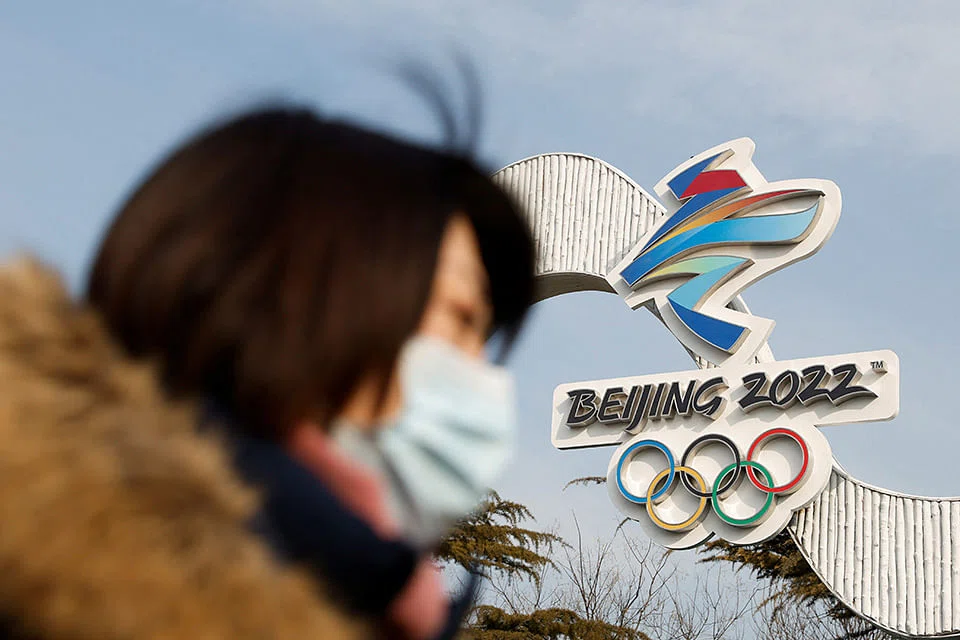
    "Ski companies are betting the Olympic Winter Games will be an accelerator to winter sports just like the 2008 Beijing Olympics was the turning point for sports awareness when China clinched the largest-ever medal tally in Olympics history," said an analyst in Hong Kong.

    With the Beijing Winter Olympics just round the corner, Bosideng - China's leading down jacket maker and No 1 globally - announced in December a joint venture with Munich luxury sportswear brand Bogner to expand in China.

    In the past decade, domestic brands have been gaining awareness and recognition from domestic consumers, particularly Gen Z. The home-grown Li-Ning Company has built a reputation as a professional trendy sports brand focusing on innovation, collaboration with designers and the right celebrity connections.

    Asean Intelligence

    Get insights into businesses across South-east Asia

    Get the free report

    More recently, rising nationalism has pushed the demand up for "Made in China" sporting goods, and, along with that, the stock prices of domestic athletic wear manufacturers.

    China's sports footwear e-commerce market alone reached US$8.9 billion in the second quarter of last year, according to Information and advisory services provider, The NPD Group. While key international brands like Nike, Adidas and Puma struggled, domestic brands gained more than 10 per cent market share with Anta Sports and Li-Ning both hitting historical high sales.

    Like most economies, the Covid-19 pandemic has been a boon to China's sporting goods and outdoors businesses. Demand has been stoked by local shopping as consumers face travel restrictions under China's zero-Covid tolerance policy. Consumers have also been inspired by the upcoming Winter Olympic Games, which start in February.

    Today, 7 of the top 10 footwear brands in China are domestic ones, with Anta in the lead. This is up from 4 local brands in 2020. While major brands like Nike and Adidas are still featured in the top 10 list, their growth has slowed somewhat. In the third quarter of 2021, Adidas reported a 15 per cent sales decline in China; Nike's fell 24 per cent in its fiscal Q2. Adidas' management blamed the geopolitical situation as the biggest factor.

    Anta and Fila (Anta owns Fila in China) saw double-digit year-over-year growth rates in Q3 2021.

    Erke, another domestic Chinese brand, had a reported year-over-year growth rate that exceeded 400 per cent.

    On the rising demand for local brands, Global X by Mirae Asset Global Investments said unlike the older generation, many young consumers do not care if a product is local or from overseas as long as it is trendy. A good example is Li-Ning, which is a very popular high-end sportswear label with a similar price point to foreign lines, such as Nike and Adidas.

    "We expect that strong industry growth will continue to benefit both global and local brands, but we think that the US-China trade war will support home-grown names in the near term," Mirae added.

    Li-Ning was founded in 1990 by China's legendary Olympian and champion gymnast Li Ning. In the 6 months to June 30, 2021, the eponymous company's revenue grew 65 per cent to over 10 billion yuan (S$2.1 billion). Net profit was up almost 190 per cent, at 1.9 billion yuan. Its cash and cash equivalents stood at 6.1 billion yuan. The company's optimistic outlook and breakthroughs with bold innovation have seen its stock price surge more than 240 per cent during the past 2 years, to HK$81.55 on Jan 21, boosting its market value to over HK$200 billion (S$34.5 billion).

    The other beneficiary is Anta, China's top domestic sportswear brand and also the official sportswear partner of the Winter Olympics. The company sponsors NBA players Alex Caruso, Klay Thompson, Gordon Hayward, and Terance Mann, and is nicknamed "The Nike of China".

    For the first 6 months ended June 30, 2021, Anta's revenue rose 55 per cent on year to 22.8 billion yuan, on the back of a 132 per cent jump in profit to 4.1 billion yuan. Its cash and cash equivalents amounted 16.2 billion yuan. Its share price has risen more than 70 per cent from before the pandemic to HK$123 on Jan 21, and its market value has ballooned to HK$330 billion.

    China's sportswear market is seen entering another golden era in the future, as Beijing continues to promote healthy living. In the State Council's renewed National Fitness Plan for 2021-2025, China is set to raise regular sports participants to 38.5 per cent of the total population in 2025 by building over 2,000 sports parks, public fitness centres and stadiums.

    It also targets to attract 300 million participants in winter sports. According to the national Winter Sports Development Plan (2016-2025), the winter sports segment is expected to reach a scale of 1 trillion yuan by 2025. Overall, China's sports industry is expected to reach 5 trillion yuan by 2025, compared to 3 trillion yuan in 2020; a compound annual growth rate of 11 per cent.

    Other Chinese brands that have soared include Xtep International, which has seen its share price surge more than 200 per cent before the pandemic to HK$13.82. The shares got a HK$1 billion investment boost from private equity firm Hillhouse Capital as the Chinese sportswear manufacturing group seeks to expand its global market share. On Jan 14, the group said it expects to record a "significant increase of not less than 70 per cent" in its consolidated profit, compared to 2020.

    Analysts have noted that while foreign brands have to re-position themselves as well as better understand China culture and sensitivities as they target the mainland, local brands have to invest more to build consumer equity if they want to break the strong brand connection to the likes of Nike and Converse. Compared to these Western brands which budget about 7 per cent for research and development, Chinese brands like Li-Ning spends only 1.8 per cent of total revenue on R&D.

    Decoding Asia newsletter: your guide to navigating Asia in a new global order. Sign up here to get Decoding Asia newsletter. Delivered to your inbox. Free.

    Copyright SPH Media. All rights reserved.