



China trade corridor a good foundation to do more, as bilateral cooperation not sure ‘win-wins’: SM Lee
He adds trade is now mixed up with security and rivalry considerations, among others, with more effort needed for positive outcomes
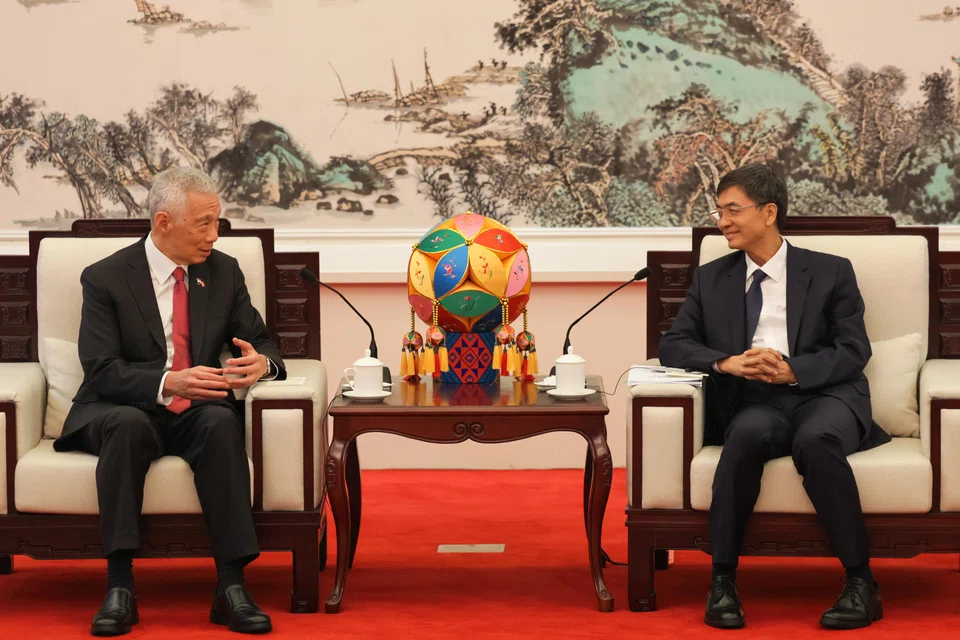
[NANNING] Amid uncertainties and worries over trade, what used to be win-win initiatives between countries is no longer assumed, and they now need to “work to make it win-win”, said Senior Minister Lee Hsien Loong on Tuesday (May 19).
“It is a very unsettled and troubled time in the world right now (with) many uncertainties, many conflicts and contradictions,” he said in the Guangxi capital Nanning on the second day of his five-day visit to China.
“And trade, which used to be a win-win exercise between countries, has become mixed up now with security considerations, resilience considerations, rivalry considerations, worries about vulnerability, and also a question mark, whether it is always win-win,” he said.
“I think if we are honest, we have to say that it is not always win-win, but we have to work to make it win-win. And between Singapore and China, and Asean and China, I think the potential for win-win economic cooperation in trade and investments, and in many other areas, is considerable.”
SM Lee made these comments at a meeting with Chen Gang, secretary of the Communist Party of China of the Guangxi Zhuang Autonomous Regional Committee.
One such win and a “very good foundation on which we can do a lot more” would be the New International Land-Sea Trade Corridor, he said. It was launched in 2017, linking western China to Singapore and South-east Asia.
“Considerable boost”
SM Lee said that has given Guangxi’s development and its connections with Singapore and Asean a “considerable boost”.
In his remarks, Chen noted that the trade corridor was becoming significant in the logistics sector in western China, adding the opening of the new Pinglu Canal that is set to create a direct route for cargo ships from south-western China to the sea will improve connectivity even further.
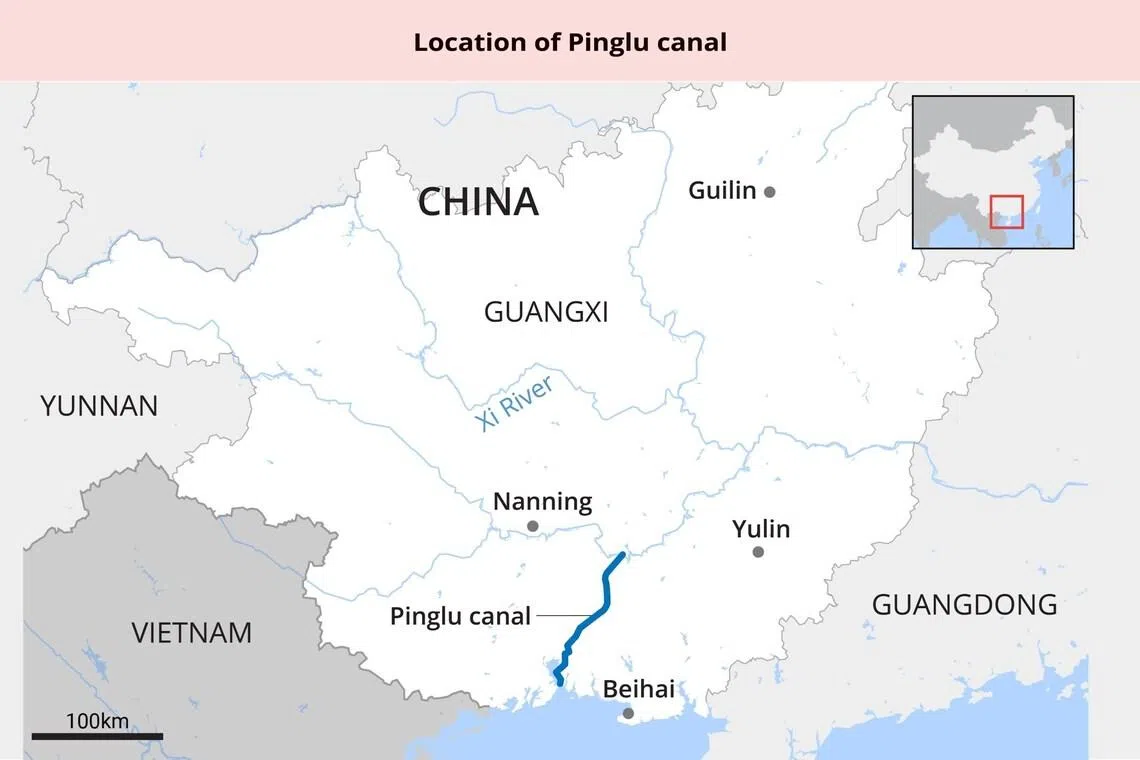
The Pinglu Canal route will bring ships on a path nearing Vietnam, whereas some shippers would previously turn to Guangdong in a detour.
Chen said at the start of the meeting that he would discuss three points with SM Lee: the Pinglu Canal and trade corridor; the construction quality of the canal; and how both routes will benefit not just south-western China, but also Singapore and other Asean countries.
After their meeting at Nanning’s Liyuan Resort, SM Lee was hosted to dinner by Chen.
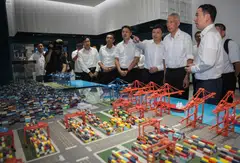
Earlier in the day, the senior minister visited the China-Singapore Nanning International Logistics Park (CSILP), which has storage, transportation, trade and finance functions, among others.
The roughly 260-hectare park was launched in 2018, with total investment exceeding 10 billion yuan (S$1.9 billion). It is operated by Singapore-Guangxi Integrated Development, a joint venture, with investment from Singapore container shipping company Pacific International Lines (PIL).
CSILP chairman Teo Siong Seng noted that trade between China and Asean has continued to grow amid geopolitical tensions in recent years, with Singapore-Guangxi trade growing by 20 per cent.
Last year, the value of bilateral trade between Singapore and Guangxi reached 13.8 billion yuan. Singapore’s cumulative investments in Guangxi reached US$1.3 billion, with 30 new projects established in 2025.
Teo, who is also PIL’s executive chairman and chairman of the Singapore Business Federation, told reporters that Asean remains the “most preferred and most stable trading bloc” amid geopolitical challenges.
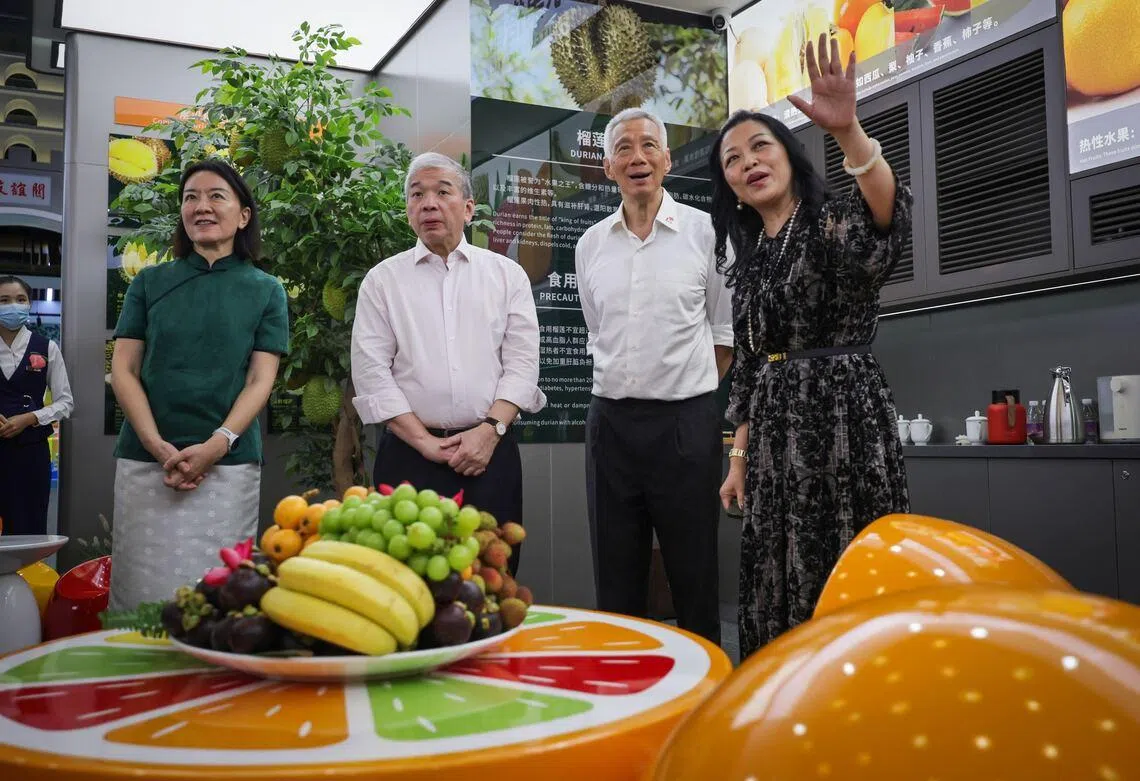
“We have seen... a lot of Chinese companies now relocating from the coastal area to this part of China (Guangxi),” he said, adding that the Pinglu Canal was an alternative route for them to move cargo.
Many goods now shipped via the park are commodities such as food, but Teo said they are targeting more variety, such as high-tech products and medicine, as well as more routes, such as from Central Asia to South-east Asia, with the new corridor.
He said the location of the park was a strategic one, noting that Guangxi is the only province in western China with a sea outlet that links to Vietnam.
“(It) has always been the most important province for China for... trade with South-east Asia,” said Teo.
Decoding Asia newsletter: your guide to navigating Asia in a new global order. Sign up here to get Decoding Asia newsletter. Delivered to your inbox. Free.
Copyright SPH Media. All rights reserved.
TRENDING NOW

Once staunchly pro-China, Malaysian Chinese businesses are now distancing themselves from Beijing

Looking beyond looming CEO succession, should UOB potentially pursue a transformative merger?

Could stablecoins be the future of money?

Grab CEO’s wife Chloe Tong on life with Anthony Tan and finding her purpose

