



China’s bad consumer debt cleanup falters, spooking investors
As many as 100 million people are behind on payments of at least 2.2 trillion yuan (US$327 billion)
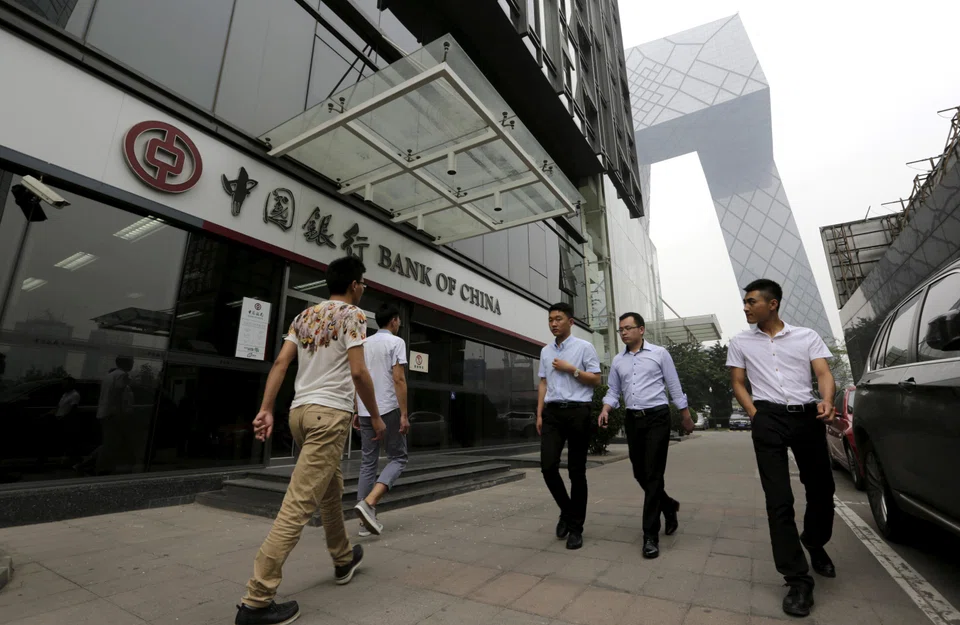
CHINA’S push to rid banks of a huge pile of soured consumer loans is running into hurdles, as authorities scrutinise debt collectors central to the cleanup effort.
The country’s banks have been offloading bundles of defaulted consumer loans at pennies on the dollar to companies that specialise in managing troubled assets.
Those firms are working with debt collectors all over the country to track down borrowers and recoup whatever money they can. The state-led cleanup effort grew out of a pilot programme in 2021 and has grown substantially, with dozens of financial institutions participating.
Problems, however, are starting to emerge. Chinese public security authorities are taking a closer look at debt collection companies and what they are doing to pressure people to repay their debt, due to concerns that their activities could disrupt social stability, according to people familiar with the matter.
The crackdown has led some debt resolution firms to lay off workers or shut down, slowing collection efforts and hurting loan recovery rates.
Industry executives say that is making investors and asset managers turn cautious about buying portfolios of non-performing loans — which could be detrimental for banks that need to purge more bad debt from their balance sheets. It shows, once again, how government actions are interfering with economic activities, prolonging the credit downturn.
China’s Ministry of Public Security and the National Financial Regulatory Administration, which oversees banks and other financial institutions, did not respond to requests for comment.
There is a growing urgency for China to fix its debt woes. As many as 100 million people — or around a tenth of its adult population — were behind on payments of at least 2.2 trillion yuan (US$327 billion) in outstanding debt as of end-2025, according to research firm Gavekal Dragonomics.
Major Chinese banks’ latest first-half results showed increases in non-performing retail loans, indicating that household finances continue to deteriorate. Industrial and Commercial Bank of China, the biggest state-owned lender, saw its NPL ratio for credit-card overdrafts climb to 5.37 per cent in June, from 4.61 per cent at the end of 2025.
SEE ALSO



Unlike the US, China doesn’t have a nationwide personal bankruptcy system, so financially insolvent borrowers generally have no legal mechanism to discharge their unpaid debt. The country also has little experience navigating a credit cycle marked by widespread consumer defaults.
China’s banking regulator a few years ago began allowing banks to sell unsecured personal NPLs in bulk to asset-management companies via a central transaction platform. Listing volumes have surged on that marketplace, with many bundles containing loans that have been overdue for years.
The bulk loan sales, which comprise credit-card borrowings and other unsecured debt, have helped banks keep their reported non-performing loan ratios low and spread out losses over time, cushioning the hit to the financial system. They also leave the laborious task of recovering funds to profit-seeking investors.
There were more than a thousand blocks of loans put up for sale in the first eight months of 2026, covering more than 275 billion yuan in unpaid balances, according to data compiled by Bloomberg News. Not every listing results in a sale, and the platform has stopped releasing aggregate transaction volumes.
Most buyers of the personal NPLs are state-owned asset management companies that specialise in working out bad debt. Some of these firms have parceled out some of the loans to other firms that are pumping in money to recover the debt.
Many portfolios earlier sold for around 5 per cent to 7 per cent of the loans’ face value, according to market participants. Some transacted for as little as 1 per cent of their outstanding principal.
Prior to the recent slowdown, Chinese authorities were considering whether to expand the bulk NPL sale programme to include secured loans such as residential mortgages, according to people familiar with the matter.
Grueling work
Getting paid can be a grueling task; debt collectors have to track down and contact individuals, and can spend weeks or even months negotiating with borrowers and trying to persuade them to repay their loans and clear their debt.
In Shanghai, Joy Zhu runs a debt-resolution firm that focuses on loans originated by smaller and medium-sized banks, consumer finance companies or online lenders. He said collections are becoming harder — and the recent crackdown by public security authorities prompted him to lay off close to 500 workers in the past month to cut costs, leaving only about 200 staffers.
“I have listened to countless collection calls and complaint recordings,” the 32-year-old said, adding that a large proportion of debtors are young citizens aged between 20 and 35. “Many of these people genuinely have absolutely no ability to repay and are struggling badly just to get by.”
Still, the economics of his industry are such that recovering money from just 10 out of every 1,000 borrowers could be enough for his firm to meet its monthly targets, Zhu added.
“Recovering personal bad debt is essentially a probability game,” said Lock Tang, the owner of an Anhui-based debt collection firm who is among the investors trying to make money from the loans. He said the returns on some portfolios he has invested in over the past two years have exceeded 20 per cent, though outcomes can vary widely.
Some investors are trying a different approach. In late 2025, China Renaissance Holdings, a boutique investment bank, said one of its units paid 308 million yuan for two portfolios of distressed consumer loans with a total outstanding principal balance of 7.4 billion yuan. That amounted to an average purchase price of about 4 per cent of their face value.
The personal consumption loans in one of the portfolios were on average 854 days overdue, and 439 days for the other. The original lender was a Chinese fintech company called Qifu, whose parent is Nasdaq-listed Qfin Holdings.
Rather than building its own debt collection capabilities, China Renaissance primarily played a financing role, according to people familiar with the matter. After acquiring the loan portfolio, it outsourced servicing of the debt back to Qifu, the people said. Both firms declined to comment.
Some large state-owned enterprises are also providing financing to buyers of distressed portfolios with rates as high as 12 per cent, according to people familiar with the matter.
Local asset management companies are increasingly acting as intermediaries, helping investors without distressed-asset licenses purchase portfolios of loans and collecting fees from them.
However, regulators recently issued a notice to asset-management companies, prohibiting them from acting merely as conduit channels, while also stepping up scrutiny, the people added. That warning stems from concerns that private firms could end up taking on excessive risks.
Corporate NPLs
Whether banks can keep disposing of bad personal loans remains a big question. A decade ago, domestic and international investors similarly acquired bundles of non-performing corporate and small business loans that Chinese banks had sold to state-backed asset managers.
They initially made sizable profits, but in the past few years returns have fallen sharply, saddling some investors with losses.
Most corporate loans were secured by real estate such as apartments, shophouses and other commercial properties. Asset managers and distressed debt investors typically paid 30 to 50 cents on the dollar for the NPLs, because the real estate backing individual loans was often worth more — and Chinese property prices were on an upswing at the time.
It took months to years for investors to go through China’s court systems to enforce their rights as lenders, foreclose on properties and then sell them. But those trades were lucrative — until China’s property markets entered a historic slump in 2021 that continues to this day.
As a result, investment cycles that once took two to three years now can stretch to eight or even 10, according to two executives at foreign distressed-debt funds. Today, some of those NPL investments remain tied up in lengthy restructurings, and their collateral values have plummeted. Billions of dollars of property-related assets also remain on the balance sheets of state-owned asset managers.
“Investors that bought assets at peak valuations have faced enormous pressure to recover capital, forcing many to exit the market altogether,” said Gu Suqi, vice-president of investments at DCL Investments, a special situations investment firm.
Harold Wang has watched that cycle unfold. He previously worked at one of the country’s four state-owned asset management companies before managing distressed portfolios for UBS Group AG and another foreign investment fund. At one point, he said he oversaw more than 10 billion yuan of non-performing assets by face value.
Wang recalled how investors and capital flooded the distressed loan market from 2016 to 2018, driving prices of loan portfolios to as high as 70 to 80 cents on the dollar, if their underlying collateral were properties in prime markets such as Beijing and Shanghai.
The optimism persisted into 2020 despite growing concerns of a property bubble. When the coronavirus pandemic happened and the country’s housing downturn deepened, many of those aggressively priced investments became stranded.
“Investors that expected double-digit returns have had to slash recovery expectations or even accept outright losses,” Wang said. It became increasingly hard to sell properties, which sharply reduced cash recoveries. The 54-year-old is planning to retire soon, and believes that resolving China’s rising pile of bad personal loans is going to become increasingly difficult.
Whether investing in retail NPLs proves more profitable in the long run could ultimately depend on the trajectory of China’s economy.
“The core thesis is really a bet on the economic cycle,” said Chen Xun, general manager of Shenzhen WorldUnion Appraisal, an assets valuation firm. A sustained recovery could lift repayment rates while reducing the supply of new distressed assets. A prolonged slowdown, meanwhile, would expand the market—but make collections increasingly difficult.
“The key question is no longer how cheaply investors can buy distressed assets,” said Feng Yi, head of research at bad-debt specialist Zheshang Asset Management. “It’s whether they can exit.” BLOOMBERG
Decoding Asia newsletter: your guide to navigating Asia in a new global order. Sign up here to get Decoding Asia newsletter. Delivered to your inbox. Free.
Share with us your feedback on BT's products and services
TRENDING NOW

Once staunchly pro-China, Malaysian Chinese businesses are now distancing themselves from Beijing

Looking beyond looming CEO succession, should UOB potentially pursue a transformative merger?

Could stablecoins be the future of money?

Grab CEO’s wife Chloe Tong on life with Anthony Tan and finding her purpose

