


Global Enterprise logo
BROUGHT TO YOU BYsc logo

China’s financial shake-up shows policymakers’ growing focus on stability, risk
    • Although details have yet to be revealed, the announcement indicates Beijing is shifting its financial regulatory system to a “twin peaks” model similar to that adopted by countries such as the United Kingdom and Australia.
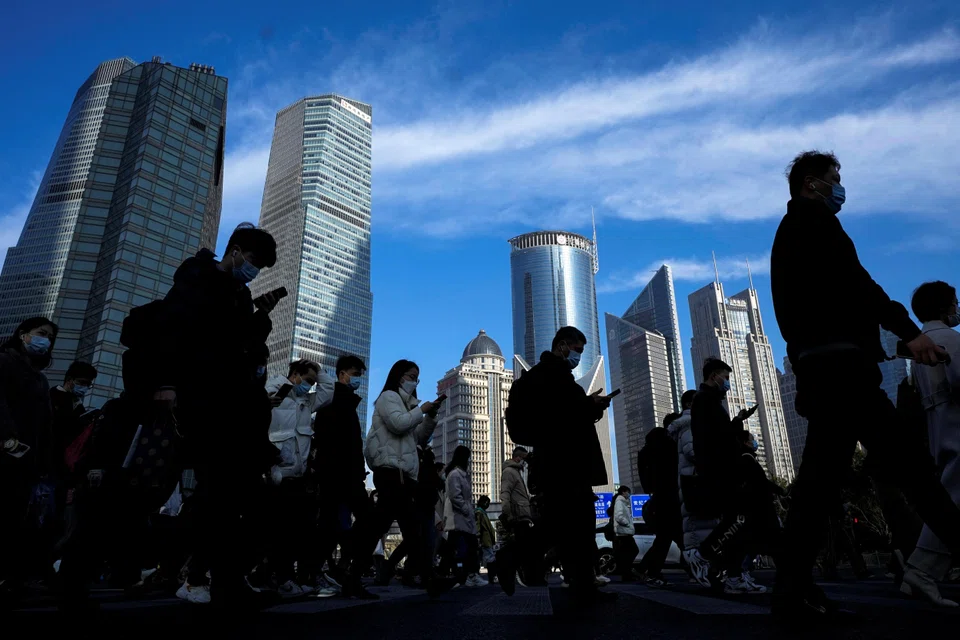
    • Although details have yet to be revealed, the announcement indicates Beijing is shifting its financial regulatory system to a “twin peaks” model similar to that adopted by countries such as the United Kingdom and Australia. PHOTO: REUTERS
    Published Thu, Mar 9, 2023 · 10:30 AM

    THE sweeping overhaul of China’s financial regulatory system unveiled on Tuesday (Mar 7) underscores the government’s growing focus on maintaining financial stability and curbing risk, analysts said.

    The massive shake-up, which will include setting up a national financial regulator that oversees all parts of the financial sector apart from securities, was unveiled in a proposal submitted by the State Council to the annual meeting of the National People’s Congress, the country’s top legislature.

    The new financial regulatory body, which will be directly under the State Council, will absorb the banking and insurance watchdog and take over some functions from the People’s Bank of China (PBOC) and the China Securities Regulatory Commission (CSRC), including supervision of financial holding companies, consumer protection, and investor protection. The securities regulator will be elevated to a government agency directly under the State Council.


    Although details of the changes have yet to be revealed, the announcement indicates Beijing is shifting its financial regulatory system to a “twin peaks” model similar to that adopted by countries such as the United Kingdom and Australia, according to analysts at Australia and New Zealand Banking Group (ANZ) and Citic Securities.

    The twin peaks model divides financial oversight between two specialist regulators — one responsible for maintaining the stability of the financial system and prudential regulation of financial institutions, and the other responsible for oversight of market conduct and consumer protection, including the conduct of financial services firms.

    While the PBOC will be responsible for macroprudential regulation, microprudential policymaking will be divided between the new regulator and the CSRC, ANZ analysts Xing Zhaopeng and Raymond Yeung wrote in a report published on Wednesday. The revamp “signals a shift in the government’s priority towards financial stability and de-risking the financial exposure of local governments and financial institutions”, they wrote.

    Asean Intelligence

    Get insights into businesses across South-east Asia

    Get the free report

    The changes will “streamline the regulatory process by combining similar functions under the same regulator”, Morgan Stanley analysts wrote in a research note on Tuesday. The financial regulator reform “should provide more consistent regulatory standards and reduce regulatory arbitrage”, they wrote.

    The decision to retain the CSRC and make it administratively more important “demonstrates Chinese policymakers’ increased focus on developing the equity market and pushing forward more direct financing to better allocate capital and help slow the buildup in debt”, Goldman Sachs analysts wrote in a report on Wednesday.

    The CSRC will take over supervision of the issuance of enterprise bonds, a type of corporate bond usually sold by state-owned enterprises, from the National Development and Reform Commission. “This effectively unifies regulation on enterprise bonds and other corporate bonds under the CSRC, which will help create a more unified bond market with more consistent regulatory standards,” the Morgan Stanley analysts wrote.

    The overhaul of the financial regulatory system will stretch down to the local level, with the local offices of the central government’s financial regulators having authority over local governments’ own supervisory systems. An official note accompanying the announcement of the reforms said the aim is to strengthen the authority of the central regulators in tackling problems at the local level, including the lack of qualified staff.

    These changes will “strengthen the central government’s control of financial regulation at the local government level, which will improve regulatory enforcement and reduce local governments’ influence on financial institutions”, said David Yin, vice-president and senior credit officer at Moody’s Investors Service.

    One of the aims of this part of the reform is to help local governments defuse financial risks, analysts led by Ming Ming, deputy director of research at Citic Securities, wrote in a Wednesday note. “Resolving (hidden) local debt is a task not only down to local governments, it will also help financial institutions, represented mainly by banks, avoid relevant bad debt,” they noted, adding that hidden local government debt cannot be resolved without the help and input of financial institutions.

    Chinese localities have around 60 trillion yuan (S$11 trillion), equivalent to half of the country’s gross domestic product, in hidden debt, according to ANZ’s estimates. Meanwhile, financial liabilities that appear on their books have surged 16 per cent year-on-year over the past five years, it said.

    Another key change in the financial regulatory overhaul is the restructuring of the PBOC’s regional branches, which currently comprise nine offices across the country that oversee several provinces each. The central bank will set up provincial-level branches in all 31 provincial-level regions on the Chinese mainland.

    The change suggests “future monetary policy will be more targeted and specific to each region,” the ANZ analysts wrote. “China had merged its provincial PBOC branches into nine regional agencies in 1998 to prevent the intervention of local governments in monetary policy decisions,” they said. “However, recent rapid increases in structural policy tools have prompted the PBOC to work closely with local governments.” CAIXIN GLOBAL

    Decoding Asia newsletter: your guide to navigating Asia in a new global order. Sign up here to get Decoding Asia newsletter. Delivered to your inbox. Free.

    Share with us your feedback on BT's products and services


