



China’s GDP growth to pick up in 2023, but pace hinges on reopening

Angela Tan
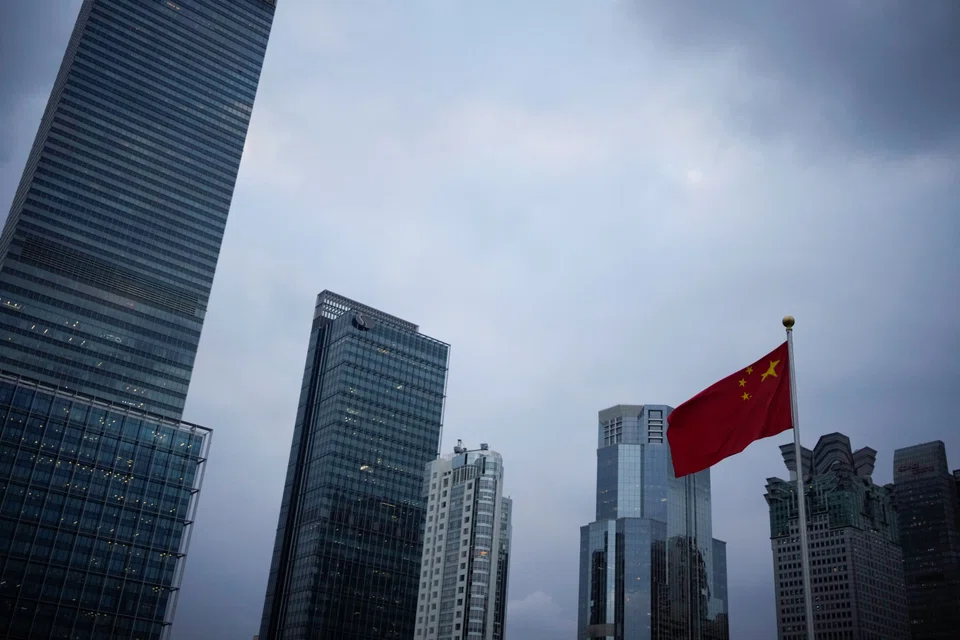
CHINA has had a very challenging 2022, but market watchers expect the country’s gross domestic product (GDP) growth could accelerate to as much as 5 per cent next year on the back of an exit from its zero-Covid protocols.
China’s real GDP is on track to grow 3 per cent this year, significantly lower than its growth target of around 5.5 per cent, as the emergence of the more transmissible Omicron variant challenges Beijing’s zero-Covid policy.
The strict two-month lockdown in Shanghai in the months of April and May led to severe disruptions, resulting in a 10.4 per cent quarter-on-quarter contraction in real GDP growth in the second quarter. Moreover, Covid cases are rising again in many major cities, including Shanghai.
Andrew Tilton, chief Asia-Pacific economist at Goldman Sachs, said growth will likely be “quite weak” over the next couple of quarters.
But he also believes China will begin easing its zero-Covid policies shortly after the country’s two annual parliamentary meetings in March next year. These so-called Two Sessions are meetings of the National People’s Congress and the Chinese People’s Political Consultative Conference, China’s top legislature and top political advisory body, respectively.
The process of exiting Covid-19 restrictions is likely to be bumpy, with potential pauses if the rate of infection rises, Tilton said, but he expects growth will be “significantly better in the second half of 2023”.

Goldman Sachs is projecting China’s GDP growth to be 4.5 per cent for 2023, before climbing to 5.3 per cent for 2024.
UBS, however, sees a full reopening only in the early part of the third quarter next year. “Measures to relax quarantine times, testing requirements, and contact tracing in late 2022 suggest the groundwork has been laid, but medical and security priorities mean the process will be gradual,” it said.
Next year’s Two Sessions will also be closely watched for how the country deals with a potentially high fiscal deficit, said Iris Pang, ING’s chief economist for Greater China.



“Too small a budget cannot stabilise the economy, but too big could hit the market’s nerves,” she said.
Regardless of what comes out of the national budget, however, a reopening is crucial if China is to see any kind of meaningful recovery.
Lu Ting, chief China economist at Nomura, said: “In the face of the zero-Covid policy, all of the other policies (to boost the economy) are powerless.”
Nomura has revised down its 2022 annual GDP growth forecast for China to 2.8 per cent, from 2.9 per cent, on surging Covid cases. It also lowered its 2023 GDP growth forecast to 4 per cent, from 4.3 per cent, on “more prolonged damage from Covid to both the supply and demand sides”.
It cited four reasons the downward pressure on growth could strengthen. First, renewed Covid outbreaks during the winter could lead to worse lockdowns. Second, Beijing’s easing of measures could be offset by local authorities’ escalation of zero-Covid protocols, on fears of being held accountable for new outbreaks. Third, China has yet to find a more reliable solution to reboot housing demand, even as the zero-Covid strategy weighs on new home sales. Finally, export growth may drop further on weaker global growth.
Assuming the reopening does take place as expected next year, asset prices should soar.
Timothy Moe, chief Asia-Pacific equity strategist at Goldman Sachs, said the event could drive the MSCI China index up 20 per cent. Besides equity prices, commodity demand should increase and the renminbi should strengthen versus the US dollar.
Consumption will be the bright spot of economic growth. But the extent and sustainability of a consumption recovery hinge on the potential improvement of the labour market, household income and consumer confidence.
The property sector, however, is still of some concern. The single largest sector in China’s economy, it is still reeling since authorities introduced in August 2020 a policy known as the “Three Red Lines” – meant to curb developer debt levels. Another policy, called “Two Red Lines”, was introduced in January 2021 to constrain banks’ property-related lending.
Goldman Sachs said the ongoing property downturn will likely be “a multi-year growth drag for China, but it could be less painful in 2023 versus 2022”. A likely end game will be less reliance on the property sector, stepped up public housing and gradual expansion of property taxes to more pilot cities.
Fixed asset investment (FAI) growth for infrastructure is also expected to drop sharply – to 2 per cent on year in 2023, from an expected 12 per cent in 2022. Overall fiscal policy should be less expansionary next year, especially for spending on traditional projects such as roads and railways, due mainly to less demand and room for further infrastructure construction.
Manufacturing FAI growth may moderate further to 5 per cent in 2023 from an expected 9.5 per cent in 2022, on slower export growth and a potential shift from goods consumption – especially work-from-home related electronics – to services consumption.
Against such an uncertain backdrop, Goldman Sachs’ Moe advised: “The cardinal rule when it comes to investing in China is you want to be invested in harmony with the government policies.”
Decoding Asia newsletter: your guide to navigating Asia in a new global order. Sign up here to get Decoding Asia newsletter. Delivered to your inbox. Free.
Copyright SPH Media. All rights reserved.






