


Global Enterprise logo
BROUGHT TO YOU BYsc logo

China’s oldest investment bank CICC eyes growth in South-east Asia

The need for infrastructure funding, consumer products and new-energy solutions continue to generate opportunities in the region

Zhao Yifan
Published Wed, Jul 3, 2024 · 05:00 AM
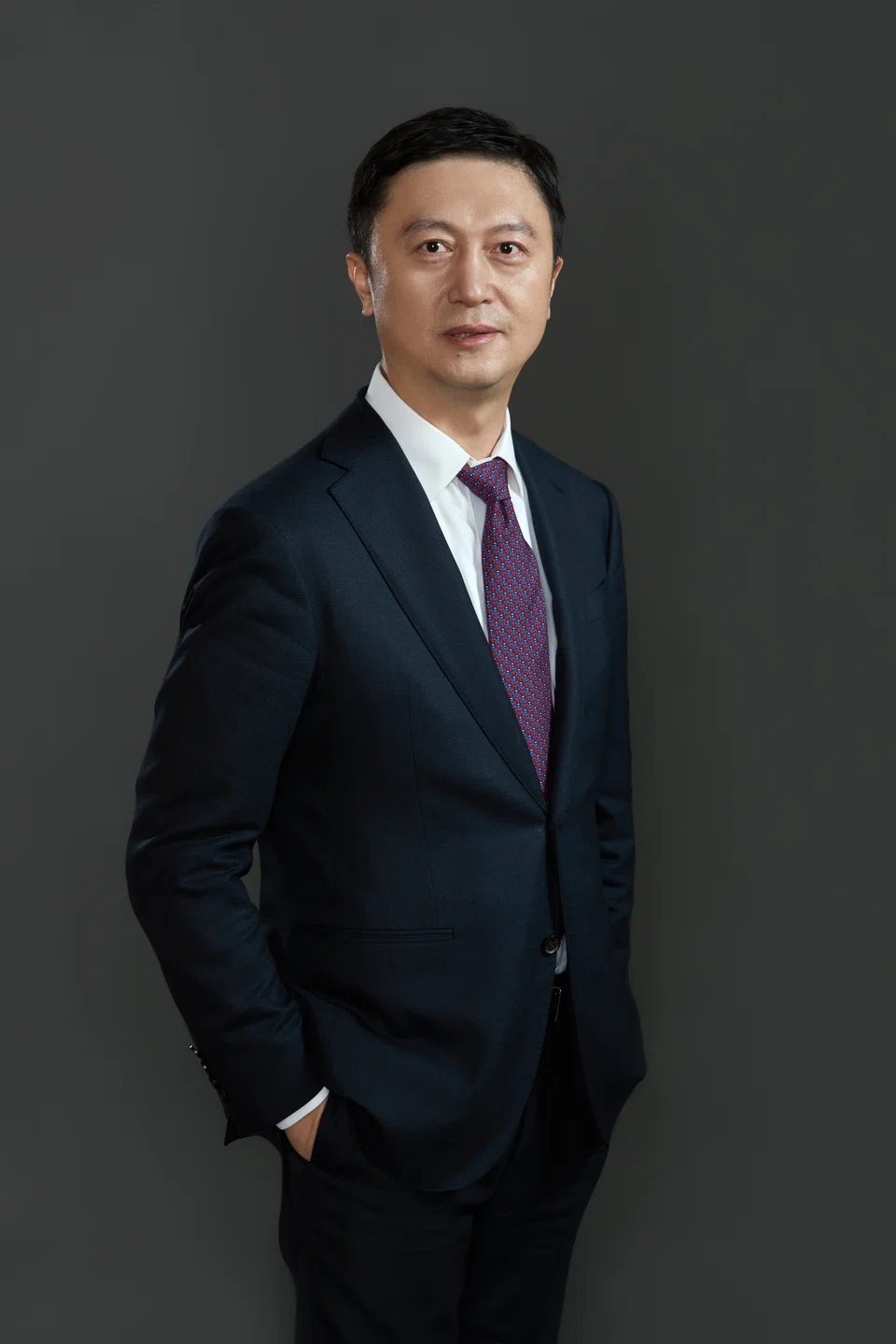
    • Wang Shuguang, CICC’s head of investment banking, says that the bank intends to open a branch office in Indonesia.
    • Wang Shuguang, CICC’s head of investment banking, says that the bank intends to open a branch office in Indonesia. PHOTO: CICC

    CHINA International Capital Corporation (CICC), the country’s oldest investment bank, is strengthening its operations in South-east Asia with a primary focus on Vietnam and Indonesia, a senior executive of the bank has said.

    The partially state-owned investment and financial-services company received approval in Ho Chi Minh City, Vietnam’s most populous city and its economic hub, last September to open a representative office for marketing and sales.

    CICC also intends to apply for licences to set up a branch office in Indonesia.

    Wang Shuguang, CICC’s head of investment banking, told The Business Times in an interview that South-east Asia is a key growth area, given the region’s thriving economic activities.

    He said he has made more frequent business trips to the region of late, and noticed that the flights are always full, which he takes as an indication of the strong links between China and South-east Asia.

    CICC’s Singapore office, which opened in 2008, has undergone rapid expansion since the start of the Covid-19 pandemic in early-2020. Its headcount has almost doubled to 60, and it grew its service offerings by introducing asset-management services in 2022, and wealth-management services last year.

    Asean Intelligence

    Get insights into businesses across South-east Asia

    Get the free report

    As for the bank’s plans for other offices in the region, Wang said CICC would evaluate the needs of each financial market and set up a presence only where it can consistently contribute value to the local markets.

    “Financial markets are serious business,” he said, and added that CICC would not open new offices for the sake of expansion.

    CICC’s chief executive in Singapore, Stephen Ng, said he does not expect headcount will grow as fast now, given that the bank has already completed its service-line setups.

    “We expect, at most, a 10 per cent increase in Singapore employees in the next three to five years,” said Ng, who is also the bank’s head for South-east Asia and South Asia.

    Asked about Singapore’s increased scrutiny on family offices following the S$3 billion money-laundering bust in 2023, he replied that the saga was unlikely to affect CICC’s business, as the bank began onboarding its wealth management clients in Singapore only in January this year.

    Serving more than Chinese clients

    Wang noted that CICC’s ties with Singapore started well before its office was set up here.

    Singapore’s sovereign wealth fund GIC was among the five founding shareholders, alongside the likes of Morgan Stanley and Hong Kong’s Mingly Corporation, when CICC was set up as the first Sino-foreign joint-venture investment bank in 1995.

    In the past decade, CICC raised more than S$5 billion from public listings in Singapore for its clients, and facilitated merger and acquisition (M&A) transactions surpassing S$20 billion in the Singapore market, said Wang.

    Other than serving Chinese clients venturing into the region, the bank connects the capital markets between China and the region by helping South-east Asian companies to list in Hong Kong and mainland China.

    “Two-thirds of clients served by CICC’s investment banking team in Singapore are from South-east Asia,” Wang said.

    He cited the example of Yihai Kerry Arawana, a food-processing subsidiary of Singapore’s Wilmar International, for which CICC acted as the joint lead underwriter during its listing on the Shenzhen Stock Exchange in 2020.

    That project marked a first in China – in which a subsidiary of a Singapore-listed company was spun off for a public offering on a mainland China stock exchange.

    Wang added that CICC also helps South-east Asian companies acquire upstream and downstream assets in China through their Chinese subsidiaries.

    The bank is known as the most active Chinese investment bank in offshore dealmaking.

    Although it reported a 12 per cent fall in revenue to 23 billion yuan (S$4.3 billion) in financial year 2023, down from 26.1 billion yuan the year before, about 6.1 billion yuan (23 per cent) of that revenue came from overseas – a 17 per cent rise from the year before.

    Meanwhile, domestic revenue totalled 16.9 billion yuan, a 19 per cent year-on-year drop. This was attributed to a market slowdown and a fall in net fee income from investment banking services, which dragged down overall performance.

    Opportunities in South-east Asia

    Wang said many South-east Asian countries share common development needs, including infrastructure, affordable consumer products, and addressing challenges related to achieving carbon neutrality.

    “These development needs necessitate substantial investment,” he said. “This is closely tied to the motivation driving Chinese companies’ overseas expansions, which is to integrate into the development trajectories of South-east Asian countries.”

    As at 2022, China was the third-largest source of foreign direct investment (FDI) inflows into Asean countries, after the US and the EU, with total FDI reaching US$18.65 billion.

    While China’s financial market is slowing down, Wang noted that CICC continues to see sufficient interest from clients and business partners in the region seeking to engage with China.

    “Every market experiences ups and downs,” he said. “On a micro level, many of our clients maintain a strong global vision.”

    Wang is optimistic that China’s technological advancements in new energy will continue to generate growth opportunities, as they play a crucial role in helping emerging economies deal with the challenge of balancing development needs and environmental concerns.

    The main competitive edge of a full-fledged investment bank over a commercial bank is that an investment bank has more room for tailor-made solutions.

    For example, CICC is helping Indonesia’s US$35 billion new capital city project to explore funding options, including the possibility of using Panda bonds – renminbi-denominated bonds issued onshore by non-Chinese issuers.

    In Singapore, the bank assisted CapitaLand Investment in raising one billion yuan through the nation’s first sustainability-linked Panda bond issuance. This initiative enabled CapitaLand to access lower-cost renminbi capital while advancing its sustainability goals.

    Investment banking as cornerstone

    CICC’s key advantages include the bank’s deep understanding and extensive coverage of Chinese investors, both industrial and financial, said Wang.

    He said CICC was the first investment bank to have served the majority of China’s unicorns, with its outreach now extending to more than half the unicorn companies across East Asia for their fundraising, M&A or advisory services.

    Notably, CICC advised Indonesian ride-hailing unicorn Gojek in its Series E financing round totalling US$1.5 billion in 2018.

    “Gojek shared a similar business model with some Chinese companies. CICC’s understanding of their development trajectory made it easier to connect them with suitable investors,” said Wang.

    “As a financial institution, we focus on what we are good at, entering a market with investment banking services as our cornerstone, then expand into equity and debt transactions before adding asset management and wealth management.”

    Decoding Asia newsletter: your guide to navigating Asia in a new global order. Sign up here to get Decoding Asia newsletter. Delivered to your inbox. Free.

    Copyright SPH Media. All rights reserved.



