



China's property tax reform: short-term pain for common prosperity

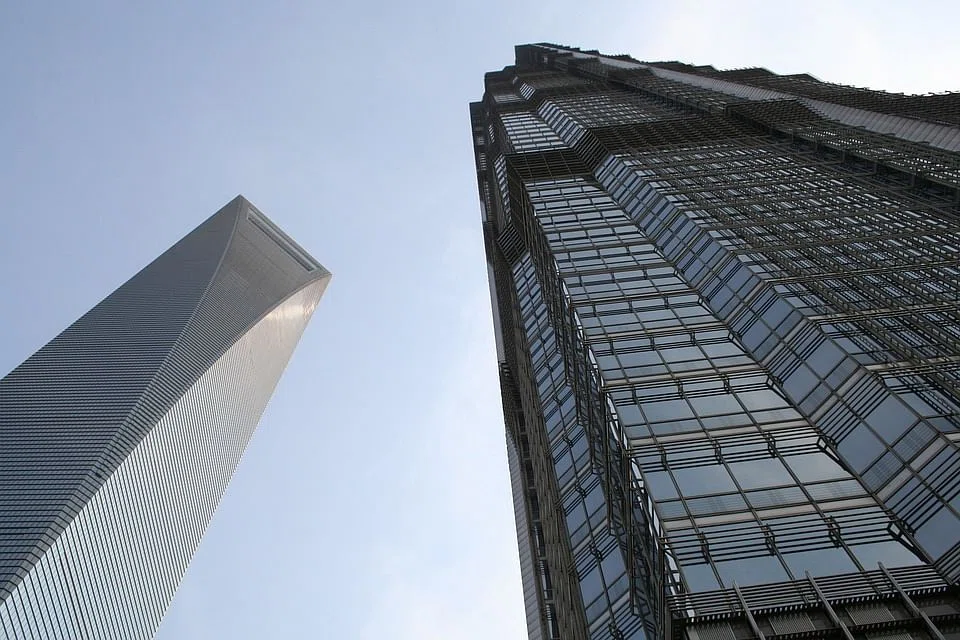
AFTER years of procrastinating, China may extend its trial property tax programme to more cities as early as this year, but any tariff is unlikely to be so hefty that could shock the sector even as Beijing seeks to address an affordability crisis in its "common prosperity" drive.
While the start date as well as the participating regions and cities have not been disclosed, the 5-year pilot tax programme will focus on commercial and residential properties. Chinese brokers expect it to kick off in highly populated tier 1 and 2 cities such as Guangzhou's Shenzhen; Zhejiang's Hangzhou, which is also the base of e-commerce giant Alibaba; and the southern island province of Hainan, where population growth is under pressure.
What the tax rate will be and whether it will be applied to existing properties or new purchases remains unclear. Zoe Yang, assistant professor at the School of Hotel and Tourism Management at Hong Kong-based CUHK Business School said if the tax was imposed on existing properties, that would be a huge burden for residents who would have to deal with both the tax and mortgages. The disposable income of Shanghai residents per capita is around 70,000 yuan (S$14,760). For a 10 million yuan house - a common price tag in an affluent city - even a 0.5 per cent tax rate would cost 50,000 yuan a year, adding pressure to families, Yang said.
One market observer in Hong Kong said: "China's housing taxes could be expanded to cover the property holding segment, in addition to levies on the construction and transactions of real estate. Inevitably, a large number of vested interests would be impacted."
China has no blanket property tax. Instead, housing taxes are levied at multiple touchpoints - as value-added tax, urban land use tax, and as an urban construction and maintenance tax, among others. As housing taxes in China are levied both during construction and at the point of transaction, there is no single category for a real estate tax.
However, property owners are subject to real estate tax. For property held for lease, a rate of 12 per cent of the annual rental income is imposed. For self-use properties, a rate of 1.2 per cent of the property adjusted cost (with a 10-30 per cent deduction from the original cost) is imposed. The implementation may differ depending on location. Individuals are normally exempted from real estate tax on residential properties. This is with the exemption of those in Shanghai and Chongqing, test beds for a pilot property tax reform 10 years ago.
Many question marks
Tax-exemptions on a first home are expected to stay intact. Also, the one city one policy principle is likely to be adhered to, and the proposed tax rate is unlikely to be too high.
"But an idle unit and a second home that exceed the tax-exemption areas would be taxed at progressive rates," said a China property market analyst.
"The introduction of the property tax in core tier 1 and 2 cities with demand and supply mismatch would incentivise owners with multiple homes to sell or rent out their properties, which will support the development of the rental housing market," the analyst said.
Sam Xie, head of research at CBRE China, expects Beijing to take reference from tax regimes in mature markets, and make it fit into China's context. The reform is expected to allow room and flexibility for local authorities to implement the tariff at their discretion and based on the conditions in their markets.
Credit Suisse predicts that the initial property tax will not be very aggressive. Instead, it will be limited to individual cities, and the tax rate could be set at an acceptable 0.5 per cent.
Plans to roll out a property tax have been discussed since 2003. But it was only in 2011, when Beijing tested property taxes between 0.4 per cent and 1.2 per cent on 2 of China's largest cities - Shanghai and Chongqing - targeting mainly second homes, luxury properties and purchases by non-residents.
According to Guohai Securities, Shanghai and Chongqing collected 19.87 billion yuan and 7.17 billion yuan in property taxes, accounting for 3.4 per cent and 5 per cent of their respective local tax revenues. Apart from a short-term slowdown in the rise of property prices in the two cities following the tax implementation, prices continued to rise. The average increase in the price of commercial housing in Shanghai and Chongqing from 2011 to 2020 was 9.2 per cent and 8.1 per cent, respectively.
Since the Shanghai and Chongqing pilots, there has been much discussion of expanding the tests nationwide. But there has been little progress, as many local governments are reluctant to push for such a tax out of worries that the property taxation will cause property values to drop, and dampen market demand for land - a crucial source of local governments' revenues.
Citi estimates that an effective tax rate of 0.5 per cent could generate 1.8 trillion yuan annually, which is equivalent to 21 per cent of land sales last year. This compares to 1.6 trillion yuan local governments reaped in net revenue from land sales. The US bank believes the current Chinese real estate stock prices have reflected the expected decline in sales in the fourth quarter. It is projecting healthier prospects for the Chinese real estate sector next year.
China's housing market value is estimated to have reached US$62.6 trillion in 2020, nearly twice that of the US. Last year, housing accounted for nearly 60 per cent of total household assets in China.
Most analysts remain optimistic about China's property sector because of the pace of urbanisation. Deutsche Bank's managing director, Linan Liu, head of Greater China macro strategy based in Hong Kong, projects the urbanisation ratio to rise over the next 5 years towards 70-75 per cent, from 60 per cent last year.
Decoding Asia newsletter: your guide to navigating Asia in a new global order. Sign up here to get Decoding Asia newsletter. Delivered to your inbox. Free.
Copyright SPH Media. All rights reserved.
TRENDING NOW

If Europe goes to war, the fallout will be felt in East Asia

Government to bring forward raising of retirement age, give employers more financial support to create flexi-load jobs
Indonesia stocks suffer worst plunge in nearly 30 years as MSCI proposes standalone status

Mapletree Industrial Trust posts 6.6% drop in Q2 DPU to S$0.0297

