



China’s property woes bleed into the economy

Angela Tan
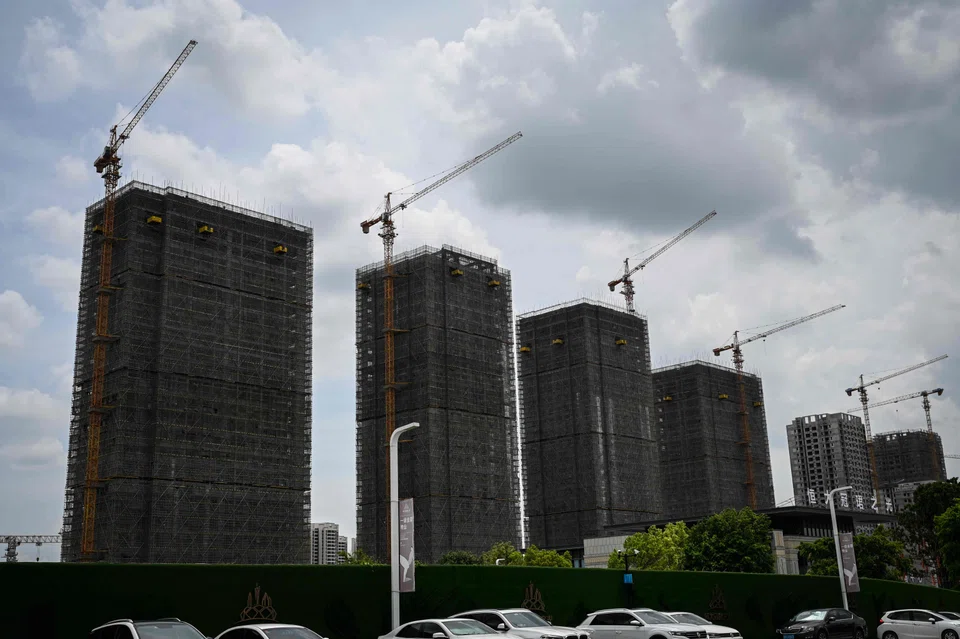
FROM Aug to Dec 2022, close to US$50 billion of Chinese property bonds are maturing.
China’s property woes, with the mountain of debt maturing and refinancing challenges, are threatening to spread beyond the sector that accounts for a quarter of the country’s gross domestic product, and into the wider economy, analysts say.
Last Wednesday (Aug 10), investors watched in dismay as Hong Kong-listed Longfor - China’s leading private developer with investment grade rating - tumbled 19 per cent after UBS downgraded the stock on cash flow concerns. The stock was further battered by rumours of unpaid commercial bills, which the management denied in an urgently set-up call with investors that evening. It also stressed its relatively solid debt structure and ability to continue to buy land plots.
Even then, sentiment for China’s property sector remains fragile, with investors battered from the waves of shocking news from mortgage boycotts to uncertainty over government bailouts.
From Jan to Jul, China’s top 100 developers saw their combined contract sales - a leading indicator of developers’ credit strength - slump almost 40 per cent from a year earlier to 523.1 billion yuan (S$108 billion). Improvements in June sales following the easing of Covid-19 restrictions proved shortlived as July saw sales fall by 28.6 per cent on month.
Bank of Singapore’s China equity strategist Louisa Fok told BT while she has a more constructive outlook for the rest of the year, she is not expecting a straight recovery path.

“We do see in the near term, there will be a few key challenges that will make the recovery (or in our constructive view) a bit more bumpy,” she said. Challenges include the huge bond maturities and refinancing risks, earnings downgrades as well as ongoing US-China tensions.
Ensuring delivery of housing projects will be an important task for Chinese builders as stressed at the Politburo meeting on Jul 28. But Chinese developers are unable to cut housing prices to stimulate demand, as their hands are tied.
Chinese real estate developers have US$117 billion worth of debt maturing this year, US$36 billion of which are denominated in dollars, according to Refinitiv. From Aug to Dec 2022, some US$50 billion of Chinese property bonds will be maturing.

Fitch Ratings said if timely and effective policy intervention does not materialise, distress in the property market would impact sectors beyond the property sector’s immediate value chain.
“Our analysis shows that three sub-sectors -- asset management companies, privately-owned engineering and construction (E&C) companies and smaller steel producers -- face the largest impact and have the greatest vulnerability in their standalone credit profiles,” its analysts said.
The credit rating agency said asset management companies hold a sizeable amount of assets that are backed by real estate-related collateral, making them highly exposed to prolonged property market distress. Weakened capital markets’ performance could translate into losses in their sizable investment books.
With halted projects and delays in receivable payments, local state-owned and privately-owned E&C companies and contractors with high exposure to property projects are under pressure from weak cash flows and a drain on their liquidity. A deterioration could see privately-owned E&C companies face high pressure on their credit profiles, as they do not have competitive advantages in infrastructure project exposure or funding access like their government-related peers.
Smaller steel makers that are highly concentrated in housing construction materials will also be vulnerable. Their limited financial flexibility and lower value-added products will restrict their ability to mitigate an external shock.
“Many have been operating at a loss for a few months and could face liquidity issues if China’s economy remains lacklustre, especially given the high leverage in the sector,” Fitch said.
Weak sales and limited access to financing will hamper private developers’ ability to launch new projects. “This will further pressure their liquidity in the longer term and lead to more defaults and restructuring in their capital-market debt,” Fitch said. A recent rise in the number of homebuyers in 3 Chinese provinces suspending mortgage payments over stalled projects underlines the potential for China’s property crisis to deepen. Diminishing confidence could stall the sector’s recovery, which will eventually ripple through the domestic economy. Already, consumers’ confidence is fragile.
According to The Financial Times, Beijing is seeking to mobilise up to 1 trillion yuan (US$148 billion) of loans for millions of stalled property developments in a bid to end a property downturn that played a big role in slowing the growth of the world’s second largest economy.
Michelle Qi, head of equities at Eastspring China, estimated that China’s mortgage boycott accounts for about 3 per cent of the country’s home mortgage loan book for the 14 largest banks.
“Our estimates suggest that a 5 per cent deceleration in real estate investment would lower China’s GDP growth by 0.6-0.7 per cent. Our baseline assumption is that the housing market bottoms out in the third quarter of 2022 and will be on course for a more meaningful recovery in 4Q22 or 1Q23,” she said.
Decoding Asia newsletter: your guide to navigating Asia in a new global order. Sign up here to get Decoding Asia newsletter. Delivered to your inbox. Free.
Copyright SPH Media. All rights reserved.






