



China's real estate slump likely to be significant but contained, say economists

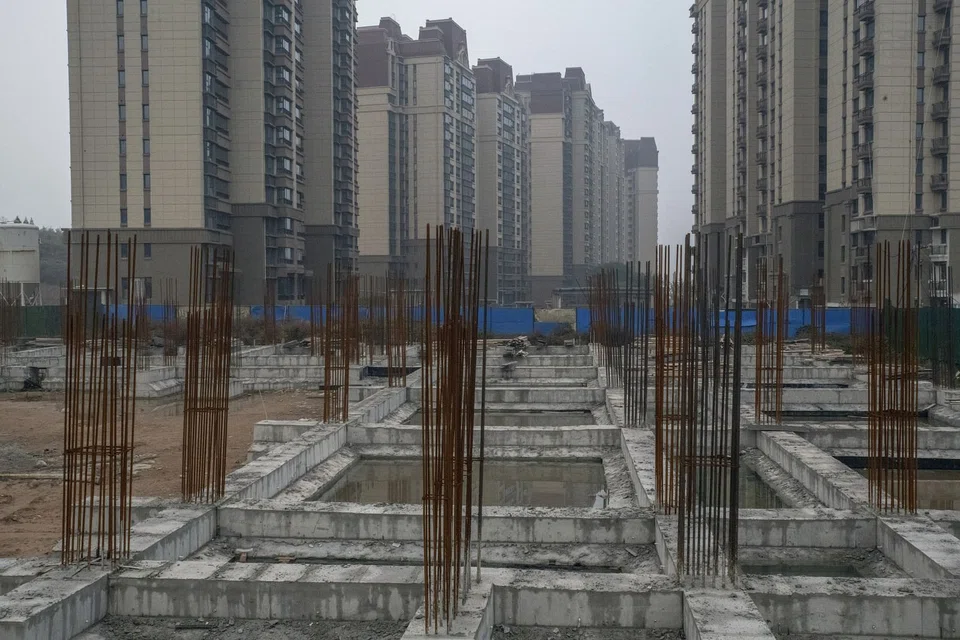
THE real estate slowdown in China is likely to be "significant" but "contained", but that "this relatively benign outlook is far from guaranteed", says a forecast in Oxford Economics on Friday (Nov 12).
In their baseline scenario, economists Louis Kuijis and Tommy Wu said the downturn would be "contained, due to a low stock of unsold housing, room for policy easing, continuing urbanisation and significant income growth."
In this case, the property sector downturn will likely extend into the first half of next year, with a recovery later in the year. In the medium-term, investment in private dwellings should grow around 3 per cent between 2021 and 2030, versus 7.6 per cent in the 2011-2020 period.
"This retrenchment of the property sector is part of the overall rebalancing that we expect, with average overall fixed investment growth of 3.3 per cent in 2021-2030 significantly lagging the projected 5 per cent average GDP growth," they said.
Despite this slowdown of real estate investment, China is still expected to continue to outpace the projected 2 per cent in the US in this decade, given the more significant urbanisation, the need to upgrade existing housing stock and more rapid income growth.
The report also outlined two other scenarios:
The first, which simulates a property downturn as substantial as that which happened in 2014-2015, posits that real estate investment growth would trough at -8.8 per cent in Q4 2022. Consequently, China's GDP growth would drop to 3.0 per cent year on year in Q4 2022, compared to 5.3 per cent in their baseline. Global GDP growth would be 0.7 percentage points lower, and global metal prices would fall heavily, said in their report.
"Countries particularly exposed to China and commodity exporters would be hit especially hard," the economists said, noting that this is a medium probability scenario.
The second scenario - a low-probability one - assumes that residential investment falls as much as it did in the US and Spain during the global financial crisis. In this model, China's overall GDP growth would trough at 1.0 per cent in Q4 2024, and global GDP growth would be 1.6 percentage points lower than the baseline.
As China's commodities imports plunge, industrial metal prices would tank, noted the authors. Like in the first scenario, the worst-hit countries would be commodity exporters and those for whom exports to China are particularly important.
Decoding Asia newsletter: your guide to navigating Asia in a new global order. Sign up here to get Decoding Asia newsletter. Delivered to your inbox. Free.
Copyright SPH Media. All rights reserved.
TRENDING NOW

Fed hike throws Singapore banks a margin lifeline; UOB most likely to feel impact

He built the Vingroup empire. Now South-east Asia’s richest man is handing some key roles to his sons

Real-estate veteran Desmond Sim quits from CEO roles at Realion, ETC

Chagee, Mixue and Luckin won the market. Sustaining their edge is the harder part

