



Chinese EV makers are shut out of India – but their tech isn’t
For Chinese carmakers facing overcapacity, such deals boost revenue and comply with Beijing’s export controls
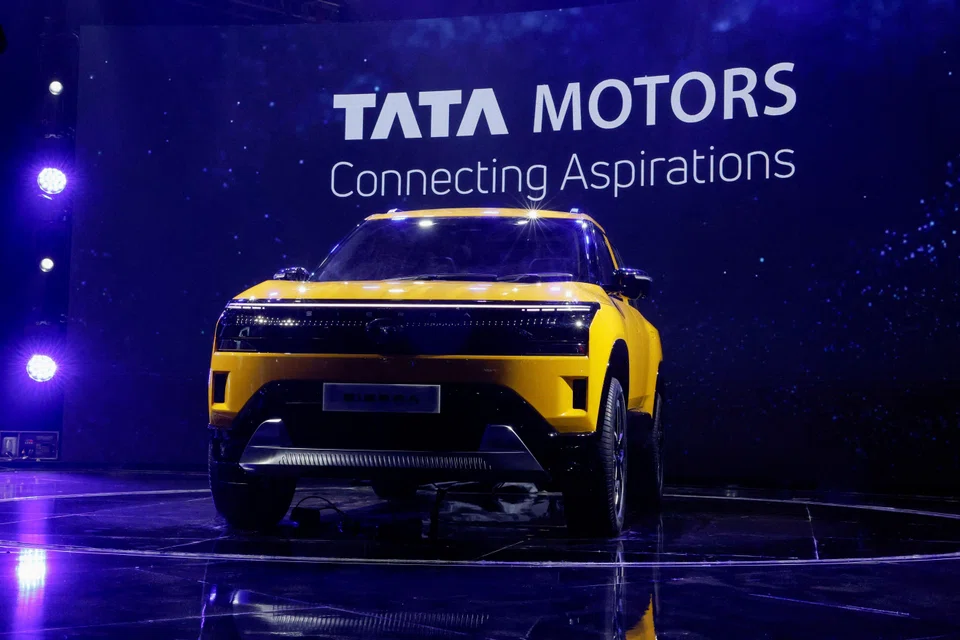
[NEW DELHI] Chinese automakers may be shut out of India, but their electric-vehicle technology is starting to make inroads in the world’s third-largest car market.
New Delhi has largely blocked Chinese companies from entering the market since 2020, and now Beijing is clamping down on the export of its tech know-how.
Yet, ties between the two countries’ carmaking industry are only growing.
Tata Motors said in June that it will use Chery’s carmaking platform to manufacture premium EVs in India.
The deal does not involve an equity stake, and both companies stressed that it is a supply arrangement without any transfer of technology know-how to Tata, highlighting the political sensitivities.
India ramped up scrutiny of Chinese businesses after a 2020 border clash between the two countries killed soldiers on both sides. While New Delhi and Beijing are working to improve ties, some friction remains.
Santosh Pai, partner at law firm Dentons Link Legal, said: “If India wants to expand its manufacturing sector and be a bigger part of the global supply chain, partnership with China is inevitable. If Chinese companies want to be global leaders, they cannot wish away India and its economic potential.”
For Tata, India’s third-largest automaker, Chery’s platform offers a quicker way to launch EVs.
Tata plans to eventually shift from relying on imported kits from China to developing components locally – a move seen favourably by some Indian policymakers because it would boost Indian manufacturing.
“We are supportive of deals that lead to more local manufacturing or supply-chain shifts down the road. That is a good way to approach China,” said a senior Indian government official.
For Chinese carmakers grappling with a slowdown at home and excess manufacturing capacity, such deals could be the answer to boosting revenue without violating Beijing’s export control orders.
Tata and Chery did not respond to requests for comment.
Growing market
The Tata-Chery deal shows that, despite its best efforts, India cannot keep China’s EV industry completely out.
The world’s most advanced EV industry is likely to continue to make inroads into India, a huge and still growing market.
That is bad news for Japanese automakers and others who are investing big in India – in part because they do not face major competition from Chinese rivals there now.
Chinese EV makers understand the importance of gaining a foothold in India through such supply deals, said Gao Hua, a former director at China SAE and now an independent analyst.
“If Chinese firms don’t participate, others from different countries will step in,” he noted.
Chinese partnerships are increasingly appearing in sectors long dominated by Japanese, South Korean and European firms, and they are challenging the incumbents with technologies that many analysts say are cheaper and faster to deploy.
For instance, Indian component maker Uno Minda has a joint venture with China’s Inovance to manufacture EV powertrains in India – a sector where Bosch, Nidec and Aptiv are already present.
Battery cooperation halted
Technology licensing deals between India and China started to gain traction in the aftermath of the 2020 investment restrictions.
But, it was not all smooth sailing. In 2025, Beijing’s export control curbs, in retaliation to Trump’s tariffs, forced Indian battery maker Amara Raja to end its licensing deal with China’s Gotion for lithium-ion cell technology for EV batteries.
“All technical collaboration has stopped,” Amara Raja’s executive director Vikramadithya Gourineni told Reuters.
“The main things we were able to take away was understanding on factory and line layouts, technology roadmaps ... and connecting to the vendor base,” he said.
Because the licensing deal was no longer possible, Amara Raja is instead ramping up investment in in-house R&D and talent, he noted.
The company is now importing equipment, battery cells and other material from Chinese suppliers to meet its cell manufacturing ambitions, but it struggles to get enough visas for engineers to come from China for operational support.
Chery’s other Indian partner
Last year, steel-to-cement billionaire Sajjan Jindal’s maiden carmaking venture, JSW Motor, agreed to a partnership with Chery, similar to Tata’s.
Under the deal, JSW had secured rights to use and adapt multiple Chery platforms to build a range of hybrids and EVs for India, sources familiar with the plans told Reuters. This involved an upfront payment of about 20 billion rupees (S$274.3 million) plus royalties, one source added.
JSW, which is investing US$3 billion in the venture, is targeting sales of 300,000 vehicles by 2030, the sources said.
The initial vehicles will largely come as imported kits from Chery, with JSW gradually building out an Indian supply chain and scaling up car production at its factory in western India, they added.
JSW Motor and Chery did not respond to requests for comment.
“This highlights the importance of nuanced approaches. Cutting ties is not always the best option,” Gao noted. REUTERS
Decoding Asia newsletter: your guide to navigating Asia in a new global order. Sign up here to get Decoding Asia newsletter. Delivered to your inbox. Free.
Share with us your feedback on BT's products and services
TRENDING NOW
Malaysian king buys stake in Singapore-listed mining firm expanding into rare earths

Family offices ‘kept captive’ by relationship managers turn to independent advisers, direct deals

Once staunchly pro-China, Malaysian Chinese businesses are now distancing themselves from Beijing

Could stablecoins be the future of money?

