



Companies brace for ‘worse’ peak shipping period this year

Mindy Tan
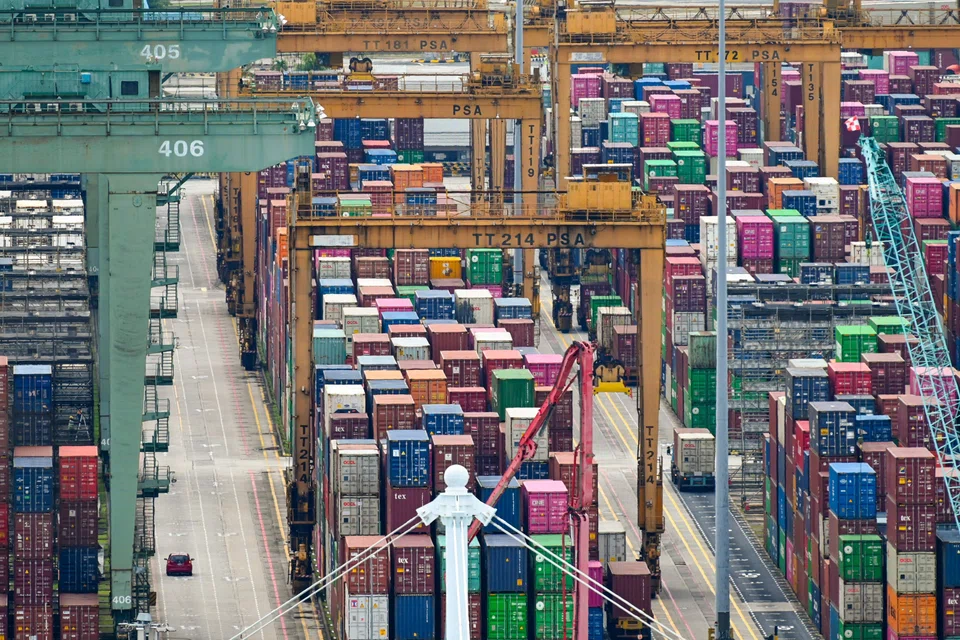
WITH this year’s peak shipping period expected to be more chaotic than 2021’s, businesses are getting prepared by sourcing from different locations and offshoring supplies to regional hubs ahead of time.
There are two main peak seasons in the shipping year, when firms stock up in advance of customer orders: from mid-August through mid-October, in the lead up to Christmas and other major sales events such as Black Friday in late November and Singles Day on Nov 11; and a shorter one at the start of the year due to Chinese New Year.
“2021 was an eye-opener in terms of the supply chain mayhem caused by a multitude of factors, with Covid being the primary catalyst,” said Peter Simmonds, executive vice president of global ocean freight at Toll Global Forwarding.
But both industry players and watchers expect 2022 to be potentially worse.
Christian Roeloffs, co-founder and chief executive officer of Container xChange, said that predicting what will happen in this year’s peak season is harder than normal. According to their xChange Industry Pulse Survey, 51 per cent of freight forwarders, traders and shippers expect greater chaos during this year’s peak season, compared with 2021.
A further 22 per cent expect the level of chaos to be the same, while 26 per cent expect this year’s peak season to be less chaotic.

“If 2021 was anything to go by, then 2022 will definitely be worse for holiday season delivery,” said Yuma Ito, partner of global management consultants Arthur D. Little.
“What we expect would be for the major carriers and global express forwarders to start sending out early messages to their clients and the general public to avoid the year-end delivery clog and start making orders early.”
“Given the uncertainty, we can expect that some brands will offshore their supplies to regional hubs ahead of time, which will allow them further flexibility in delivering to the region,” he added.

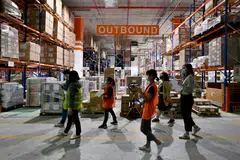
Rakesh Agarwal, advisory partner at KPMG in Singapore, said the professional services firm has seen evidence of stockpiling by retailers of consumer goods, particularly for businesses that faced supply shortages in previous years.
“While it is still months away from the holiday season, some companies are buying ahead of need and increasing lead times to assure supply,” he noted. “For example, some retailers have started placing heavy orders and we have seen companies ordering up to 50 per cent more than the usual to build the inventories till August 2022.”
Logistics firm Kuehne+Nagel has also seen customers stock up earlier than in previous years for the upcoming holiday season.
Marcus Balzereit, Kuehne+Nagel’s senior vice president of sales and marketing for the Asia Pacific region, said the company offers real-time supply chain solutions such as the Seaexplorer platform which gives customers visibility into their shipments. They also recently launched the Kuehne+Nagel Disruption Indicator which measures the efficiency of the world container shipping networks.
Toll Global Forwarding’s Simmonds has also noticed the trend of companies adopting multimodal strategies for supply chain agility while balancing cost efficiency and transit time requirements.
With Covid-19 cases rising as restrictions ease and labour challenges across the supply chain, there are “expectations that disruptions will continue into 2023”, he said.
KPMG’s Agarwal added: “Businesses can no longer take things for granted, be it logistics capabilities, availabilities, or low costs.”
“As we have seen over the past 2 holiday seasons, businesses had to overcome countless hurdles such as rising inflation, supply chain issues, shipping delays, and workforce shortages. This year’s shipping will be no different, in fact it could possibly be slightly exacerbated with the ongoing geopolitical issues, further Covid-19 lockdown, port congestion and high shipping rates.”
Decoding Asia newsletter: your guide to navigating Asia in a new global order. Sign up here to get Decoding Asia newsletter. Delivered to your inbox. Free.
Copyright SPH Media. All rights reserved.
TRENDING NOW

Indonesia’s coal tycoon Low Tuck Kwong replaced as Bayan Resources president-director

OCBC names Ang Eng Siong as global corporate banking head in rejig of wholesale banking business

Consider lowering homeownership barriers for some non-resident foreigners

DBS opens flagship investment strategy to retail investors with new fund

