
Concentration of wealth draws private jet operator VistaJet to boost presence in Asia

Tay Peck Gek

IF RICH Asians learned anything from Covid-19 travel restrictions, it was to appreciate the benefits of private aviation. Even as pandemic winds die down, Asia’s high-net-worth individuals are keeping private jet operators busy.
Private jet operator VistaJet, for one, said flight hours from Asia have increased the most among the regions it serves.
In the first half of this year, VistaJet’s parent company, Vista Global Holding, recorded an 80 per cent year-on-year surge in flight hours within Asia, as well as out of the region.
Notably, flight hours for trips originating in Singapore rose 85 per cent during the period.
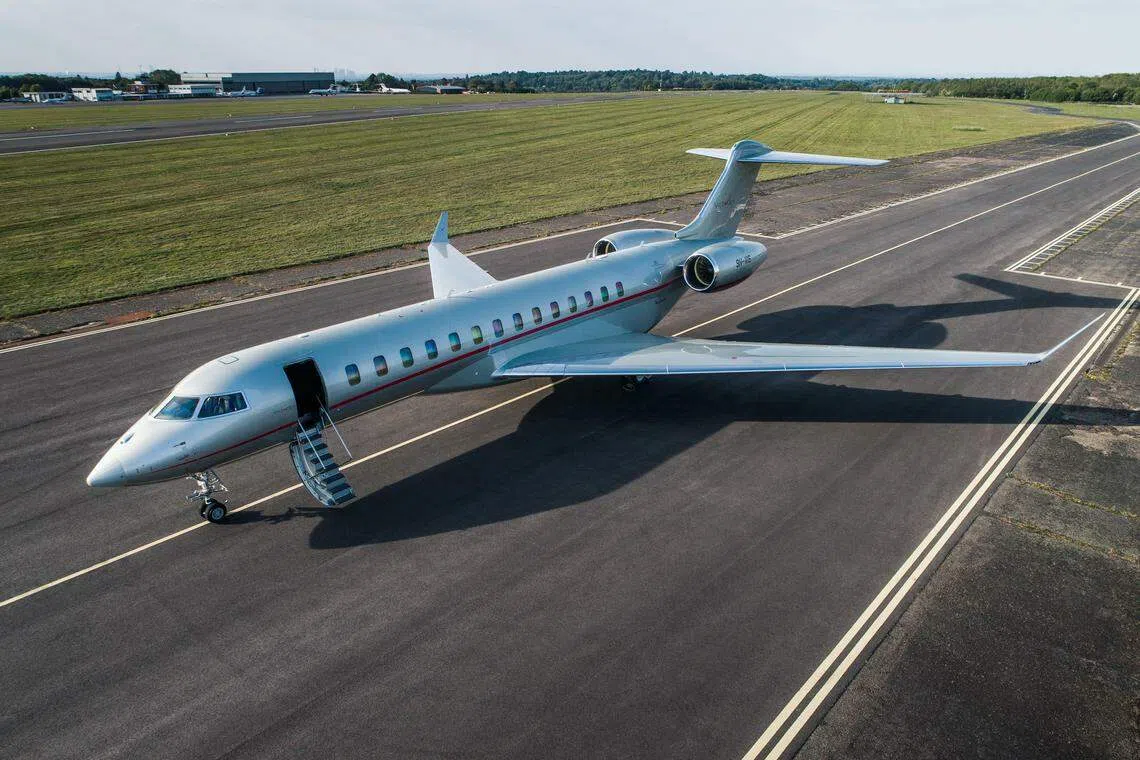
Vista, with a fleet of 360 aircraft in the group, also reported a rise in total flights globally, but at a comparatively slower pace of 30 per cent.
This was dragged by slower growth in Vista’s largest market, the United States, which clocked a 15 per cent increase in flight hours for the first half year. Flight hours from Europe and the Middle East climbed 38 per cent and 62 per cent, respectively.

The US accounts for 40 per cent to 45 per cent of Vista’s business in terms of flight hours, followed by Europe (34 per cent), and Asia and the Middle East (10 per cent each).
Flights to Asia
The positive trends in Asia are likely to have enticed Vista to expand its presence in the region, where the Malta-headquartered player has established a footprint since 2008. Earlier this year, VistaJet opened an office in Singapore.
Ian Moore, chief commercial officer of VistaJet and Vista, in an interview with The Business Times, said: “By opening up an additional office in Singapore, I think that just shows our footprint and how much we invest in the Asian market as well.”

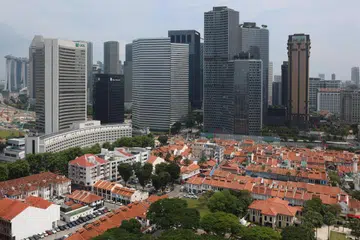
With more than half of the family offices in Asia estimated to be located in Singapore, Moore said the concentration of wealth in the Republic bodes well for private aviation service providers.
“Not just the customer base, but the wealth and the control of that wealth has definitely come from South-east Asia,” he added.
Moore noted that South-east Asian consumers are “very savvy” with investing. Not many of them want to invest in a plane, which is a depreciating asset; this is what drives demand for private aviation services such as VistaJet’s.
VistaJet planes are available by membership or on-demand charter, with flights costing from US$15,000 an hour for both groups of users.
It has more than 1,000 membership accounts globally, with each account typically flying multiple passengers. About 15 per cent of its subscription accounts are from Asia.
VistaJet’s clientele in Asia is mainly made up of multi-family global citizens who have sold their aircraft in favour of tapping the services of the company’s fleet.
Its customers’ frequent routes in Asia are from Hong Kong to Singapore and Japan, as well as from Singapore to Malaysia and Indonesia. Another route, from Hong Kong to mainland China, has also taken off in the last eight to nine months.
VistaJet’s model, which offers its clients the chance to be asset-light, means its business is unlikely to be affected significantly in a recession, Moore said. This is because aircraft owners hit by an economic downturn are expected to continue flying privately, even after they sell their jets, he added.
“It’s very difficult for people to go back to commercial (aviation) after they have owned an aircraft. Our business model works perfectly for that – you have sold your jet, but you’re used to aircraft ownership, and you want something to be significantly cheaper than aircraft ownership.”
Decoding Asia newsletter: your guide to navigating Asia in a new global order. Sign up here to get Decoding Asia newsletter. Delivered to your inbox. Free.
Copyright SPH Media. All rights reserved.