Deadline passes for US blockade of Hormuz, Iran threatens to retaliate against Gulf neighbours
President Trump says Iranian ‘fast-attack’ ships that come close to US blockade will be eliminated
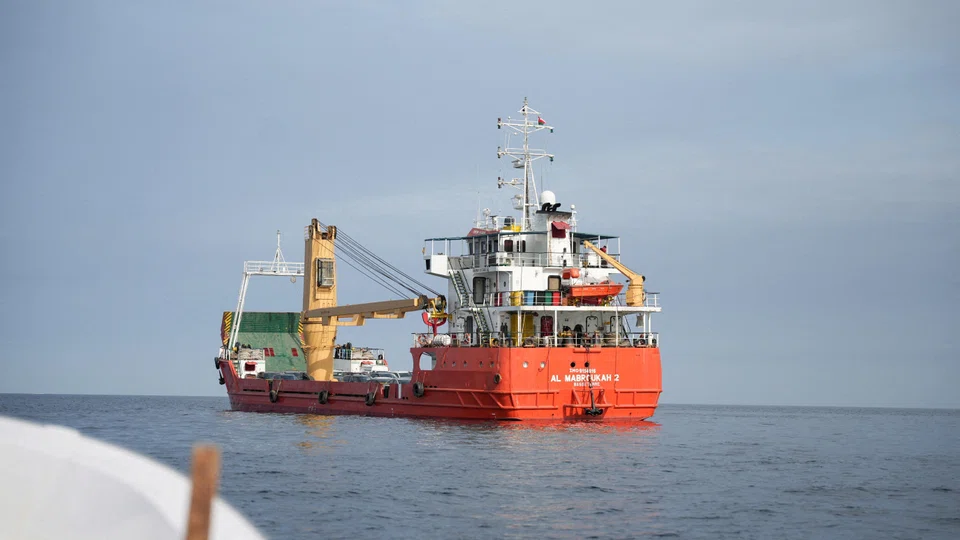
[WASHINGTON/DUBAI] The deadline passed on Monday (Apr 13) for the start of a US military blockade of ships leaving Iran’s ports, and Teheran threatened to retaliate against ports of its Gulf neighbours after weekend talks on ending the war broke down.
Oil prices surged, with no sign of a swift reopening of the Strait of Hormuz to ease the biggest ever disruption in supplies.
Since the war started on Feb 28, Iran has effectively shut the strait to all vessels except its own, saying passage would be permitted only under Iranian control and subject to a fee.
US President Donald Trump said Washington would block Iranian vessels and any ships that paid such tolls and that any Iranian “fast-attack” ships that went near the blockade would be eliminated. US Central Command said the measure would take effect from 10 am ET (10 pm Singapore time) on Monday.
Nato allies including Britain and France said they would not be drawn into the conflict by taking part in the blockade, stressing instead the need to reopen the waterway, through which about one-fifth of the world’s oil normally passes.
A ceasefire that halted six weeks of US and Israeli airstrikes looked in jeopardy, with only a week left to run. Washington said Teheran rejected its demands at weekend talks in Islamabad, the highest-level discussions since Iran’s 1979 Islamic Revolution.
Blockade comes into force
The US military’s regional Central Command said the blockade would be “enforced impartially against vessels of all nations” entering or leaving Iranian ports in the Gulf and the Gulf of Oman.
“The blockade will not impede neutral transit passage through the Strait of Hormuz to or from non-Iranian destinations,” Central Command said in a note to seafarers seen by Reuters on Monday.
Two Iranian-linked tankers, the Aurora and New Future, laden with oil products, left the strait on Monday before the deadline, according to LSEG data.

An Iranian military spokesperson called any US restrictions on international shipping “piracy,” warning that if Iranian ports were threatened, no port in the Gulf or Gulf of Oman would be secure. Any military vessels approaching the strait would violate the ceasefire, Iran’s Revolutionary Guards said.
On Sunday, Trump had posted on social media that ships paying Iran an “illegal toll” would not be granted safe passage, adding, “Any Iranian who fires at us, or at peaceful vessels, will be blown to hell!”
‘Zero lessons learned’ says Teheran
Trump has also lashed out at US-born Pope Leo, denouncing him as “terrible” in a rare direct attack on the pontiff who has spoken out against the war.
With the war unpopular at home and rising energy prices causing political blowback, Trump paused the US-Israeli bombing campaign last week after threatening to destroy Iran’s “whole civilisation” unless it reopened the strait.
Israel has continued to bombard Iran-backed Hizbollah in Lebanon and on Monday Israeli troops launched an attack to seize a key south Lebanon town from the group. Israel and the US have said the campaign against Hizbollah was not part of the ceasefire, while Iran has insisted it is.
Iran has ignored the demand to open the strait, while bringing new demands to the talks, including recognition of its control of the waterway, lifting of sanctions and the withdrawal of forces from US military bases across the Middle East.
Pakistani Prime Minister Shehbaz Sharif said efforts were still on to resolve the conflict after the direct talks between the US and Iran in Islamabad at the weekend.
Trump has declared victory, despite failing to achieve the objectives he set out at the start of the war: to eliminate Iran’s ability to strike its neighbours, end its nuclear programme and make it easier for Iranians to topple their government.
Iran retains missiles and drones that can hit Gulf neighbours, and a stockpile of uranium enriched to near bomb-making levels. Teheran’s leadership, which faced a popular uprising at the start of the year, has withstood the US onslaught with no sign of organised opposition.
Emboldened Iranian officials say they will make a deal only if the US makes further concessions. Iran had “encountered maximalism, shifting goalposts, and blockade” from the US at the talks, said Foreign Minister Abbas Araqchi.
“Zero lessons learned,” he added. “Good will begets good will. Enmity begets enmity.”
Oil benchmarks understate disruption
Benchmark oil prices, which had eased last week after the ceasefire was announced, surged by around 7 per cent on Monday, back above US$100 a barrel.
Traders say the main benchmarks – used to set prices for trillions of US dollars’ worth of commodities worldwide – actually understate the severity of a disruption with no precedent in modern times.
Trump has long said a bump in US petrol prices would be short-lived. But he told Fox News’ Sunday Briefing that they could stay high through November’s midterm elections.
Iran’s chief negotiator, Mohammad Baqer Qalibaf, posted a map of Washington-area petrol prices on social media with the comment: “Enjoy the current pump figures. With the so-called ‘blockade’. Soon you’ll be nostalgic for US$4-US$5 gas.” REUTERS
Decoding Asia newsletter: your guide to navigating Asia in a new global order. Sign up here to get Decoding Asia newsletter. Delivered to your inbox. Free.
Share with us your feedback on BT's products and services