

Depots full of containers and sailings with no cargo signal weak consumer demand: analysts

Mindy Tan
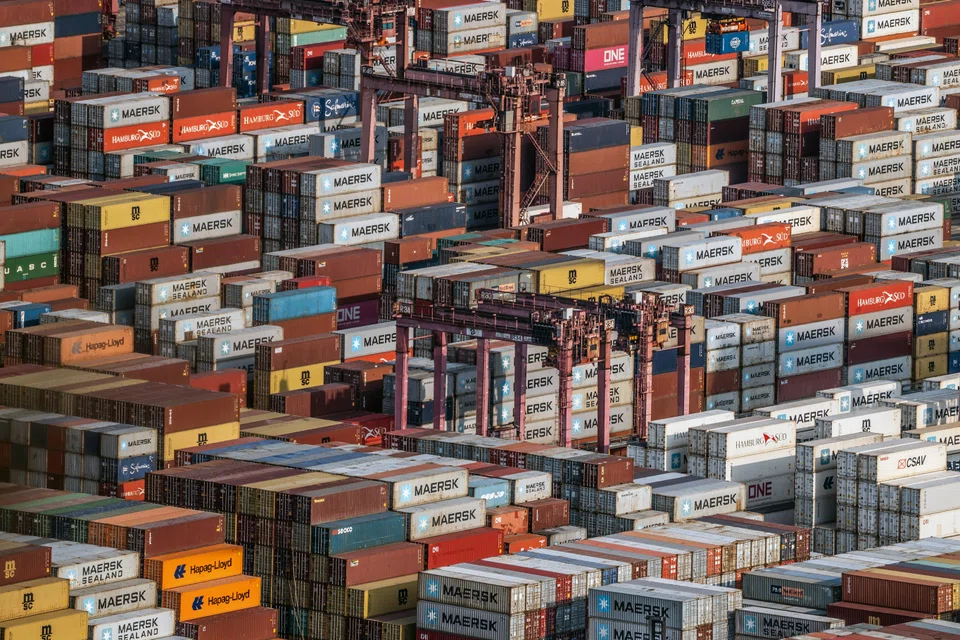
CONTAINER depots are expected to remain chock-a-block for the first three months of the year, even as retailers kick off their restocking activities following the year-end festive season, according to data from Container xChange. The oversupply of containers, coupled with increased sailings with little to no cargo, suggest consumer demand is weakening significantly.
“There is just not enough depot space to accommodate all the containers. With the further release of container inventory into the market (for example from disposal of leasing fleets), there will be added pressure on depots in the coming months,” said Christian Roeloffs, co-founder and chief executive of Container xChange.
The container trading and leasing platform said in a recent report that the majority of the more than 2,600 industry professionals surveyed expect container depots to be overwhelmed with containers as the demand and supply gap widens due to declining demand.
Almost half (46.2 per cent) of respondents said they expect container depots to be overloaded at the start of 2023, but that oversupply will ease with time. A further 40.4 per cent said depots will continue to be congested with containers.
There are also expectations that congested depots will start to charge higher storage fees to disincentivise containers from staying past their deadlines.
“Empty container repositioning will remain a problem in 2023 while more equipment will hit the waters. Ports will face congestion and containers exceeding their dwell times will face increased demurrage and detention charges,” said Container xChange in its report. Demurrage is a charge for not offloading in the time specified.
This situation comes even as retailers in the US kicked off their restocking activities earlier than predicted this year, suggesting that overall replenishment is weak.
Replenishments typically happen in the later part of the first quarter. The peak container shipping season, meanwhile, is traditionally in the third quarter of each year, as retailers build up inventory ahead of the year-end holiday and shopping season.
But retailers did not really stock up due to lower consumer demand last year, noted Roeloffs. As a result, the holiday season triggered an “early burnout” of inventories in the United States, which kickstarted the inventory replenishment cycle sooner.
Logistics company Dimerco Express Group said it is not seeing evidence of inventory replenishment activities in South-east Asia, citing slow global market demand.
“Malaysia’s manufacturing sector is still facing the challenge of outputs and orders being moderately sustained, due to the slow demand. In Vietnam, the manufacturing sector is also not showing signs of early replenishment activities for the coming few months; with the furniture and apparel industry expecting to suffer more than the electronics industry.”
China’s reopening is unlikely to provide a considerable boost to Asean’s overall exports, given that much of the region’s exports to China are integrated into the industrial sector rather than its consumer cycle, said HSBC Global Research in a report on Jan 11.
“Even in the case of the Philippines, whose manufacturing links with China are not as deep as its peers, the main drag on their exports was manufactured goods, a large part of which are electronics products. While the rebound in China’s growth can partially put a floor on global production, it is unlikely to reverse the already cooling trade cycle,” it said.
The lack of consumer demand is also implied by increased blanked sailings, which is when a carrier skips a particular port or segment of its scheduled route.
According to data from freight rate benchmarking platform Xeneta, carriers have blanked more than six times the number of sailings on the main Asia-to-US West Coast corridor in recent weeks as they did in the equivalent period of 2019.
In the last four weeks, carriers announced the blanking of 220,489 twenty-foot equivalent units (TEUs) on the trade. In comparison, carriers blanked 29,796 TEU in the same period in 2019, which was the last full pre-pandemic year. Oslo-based Xeneta’s data is crowdsourced from global shippers.
Other leading corridors also suffered. The Asia-North Europe trade has seen blanked sailings increase 715 per cent against 2019 figures, to 226,000 TEU, while those from the Far East to the US East Coast have climbed by 340 per cent to 140,000 TEU.
“This really does demonstrate the low level of demand gripping the industry at present,” said Peter Sand, Xeneta’s chief analyst.
“In a normal year, we tend to see very few blanked sailings in the run-up to (the Chinese New Year), as shippers stock up on their inventories. So, this is a worrying development for carriers, and a bad omen of what’s to come for the year ahead.”
In the longer run, however, intra-trade is still expected to be on the uptrend within Asia. India’s 12 major ports have seen an increase from 8.34 million TEUs to 8.45 million over the first three quarters of 2022, and an overall growth of 1.7 million TEUs in December alone, said Dimerco Express’ spokesperson.
“We foresee that exports out of India will start picking up for intra-Asia, Africa, and Europe. However, US exports will continue to experience a decline of 4-5 per cent in the first quarter of 2023.”
Eric Johnson, director at S&P Global, said: “One of the major trends that has caught the attention of the supply chain and shipping industry is that imports from China to the US and UK have gone down. Import volume into the US as a whole, however, hasn’t gone down at the same rate as from China, which strongly corroborates the theory that trade is shifting elsewhere.”
The speed of this diversification is closely correlated with the disruptions observed in China as a result of variables including the zero-Covid plan (and subsequent reversal on a wide range of policies), production shutdowns, and escalating geopolitical tensions, noted Container xChange’s Roeloffs.
“If (these disruptions) happen more quickly, diversification will follow suit,” he said.
Decoding Asia newsletter: your guide to navigating Asia in a new global order. Sign up here to get Decoding Asia newsletter. Delivered to your inbox. Free.
Copyright SPH Media. All rights reserved.