



In Depth: China captures Prince Group associate tied to US$24 billion crypto network
Li Xiong is one of the scam empire’s more shadowy operators
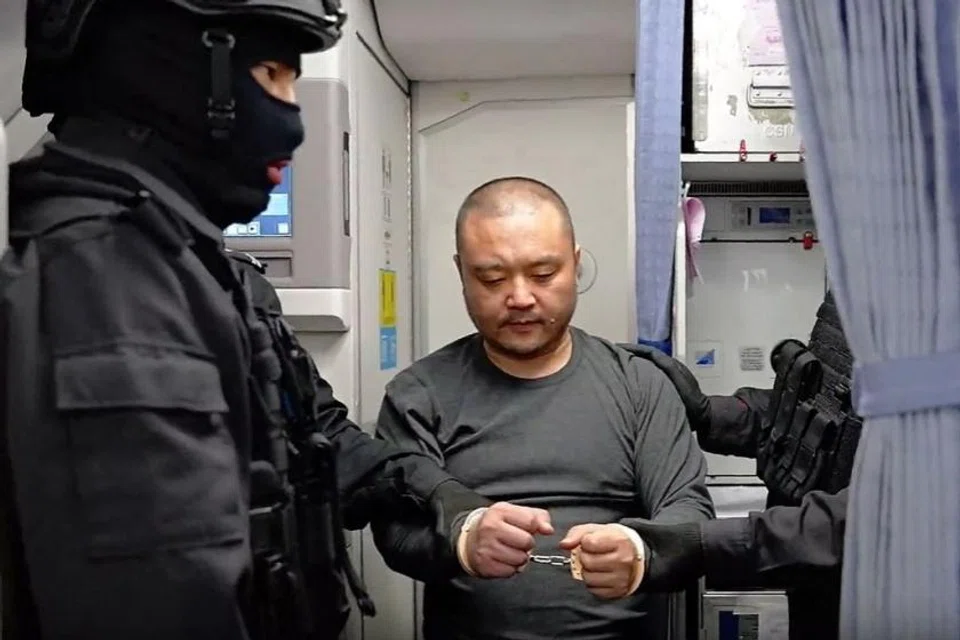
[BEIJING] Chinese authorities have brought back a senior associate of alleged crime boss Chen Zhi from Cambodia, as Beijing deepens its crackdown on a network accused of online gambling, fraud and money laundering across South-east Asia.
Li Xiong was returned to China from Phnom Penh with the cooperation of Cambodian authorities and is under investigation for allegedly operating casinos, fraud, illegal business activities and concealing criminal proceeds, China’s Ministry of Public Security said on Wednesday (Apr 1).
Li once served as chairman of Huione Group, a conglomerate under Chen’s Prince Group tied to payments, currency exchange, insurance and banking services in Cambodia that researchers and law-enforcement agencies have linked to fraud and laundering networks.
Cambodia’s Interior Ministry earlier said separately that Li was arrested under a cooperation framework aimed at combating online scams and transferred to China for further legal proceedings. It said the move followed months of joint investigation with Chinese authorities. Under a royal decree issued Mar 31, Li’s Cambodian citizenship was revoked.
British blockchain analytics firm Elliptic has said that since 2021, crypto wallets used by Huione Guarantee and its merchants have processed transactions worth at least US$24 billion, making it the largest online illicit marketplace on record.
Li’s return follows the earlier repatriation of Chen, the 38-year-old founder of Prince Group, who was sent back to China in early January after Cambodian authorities revoked his citizenship. Chinese police have accused Chen of crimes including operating casinos, fraud, illegal business activity and concealing criminal proceeds.
Caixin previously reported that Chen, who came from a fishing village in China’s Fujian province, built a sprawling empire in Cambodia after moving there more than a decade ago. At the height of his influence, he invested in Singapore, the UK and Taiwan, while US authorities seized Bitcoin linked to him worth roughly US$15 billion.
Close associate
If Chen was the public face of the empire, Li was seen as one of its more shadowy operators.
“He had a different style from Chen – one was in the open, the other in the shadows,” a scholar who has long studied telecom-fraud operations in Cambodia told Caixin. In Sihanoukville, Cambodia’s second-largest city and a hub for Chinese-linked casinos and scam compounds, the scholar said that Li was better known by the nickname “Boss Xi” – a nickname derived from the first syllable of Xigang, the Chinese shorthand for Sihanoukville.
SEE ALSO








According to the scholar and people familiar with the matter, Li started in finance inside Prince Group before building out a business spanning money changing, payments and escrow services. He kept a low profile, rarely appearing in public. One of his few public appearances was at the launch of Panda Bank, part of the Huione Group empire.
Public records in Cambodia show Huione’s earliest known company, Huione Currency Exchange, was established in 2014. Li was listed as chairman, with a registered contact address in Zhengzhou, Henan province. In 2018, he established Huione Pay, which later became a widely used payment tool among Cambodia’s ethnic Chinese business community.
Before 2019, remittances in Cambodia’s Chinese circles were often handled by phone, a Chinese resident in Cambodia told Caixin. Huione Pay spread quickly because it made transfers, deposits and withdrawals more convenient, the person said, and was soon accepted by nearly all Chinese-run shops.
That reach became evident when Huione later faced a run on deposits.
In May 2025, the US Treasury Department’s Financial Crimes Enforcement Network, or FinCEN, designated Huione Group a “primary money laundering concern” and proposed cutting off its access to the US financial system. FinCEN said Huione was a critical node for laundering proceeds for transnational criminal organisations in South-east Asia, including so-called pig-butchering scams.
Between August 2021 and January 2025, Huione laundered at least US$4 billion in illicit proceeds, according to FinCEN, including at least US$36 million from pig-butchering schemes and US$300 million in virtual assets tied to other cyber frauds.
Seven months after the US move, Huione announced that all of its stores in Cambodia would suspend operations, according to the Chinese resident. The company’s headquarters was deserted, the person said, with a repayment-delay notice posted at the entrance. Hundreds or thousands of Chinese depositors gathered outside waiting to withdraw funds, but queue numbers stopped after reaching 1,000.
A platform for the underworld
The money amassed through Huione’s exchange and payment businesses helped it move into a more lucrative business: escrow and channel services for the criminal underworld, according to the scholar. In 2021, the company launched the Huione Guarantee platform, which evolved into what researchers described as a “compound + guarantee + laundering” model.
The platform’s role was to solve a trust problem inside South-east Asia’s sprawling scam economy. Fraud operations often relied on outside laundering crews to cash out stolen money, convert it to cryptocurrency and return it to the scam operators after deducting fees.
As many of those crews were small and loosely organised, both sides sought intermediaries who could hold deposits and guarantee transactions. Huione, backed by its money-changing operations, became a trusted middleman, the scholar said.
Huione operated multiple Telegram groups for matching buyers and sellers, one of which had 400,000 subscribers, the scholar said. On the now-deleted Huione Guarantee website, posts advertised services including direct recruitment of laundering crews.
Elliptic said many merchants on Huione Guarantee openly offered laundering services, including accepting payments from victims around the world, moving money across borders and converting it into cash or stablecoins.
Most merchants specified what kinds of funds they were willing to handle depending on the likelihood the money would be frozen by banks or law enforcement, Elliptic said.
Other merchants provided services that supported online fraud more directly, according to Elliptic, including building fake crypto-investment websites for pig-butchering scams, selling personal data and contact lists, supplying telecom equipment and marketing AI face-swapping tools used to deceive victims.
That helped make Huione Guarantee not only a financial intermediary but a central infrastructure layer for the online scam economy. Elliptic said wallets used by the platform and its merchants had received more than US$24 billion in cryptocurrency since 2021, a volume that would make it the biggest illicit online marketplace ever identified.
The network’s proximity to political and business elites has drawn additional scrutiny. One Huione Pay director, Hun To, also appeared on the board of Proteva Insurance, another Huione affiliate. Media reports have identified Hun To as a cousin of Cambodian Prime Minister Hun Manet and said he was previously suspected by Australian police of involvement in heroin trafficking and money laundering.
Link to Prince Group
Rumours of ties between Huione and Prince Group have circulated for years in Cambodia. On paper, the two groups appeared to have separate ownership structures, though some personnel overlapped. But the scholar and Chinese residents told Caixin that executives inside Prince Group regarded Huione as effectively part of the same network, with Huione described as Prince Group’s “little brother.”
According to the scholar, Prince Group sold Jinbei two Casino to Huione after Prince came under growing scrutiny from US law enforcement. Around the same period, Huione acquired multiple compounds and other assets in Sihanoukville.
One of the clearest links is an area known as “Compound No 8,” recently included in a new round of UK sanctions targeting South-east Asian scam networks. British authorities described the compound as one of Cambodia’s largest scam hubs, capable of holding 20,000 trafficked workers.
Elliptic said photos of the site showed signage using the Khmer name of a company called Legend Innovation, which it linked to Prince Group through shared phone numbers, overlapping directors and social ties to Prince executives, including sanctioned director Ing Dara.
Elliptic also found connections between Compound No 8 and Huione. Huione Technology had displayed renderings of a development on its website in 2021 that closely matched later photos of the compound, which became informally known as “Huione Park.”
During Huione Pay’s liquidity crisis in December 2025, property management at the compound warned that merchants refusing payment through the Huione app would be evicted.
After sanctions, Huione Pay briefly renamed itself H-Pay, but the move failed to halt its decline. In December 2025, Cambodia’s central bank said Huione Pay’s licence had already been revoked in September 2024 and its liquidation process had been completed. CAIXIN GLOBAL
Decoding Asia newsletter: your guide to navigating Asia in a new global order. Sign up here to get Decoding Asia newsletter. Delivered to your inbox. Free.
Share with us your feedback on BT's products and services






