



East Asia, Pacific ports need US$12 billion in investment a year for modernisation: World Bank
China will account for 65% of the required capital while a group of five Asean countries will take up 25%

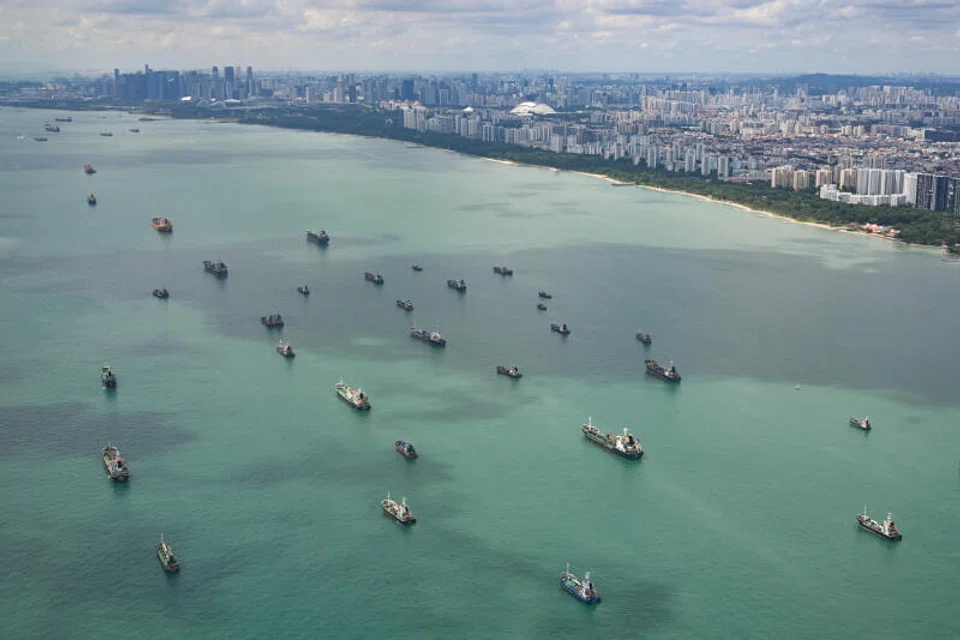
[SINGAPORE] Ports in East Asia and the Pacific need US$12 billion in annual investment between 2025 and 2040 to raise efficiency and capacity, the latest World Bank study showed.
If container trade increases stay at 3.5 to 4 per cent a year, US$90 billion in total investment or US$6 billion a year will be needed to nearly double capacity of handling the boxes to 300 million twenty-foot-equivalent units by 2040.
Non-container cargo – dry bulk and liquid bulk – will require additional capacity, bringing expected total annual port investment needs to US$12 billion a year, the international body said in a report published last Monday (Jul 27).
China will account for about 65 per cent of the required capital, Asean-five about 25 per cent, and with the rest being taken by the remaining developed East Asian and Pacific economies. Asean-five refers to the Philippines, Indonesia, Thailand, Singapore and Malaysia.
Decarbonisation
As the maritime sector pursues decarbonisation, ports (especially those in developing countries in the region) will need substantial new investment in storage, ranging from US$50 million to US$1.2 billion depending on the scale pursued.
However, given low-transaction volumes and the volatility of alternative fuels, such infrastructure is unlikely to be financially self-sustaining in most developing ports.
Operating costs, including specialised handling, stringent safety protocols, skilled workforce development, and maintenance, are expected to exceed revenues. As a result, these infrastructure will require public support or targeted subsidies to ensure reliability and safety.
Current policies and observed actions suggest that a basic, safety-focused approach on major hubs is the default, limiting flexibility for domestic shipping.
Upgrading costs
The region will require major investment to replace ageing vessels and upgrade fleets to meet rising efficiency, safety and environmental standards.

The report noted the domestic fleet alone will need about US$150 billion for vessel renewal, with an additional US$22 billion if dual-fuel capability is adopted.
The regional fleet will require about US$97 billion, with a further US$14.5 billion for dual-fuel capability. Retrofits for about 1,412 domestic vessels, which are primarily 10 to 15 years old, will require an estimated US$1.4 billion. The scale of the investment suggests that new financial structures will be needed, particularly for domestic and subregional shipping, segments often dominated by small companies with fewer than 10 vessels.
For such firms, inadequate access to finance is compounded by constraints in technical and commercial capacity to procure and operate new, modern ships. “This points to the need for corporate entities – such as leasing companies and infrastructure investment funds – that can aggregate ship orders and ownership to reduce procurement costs, provide technical and procurement support, and access debt at lower cost,” the World Bank said.
Across the region, an estimated eight million to nine million people are directly employed in water transport, ports and maritime-related logistics, and a further eight million indirect jobs are supported across supply chains, services and household consumption.
Decoding Asia newsletter: your guide to navigating Asia in a new global order. Sign up here to get Decoding Asia newsletter. Delivered to your inbox. Free.
Copyright SPH Media. All rights reserved.






